Researchers have made significant advancements in Vision Language Models (VLMs) by employing a contrastive training strategy to align image and text embeddings.
What Happened
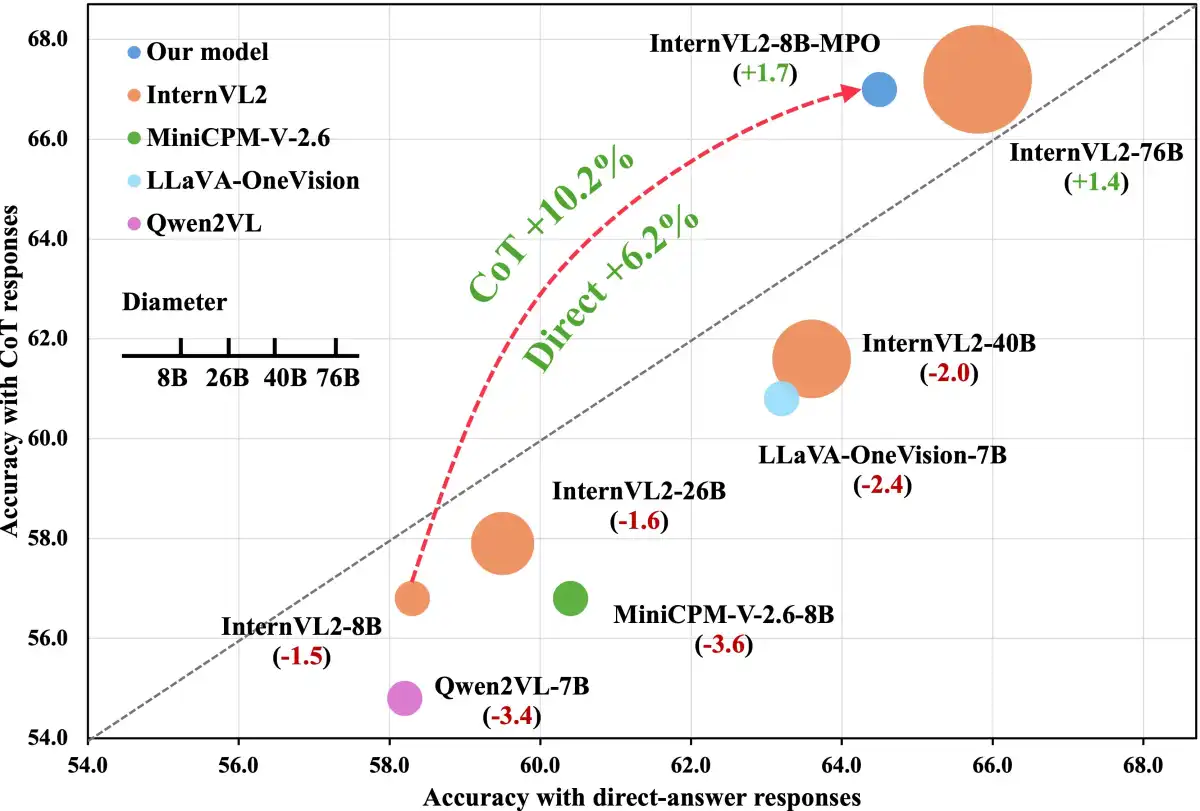
A recent study published on Amazon Science has demonstrated that VLMs can be improved by approximately 2% across various multimodal evaluations using a joint pretraining method. This approach combines next-token prediction loss with contrastive training, similar to the strategy used by Radford et al. [39]. The researchers identified a significant gap between image and text embeddings when VLMs are trained solely on next-token prediction loss.
To address this issue, the team employed a joint pretraining method that enhances VLM performance without requiring additional compute or training data. This breakthrough has far-reaching implications for the development of more accurate and efficient VLMs.
Background and Context
Vision Language Models have achieved significant advancements in recent years due to the success of large language models. The common strategy for aligning vision and language models involves a two-step process: an alignment (or pretraining) stage and an instruction tuning stage. During the alignment stage, a projection module is trained to map image embeddings into the language space using a paired image-text dataset.
In the instruction tuning stage, the model is trained to answer specific questions about the images. However, researchers have identified a significant gap between the embeddings for image and text pairs when VLMs are trained solely on next-token prediction loss. This issue has hindered the development of more accurate and efficient VLMs.
Why it Matters
The findings of this study have significant implications for the industry, as they demonstrate that a joint pretraining method can enhance VLM performance without requiring additional resources. This breakthrough has the potential to accelerate the development of more accurate and efficient VLMs, which are essential for various applications such as image captioning, visual question answering, and multimodal retrieval.
The study's results also highlight the importance of contrastive training in aligning vision and language models. By combining next-token prediction loss with contrastive training, researchers can improve VLM performance without requiring additional compute or training data.
What Comes Next
The findings of this study have sparked interest among researchers to explore further the potential of joint pretraining methods for improving VLM performance. Future studies may investigate the application of this approach in various domains, such as image captioning and visual question answering.
Additionally, the study's results highlight the need for more research on contrastive training strategies for aligning vision and language models. By continuing to explore new approaches and techniques, researchers can develop more accurate and efficient VLMs that can be applied in various real-world applications.
Key Facts
- The study demonstrated that a joint pretraining method can enhance VLM performance by approximately 2% across various multimodal evaluations.
- The approach combines next-token prediction loss with contrastive training, similar to the strategy used by Radford et al. [39].
- The researchers identified a significant gap between image and text embeddings when VLMs are trained solely on next-token prediction loss.
- The joint pretraining method enhances VLM performance without requiring additional compute or training data.
- The study's results have significant implications for the development of more accurate and efficient VLMs, which are essential for various applications such as image captioning and visual question answering.