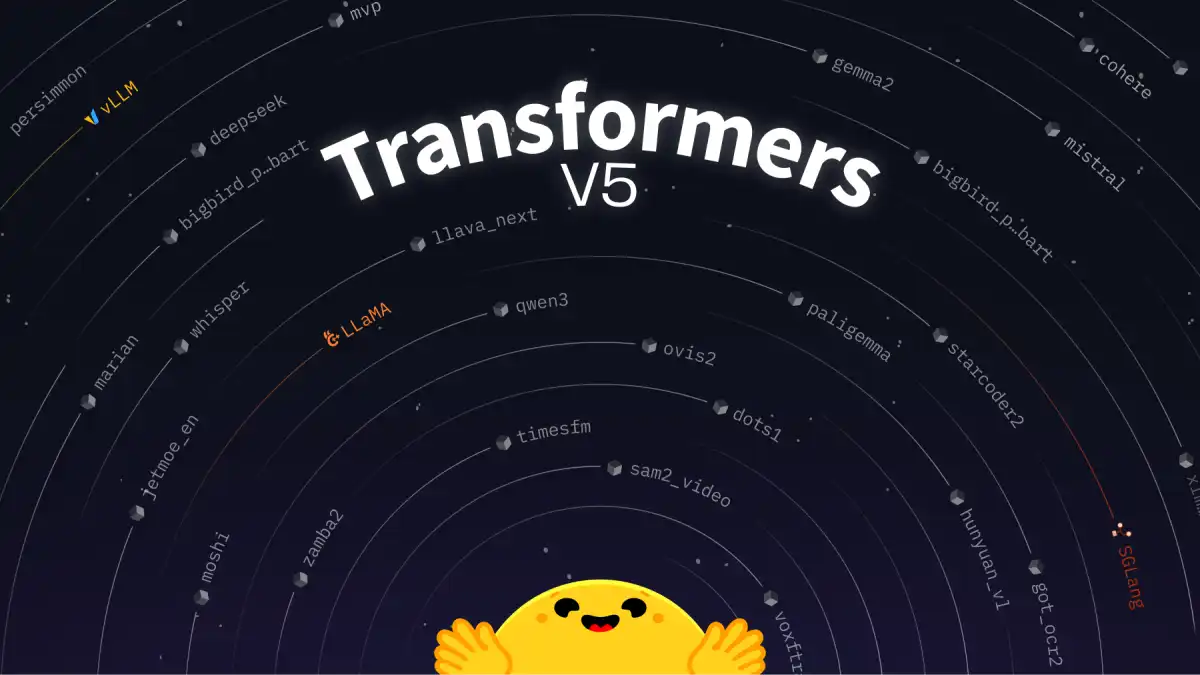
The latest version of Transformers.js, a JavaScript library for machine learning, has been released by Hugging Face. The new version, v3, brings significant improvements in speed and compatibility, making it easier to deploy machine learning models directly in the browser.
What's New in Transformers.js v3
The main features of Transformers.js v3 include WebGPU support, which provides up to 100 times faster inference compared to previous implementations. This is achieved by leveraging the power of WebGPU, a next-generation graphics API that offers considerable performance improvements over WebAssembly (WASM). Additionally, the new version introduces new quantization formats, allowing models to be loaded and executed more efficiently using reduced data types (dtypes).
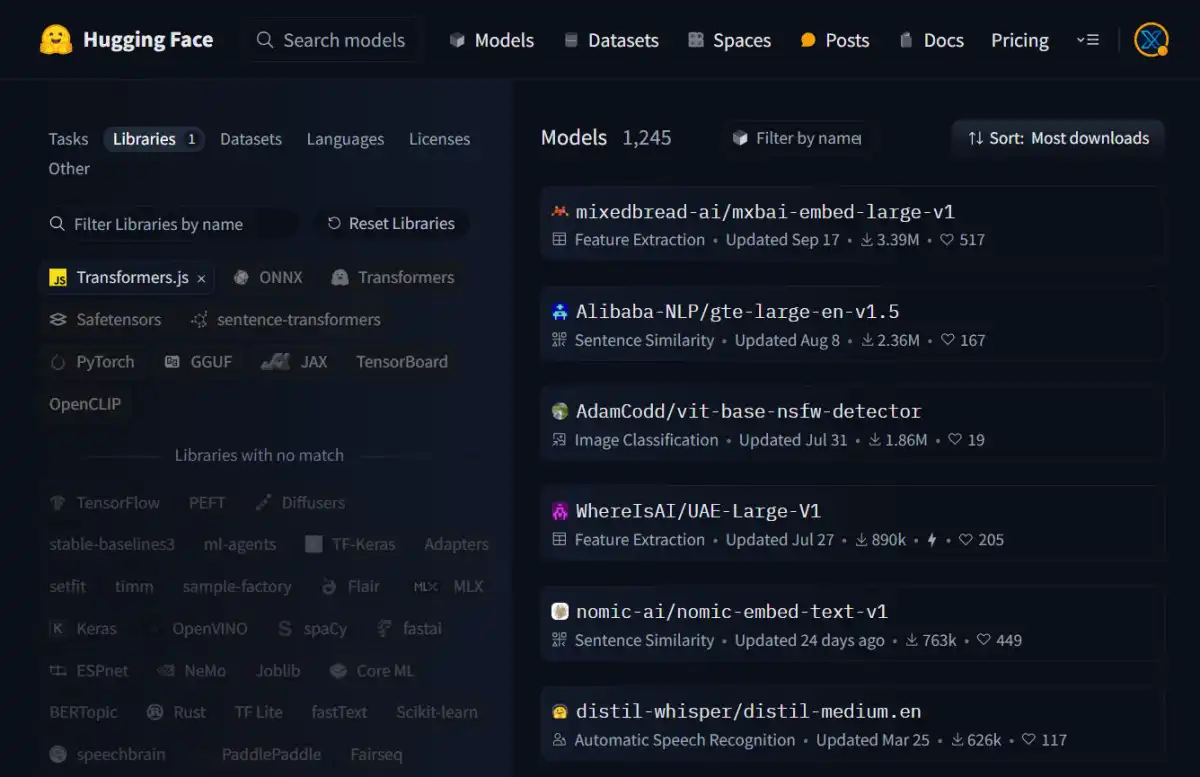
Transformers.js v3 also supports 120 model architectures, including popular ones such as BERT, GPT-2, and the newer LLaMA models. Moreover, with over 1200 pre-converted models now available, developers can readily access a broad range of tools without worrying about the complexities of conversion.
Background and Context
Transformers.js is a JavaScript library for machine learning that allows developers to run state-of-the-art models directly in the browser. The library uses ONNX Runtime to run models in the browser, making it possible to deploy machine learning models without relying heavily on server-side resources or extensive backend support.
The previous version of Transformers.js suffered from limited performance and compatibility issues, which made it difficult for developers to use the library effectively. However, with the release of v3, Hugging Face has addressed these shortcomings by providing a significant boost in speed and expanding compatibility across different JavaScript runtimes.
Why It Matters to the Industry
The release of Transformers.js v3 is significant for the adult industry because it provides developers with a powerful tool for building machine learning models that can be deployed directly in the browser. This means that companies can now build more efficient and scalable models without relying on server-side resources or extensive backend support.
Moreover, the new version of Transformers.js supports 120 model architectures, including popular ones such as BERT, GPT-2, and LLaMA. This makes it easier for developers to access a broad range of tools and build more complex models that can handle tasks such as natural language processing, computer vision, and audio processing.
What Comes Next
The release of Transformers.js v3 is just the beginning of a new era in browser-based machine learning. With the library's ability to support 120 model architectures and over 1200 pre-converted models, developers can now build more complex and efficient models that can handle tasks such as chatbot implementations, text classification, and object detection.
Moreover, the availability of 25 new example projects and templates will make it easier for developers to get started quickly and showcase use cases from real-world applications. This means that companies in the adult industry can now build more efficient and scalable models without relying on server-side resources or extensive backend support.
Key Facts
- WebGPU Support: Up to 100 times faster inference compared to previous implementations.
- New Quantization Formats: Allows models to be loaded and executed more efficiently using reduced data types (dtypes).
- 120 Model Architectures: Supports popular ones such as BERT, GPT-2, and LLaMA.
- Over 1200 Pre-Converted Models: Developers can readily access a broad range of tools without worrying about the complexities of conversion.
- 25 New Example Projects and Templates: Makes it easier for developers to get started quickly and showcase use cases from real-world applications.
The release of Transformers.js v3 is a significant milestone in browser-based machine learning, providing developers with a powerful tool for building efficient and scalable models. With its ability to support 120 model architectures and over 1200 pre-converted models, the library will make it easier for companies in the adult industry to build more complex and efficient models without relying on server-side resources or extensive backend support.