Hugging Face Transformers has been gaining popularity in recent years due to its ability to simplify the process of implementing Transformer models for various tasks such as natural language processing, computer vision, and audio. A new guide published by Hugging Face aims to make this technology more accessible to non-technical individuals who want to understand the basics of using open-source machine learning without having to learn Python from scratch.
Background and Context
The guide, titled "A Total Noob's Introduction to Hugging Face Transformers," is designed specifically for those looking to understand the bare basics of using open-source ML. The author, Andrew Jardine, recognizes that the learning curve presents a barrier for non-technical individuals who want to collaborate with machine learning practitioners. As someone who came from the business side of AI, Jardine wanted to offer a more approachable path for like-minded learners.
The guide assumes no prior knowledge and explains concepts from the ground up to ensure clarity. It covers topics such as deploying an LLM in a notebook, basics for using the Transformers library, and basic concepts for using Python. The goal is not to turn readers into machine learning practitioners but to enable better understanding of and collaboration with those who are.
What Happened
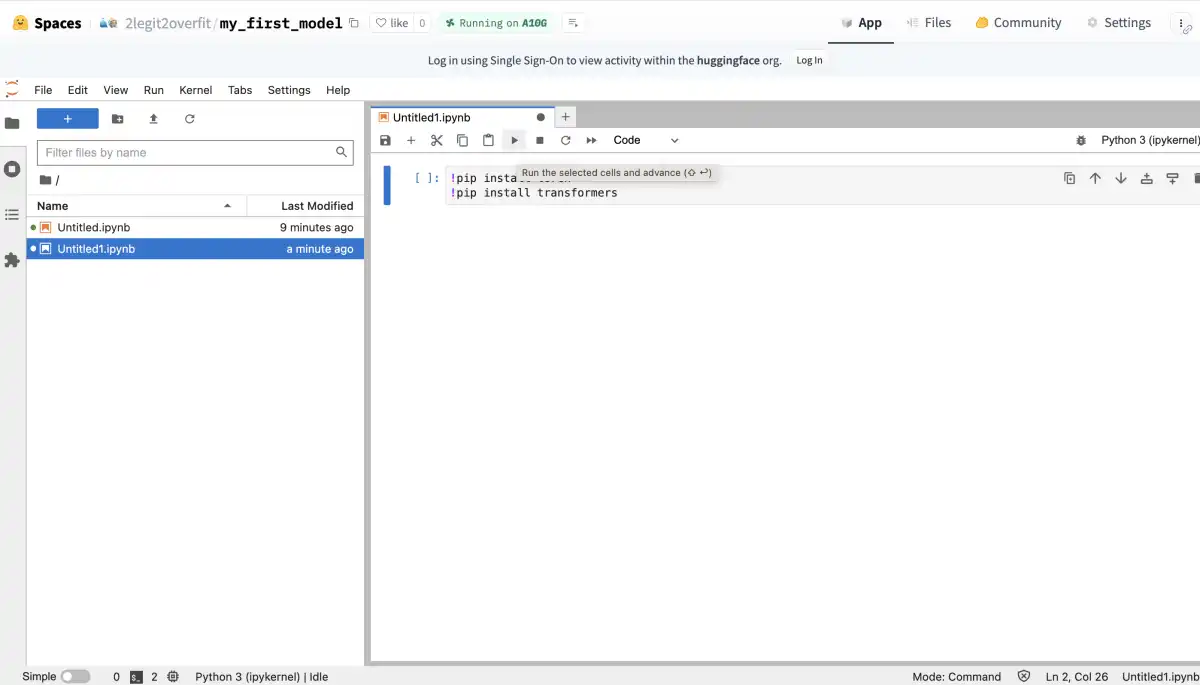
The guide takes readers through a simple worked example of running Microsoft's Phi-2 LLM in a notebook on a Hugging Face space. It explains how to create a Hugging Face account, add billing information, and configure a space to host the notebook. The author also covers the basics of using the Transformers library, including importing classes, defining models, and loading them.
The guide uses Microsoft's Phi-2 as an example model, which is a small but surprisingly capable model that can be used for various tasks such as text generation and language translation. The author notes that Phi-2 is a base model that has not been instruction-tuned for conversational uses, so it effectively acts as a massive auto-complete model.
Why It Matters to the Industry
The Hugging Face Transformers library provides access to thousands of pre-trained models for various tasks such as natural language processing, computer vision, and audio. This technology has significant implications for industries that rely on machine learning, including the adult industry. By making it easier to implement Transformer models, Hugging Face Transformers can help reduce latency, improve scale, and enhance moderation capabilities.
The guide's focus on accessibility is particularly relevant to the adult industry, where non-technical individuals often need to collaborate with machine learning practitioners. By providing a more approachable path for these individuals, the guide can help bridge the gap between technical and non-technical teams.
What Comes Next
The Hugging Face Transformers library is constantly evolving, with new models and features being added regularly. The guide provides a solid foundation for readers to build upon, but it is essential to stay up-to-date with the latest developments in the field. Readers can explore the Hugging Face Hub, which hosts thousands of pre-trained and fine-tuned models, as well as the Model Hub, which allows versioning, collaboration, and deployment.
The guide also encourages readers to experiment with different models and tasks, using the Spaces platform to showcase machine learning models through interactive demos. This can help readers develop a deeper understanding of how Hugging Face Transformers works and its potential applications in various industries.
Key Facts
- Hugging Face Transformers is an open-source Python library that provides access to thousands of pre-trained models for natural language processing, computer vision, and audio tasks.
- The guide "A Total Noob's Introduction to Hugging Face Transformers" aims to make this technology more accessible to non-technical individuals who want to understand the basics of using open-source machine learning without having to learn Python from scratch.
- The guide covers topics such as deploying an LLM in a notebook, basics for using the Transformers library, and basic concepts for using Python.
- Hugging Face Transformers can help reduce latency, improve scale, and enhance moderation capabilities in industries that rely on machine learning.
- The Hugging Face Hub hosts thousands of pre-trained and fine-tuned models, while the Model Hub allows versioning, collaboration, and deployment.