The open-source robotics framework LeRobot has released version 0.5.0, a major update that expands its capabilities in every direction. The new release includes support for full humanoids, faster training and inference times, and improved simulation infrastructure.
What Happened
LeRobot v0.5.0 is the result of over 200 merged pull requests (PRs) and contributions from more than 50 new contributors since version 0.4.0. The release includes a wide range of improvements, including support for full humanoids, faster training and inference times, and improved simulation infrastructure.
The biggest hardware addition in this release is full support for the Unitree G1 humanoid robot. This is LeRobot's first humanoid integration, and it's comprehensive: locomotion, manipulation, teleoperation, and whole-body control (WBC) are all supported. The G1 can be remotely operated using an intuitive teleoperation interface, and its WBC capabilities allow for coordinated movement and object manipulation.
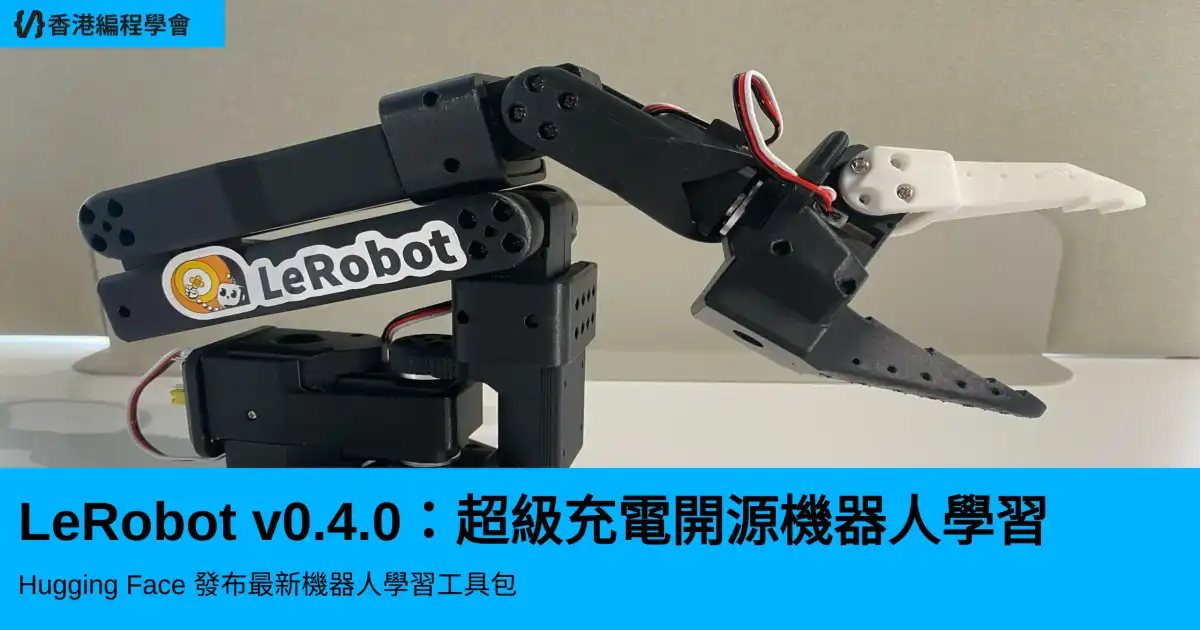
In addition to the Unitree G1, LeRobot v0.5.0 also supports other robots, including the OpenArm and OpenArm Mini, Earth Rover, OMX Robot, and SO-100/SO-101. The hardware ecosystem has been expanded to include CAN Bus motors, which allow for higher-performance actuators.
Background and Context
LeRobot is an open-source robotics framework that provides a platform for training and deploying policies on real-world robots. It's designed to be flexible and modular, allowing users to easily integrate new hardware and software components. LeRobot has been gaining popularity in recent years due to its ease of use and flexibility.
The Unitree G1 is a commercially available humanoid robot that's known for its high-quality dynamics and kinematics. It's a popular choice among researchers and developers who need a robust and reliable platform for testing and deploying their policies. LeRobot's support for the G1 marks an important milestone in the development of open-source robotics, as it allows users to take advantage of the robot's capabilities without having to invest in expensive hardware.
Why It Matters
The release of LeRobot v0.5.0 is significant because it expands the capabilities of the framework in every direction. The support for full humanoids, faster training and inference times, and improved simulation infrastructure make it an attractive choice for researchers and developers who need a robust and flexible platform for testing and deploying their policies.
The implications of this release are far-reaching, as it has the potential to accelerate the development of robotics and artificial intelligence. By providing a platform that's easy to use and flexible, LeRobot is making it possible for more people to contribute to the field and push the boundaries of what's possible with robotics and AI.
What Comes Next
The release of LeRobot v0.5.0 marks an important milestone in the development of open-source robotics. As the framework continues to evolve, it's likely that we'll see even more exciting developments in the field. The support for full humanoids and improved simulation infrastructure will make it easier for researchers and developers to test and deploy their policies on real-world robots.
The future of LeRobot looks bright, as the community continues to grow and contribute to the framework. With its ease of use and flexibility, LeRobot is poised to become a leading platform for robotics and AI development.
Key Facts
- LeRobot v0.5.0 includes support for full humanoids, including the Unitree G1.
- The release also includes faster training and inference times, thanks to improvements in data pipeline bottlenecks and parallel encoding.
- Improved simulation infrastructure allows users to train policies on realistic simulations of real-world environments.
- LeRobot v0.5.0 supports a wide range of robots, including the OpenArm and OpenArm Mini, Earth Rover, OMX Robot, and SO-100/SO-101.
- The release includes support for CAN Bus motors, which allow for higher-performance actuators.