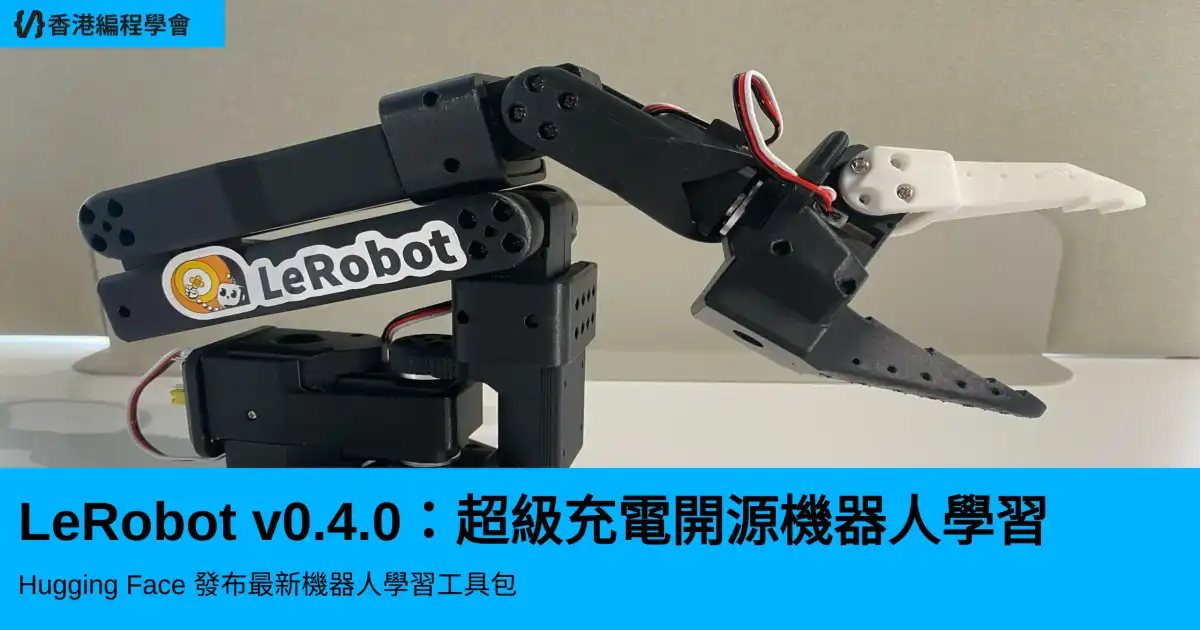
The LeRobot community has made significant strides in advancing robotic generalization through diverse and real-world data collection. Recent advances in Vision-Language-Action (VLA) models have enabled robots to perform a wide range of tasks, from simple commands like "grasp the cube" to complex activities like folding laundry or cleaning a table.
Background and Context
The key objective of these VLA models is to achieve generalization—the ability to execute tasks in new environments, with unfamiliar objects, and under varying conditions. However, progress in generalization is often hindered by the limited availability of diverse data. Physical Intelligence, a leading research group, highlights that the core challenge in robotics is not just dexterity but achieving multi-level generalization.
This involves understanding how to manipulate objects even if they are different from those previously encountered, grasping the semantic context of tasks (such as where to place items), and adapting skills to different scenarios. For example, a robot must know how to pick up a spoon by its handle or a plate by its edge, even if it has not seen those specific utensils before. It must also recognize that clothes belong in a hamper, not on a bed.
Why it Matters to the Industry
The LeRobot community's efforts to advance robotic generalization through diverse and real-world data collection have significant implications for the adult industry. The ability of robots to generalize is crucial for tasks such as content creation, where robots may need to perform complex actions in new environments with unfamiliar objects.
Moreover, the development of VLA models that can learn from diverse datasets has the potential to improve the efficiency and effectiveness of content moderation systems. By enabling robots to recognize and adapt to different scenarios, these systems can better detect and prevent the spread of prohibited content.
The LeRobot Community's Efforts
LeRobot is a platform dedicated to making robotics data collection more accessible. By enabling data collection in various settings—homes, schools, and other everyday environments—LeRobot seeks to gather a broader and more varied dataset. The platform has already seen rapid growth in the number of community-contributed datasets on the Hugging Face Hub.
Most contributions focus on robotic arms and manipulation tasks, but there is potential for expansion into other domains like autonomous vehicles, assistive robots, and mobile navigation. Several standout community-contributed datasets demonstrate the creativity and diversity possible in robotics.
What Comes Next
The LeRobot community's efforts to advance robotic generalization through diverse and real-world data collection are ongoing. The platform continues to grow, with new contributions and datasets being added regularly. As the community continues to work together to develop more robust and capable robots, we can expect to see significant advancements in areas such as content creation and moderation.
Key Facts
- The LeRobot community has made significant strides in advancing robotic generalization through diverse and real-world data collection.
- VLA models have enabled robots to perform a wide range of tasks, from simple commands like "grasp the cube" to complex activities like folding laundry or cleaning a table.
- Physical Intelligence highlights that the core challenge in robotics is not just dexterity but achieving multi-level generalization.
- LeRobot is a platform dedicated to making robotics data collection more accessible, with a focus on gathering a broader and more varied dataset.
- The LeRobot community's efforts have significant implications for the adult industry, particularly in areas such as content creation and moderation.
The future of robotic generalization is bright, thanks to the ongoing efforts of the LeRobot community. As we continue to push the boundaries of what is possible with robotics, we can expect to see significant advancements in areas such as content creation and moderation.