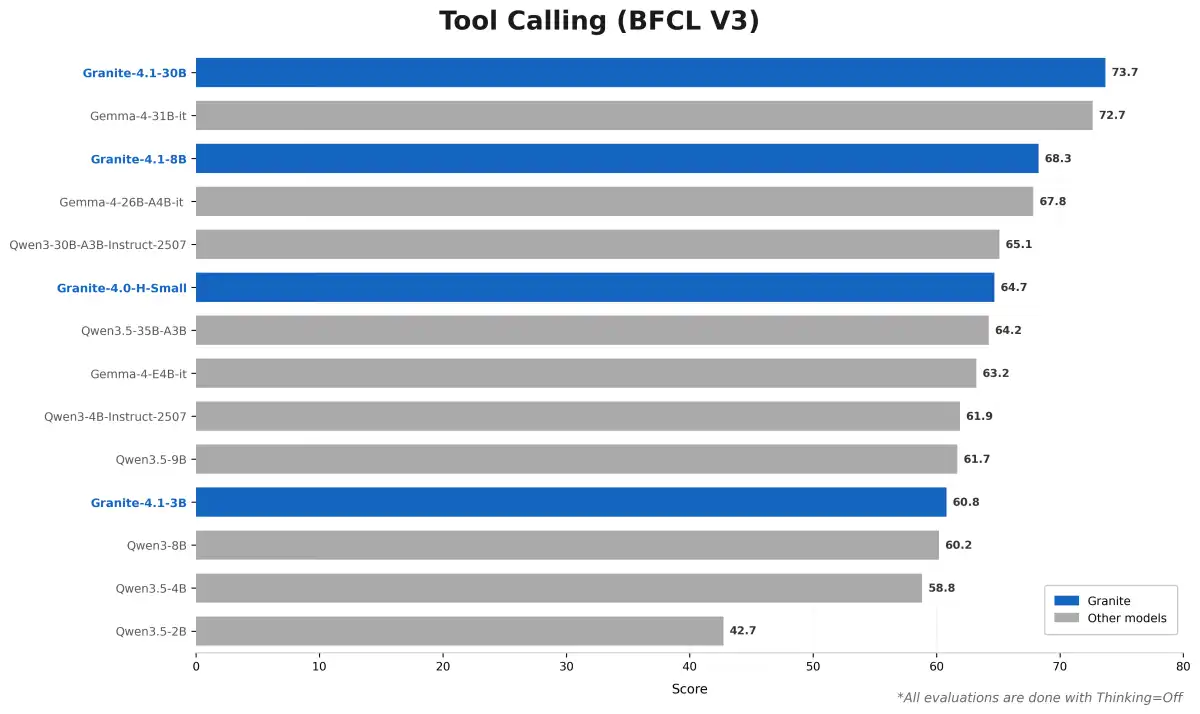
IBM has released its Granite 4.0 Nano family of AI models, designed for extreme efficiency and small enough to run on laptops or even directly in a web browser. This marks a strategic push toward smaller, more accessible AI for on-device and edge computing applications, challenging the industry's focus on massive, server-bound systems.
The Granite 4.0 Nano family includes four models, ranging from a tiny 350 million parameters to a more capable 1.5 billion parameter version. Their design makes them ideal for developers building applications on consumer hardware or at the edge, where cloud reliance is impractical. The goal is to empower a new class of AI applications that value privacy, low latency, and independence from costly data centers.
Background and Context
The Granite 4.0 Nano family is part of IBM's ongoing effort to develop powerful, useful models that don't require hundreds of billions of parameters to get the job done. The company has been working on improving training methodologies, pipelines, and data sets to achieve better performance with smaller models. This release includes variants benefiting from the Granite 4.0’s new, efficient hybrid architecture.
The smallest variants can operate comfortably on a modern laptop with 8-16GB of RAM. In a notable demonstration of their lightness, Joshua Lochner, a machine learning engineer at Hugging Face, confirmed that “the smallest ones can even run locally on your own web browser,” he said. This level of accessibility lowers the barrier to entry for developers and small businesses, enabling a shift toward local-first AI.
Why it Matters to the Industry
The release of the Granite 4.0 Nano family has significant implications for the adult industry. With smaller models that can run on laptops or in web browsers, developers can build applications that value privacy and low latency. This is particularly important for industries like adult entertainment, where data security and compliance are critical.
Additionally, the focus on edge computing and on-device applications opens up new possibilities for real-time moderation and content analysis. With smaller models that can run locally, developers can implement more efficient and effective moderation systems, reducing latency and improving user experience.
What Comes Next
The release of the Granite 4.0 Nano family is just the beginning of IBM's efforts to make AI more accessible and efficient. The company has stated that it will continue to grow the Granite 4.0 family and work to make AI a more effective tool for developers.
As the industry continues to evolve, we can expect to see more innovative applications of AI in adult entertainment. With smaller models that can run on laptops or in web browsers, developers will be able to build more efficient and effective moderation systems, improving user experience and reducing latency.
Key Facts
- The Granite 4.0 Nano family includes four models, ranging from a tiny 350 million parameters to a more capable 1.5 billion parameter version.
- The smallest variants can operate comfortably on a modern laptop with 8-16GB of RAM.
- The models are designed for edge computing and on-device applications, where cloud reliance is impractical.
- The goal is to empower a new class of AI applications that value privacy, low latency, and independence from costly data centers.
- The Granite 4.0 Nano family is part of IBM's ongoing effort to develop powerful, useful models that don't require hundreds of billions of parameters to get the job done.