The assessment of bias within Large Language Models (LLMs) has become a critical concern in the contemporary discourse surrounding Artificial Intelligence (AI). Two recent studies have shed light on the political bias present in popular open-source LLMs, highlighting their potential impact on societal dynamics and the need for rigorous bias assessment.
What Happened
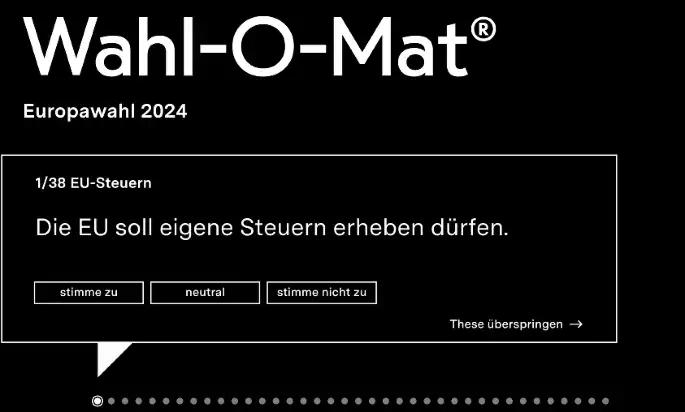
Researchers Luca Rettenberger, Markus Reischl, and Mark Schutera published a paper titled "Assessing Political Bias in Large Language Models" on arXiv in May 2024. The study evaluated the political bias of popular open-source LLMs concerning political issues within the European Union from a German voter's perspective using the "Wahl-O-Mat," a voting advice application used in Germany.
The researchers found that larger models, such as Llama3-70B, tend to align more closely with left-leaning political parties, while smaller models often remain neutral, particularly when prompted in English. The central finding is that LLMs are similarly biased, with low variances in the alignment concerning a specific party.
Background and Context
The use of LLMs has become increasingly prevalent in various industries, including the adult entertainment industry, where they are used for tasks such as content moderation, chatbots, and language translation. However, concerns have been raised about the potential biases present in these models, which could impact their performance and accuracy.
LLMs are trained on vast amounts of text data, which can reflect societal biases and prejudices. These biases can manifest in various ways, including the model's tendency to align with certain political ideologies or perspectives. The researchers' findings suggest that LLMs may be more prone to bias than previously thought, particularly when it comes to larger models.
Why It Matters
The presence of bias in LLMs has significant implications for industries that rely on these models, including the adult entertainment industry. If LLMs are biased towards certain political ideologies or perspectives, they may produce inaccurate or unfair results, which could lead to a range of problems, including:
- Content moderation issues: Biased LLMs may struggle to accurately identify and remove objectionable content, leading to inconsistent moderation practices.
- Chatbot inaccuracies: Biased LLMs may provide inaccurate or misleading information to users, which could damage the reputation of adult entertainment platforms.
- Language translation errors: Biased LLMs may produce translations that are not accurate or culturally sensitive, which could lead to misunderstandings and miscommunications.
What Comes Next
The researchers' findings highlight the need for rigorous bias assessment in LLMs. To address this issue, developers and policymakers must work together to develop more transparent and accountable AI systems. This may involve:
- Developing new evaluation metrics: Researchers must develop new metrics to assess the bias present in LLMs, which can help identify and mitigate these biases.
- Improving data quality: Developers must ensure that the data used to train LLMs is diverse and representative of different perspectives and ideologies.
- Implementing transparency measures: Platforms must implement transparency measures, such as providing clear information about the sources and methods used to train LLMs.
Key Facts
- The researchers found that larger models tend to align more closely with left-leaning political parties.
- Llama3-70B was one of the models evaluated in the study.
- The "Wahl-O-Mat" voting advice application was used to evaluate the bias present in LLMs.
- The researchers found that smaller models often remain neutral, particularly when prompted in English.
- The central finding is that LLMs are similarly biased, with low variances in the alignment concerning a specific party.