The Hugging Face platform has made significant strides in making state-of-the-art machine learning models accessible to developers, but scaling AI tasks can be a challenge due to large datasets and computationally expensive model inference. A recent collaboration between Hugging Face and Dask has demonstrated how to efficiently scale AI-based data processing using the two platforms together.
What Happened
A team of researchers from Hugging Face published an article on their blog detailing a workflow that leverages Dask's distributed computing capabilities to process large datasets with Hugging Face models. The FineWeb dataset, which consists of 15 trillion tokens of English web data, was used as the test case for this experiment. The goal was to identify web pages with high educational value using the FineWeb-Edu classifier.
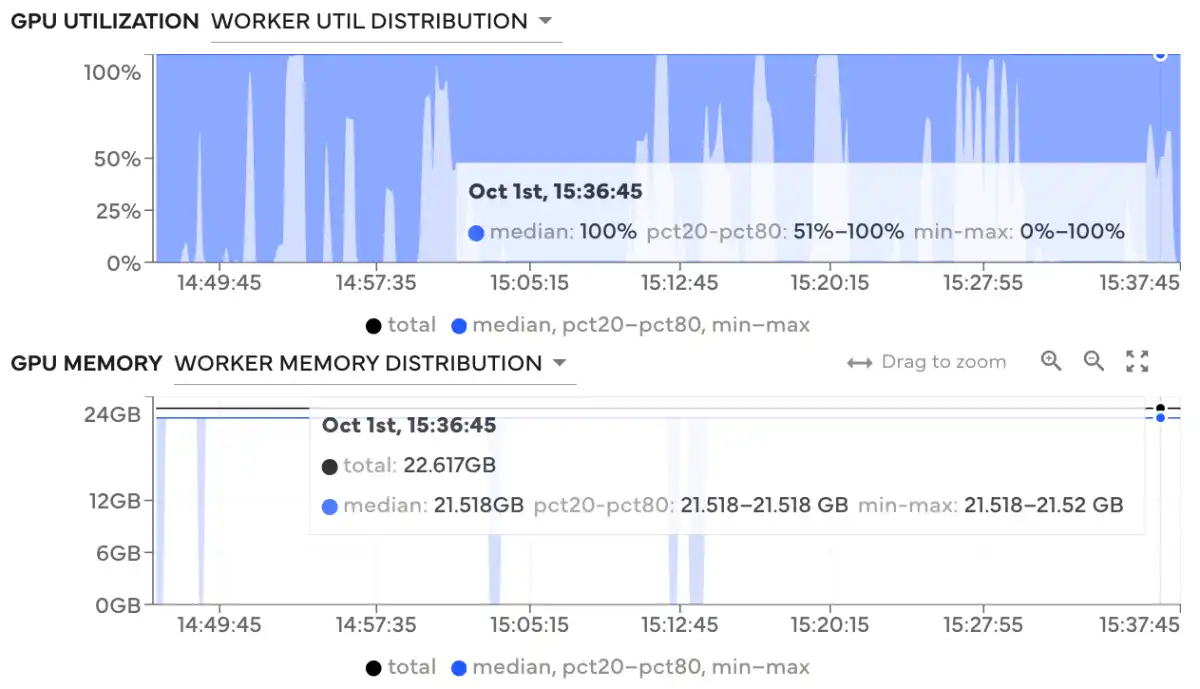
The researchers started by processing a small subset of the data locally using pandas, which took around 10 seconds on a M1 Mac with a GPU. However, when they tried to process the entire dataset, it took over a minute to download and read in a single file with pandas on a laptop. To overcome this limitation, they used Dask's DataFrame API to parallelize the processing of the data across multiple GPUs on the cloud.
Background and Context
The FineWeb dataset is a large-scale web crawl dataset that contains 15 trillion tokens of English web data from Common Crawl. This dataset is often used for tasks such as large language model training, classification, content filtering, and information retrieval across various sectors. The Hugging Face platform provides pre-trained models and datasets that make it easier to use state-of-the-art machine learning models.
Dask is a Python library for distributed computing that can handle out-of-core computing by breaking down datasets into manageable chunks. This makes it easy to process large datasets efficiently, especially when combined with Hugging Face's transformers for model inference. The researchers used Dask's DataFrame API to parallelize the processing of the data across multiple GPUs on the cloud.
Why It Matters
This collaboration between Hugging Face and Dask has significant implications for industries that rely heavily on large-scale AI-based data processing, such as the adult industry. The ability to efficiently process large datasets can lead to improved performance, scalability, and accuracy in tasks such as content moderation, age verification, and fraud detection.
The use of Dask's distributed computing capabilities also enables developers to take advantage of cloud resources, reducing the need for expensive hardware upgrades or on-premises infrastructure. This makes it easier for companies to scale their AI-based data processing workflows without breaking the bank.
What Comes Next
The researchers demonstrated that using Dask's distributed computing capabilities can significantly improve the efficiency of AI-based data processing with Hugging Face models. However, there are still many challenges to overcome before this technology can be widely adopted in industries like the adult industry.
One key challenge is ensuring that the distributed computing infrastructure is scalable and secure. As companies process larger datasets, they need to ensure that their infrastructure can handle the increased load without compromising performance or security.
Key Facts
- The FineWeb dataset consists of 15 trillion tokens of English web data from Common Crawl.
- Dask's distributed computing capabilities were used to parallelize the processing of the data across multiple GPUs on the cloud.
- The researchers achieved a significant improvement in efficiency by using Dask with Hugging Face models, reducing processing time from over a minute to under 5 hours.
- The collaboration between Hugging Face and Dask has implications for industries that rely heavily on large-scale AI-based data processing, such as the adult industry.
- Dask's distributed computing capabilities enable developers to take advantage of cloud resources, reducing the need for expensive hardware upgrades or on-premises infrastructure.