The Linux kernel has been hit by three separate vulnerabilities that allow local users to gain root access, compromising the security of default installations of several major distributions. The flaws, discovered by various researchers and disclosed publicly in recent weeks, have already seen working exploits circulating online, prompting administrators to apply vendor kernel updates without delay.
What Happened
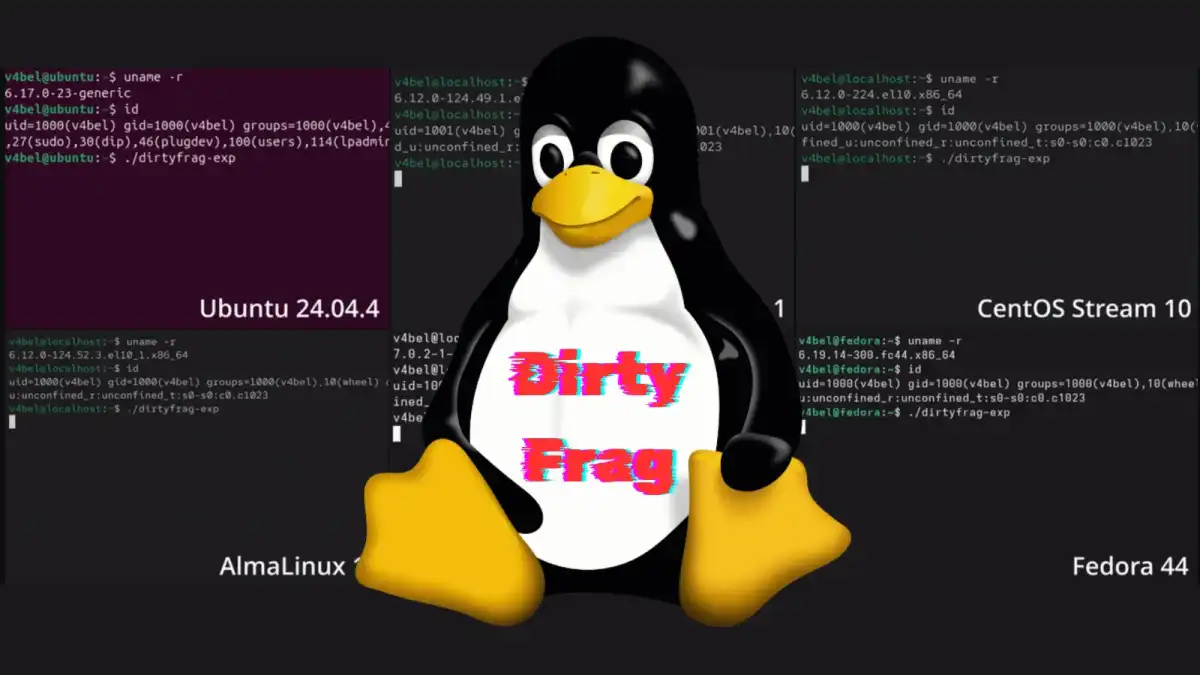
The first vulnerability, known as Dirty Frag (CVE-2026-31431), was discovered by security researcher Hyunwoo Kim (@v4bel) and targets the frag member of the kernel's struct sk_buff. The bug exploits the zero-copy send path where splice() plants a reference to a read-only page cache page into the frag slot of a sender-side skb, allowing an attacker to permanently modify the page cache in RAM.
The receiver-side kernel code then performs in-place cryptographic operations directly on top of that frag, resulting in a deterministic logic bug that requires no timing window and carries an extremely high success rate. The vulnerability has already seen a public exploit released, making it a pressing concern for administrators to patch their systems.
Background and Context
The Linux kernel is the foundation upon which many operating systems are built, including those used in the adult industry for streaming and webcam infrastructure, servers, and platforms. The kernel's role in managing system resources and providing a layer of abstraction between hardware and software makes it a critical component of any system.
However, as with any complex piece of software, vulnerabilities can arise from even small errors or oversights. In the case of Dirty Frag, the bug was discovered by exploiting a specific sequence of events that allows an attacker to manipulate the kernel's behavior and gain root access.
Why it Matters to the Industry
The Linux kernel vulnerabilities disclosed in recent weeks have significant implications for the adult industry. With working exploits already circulating online, administrators must apply vendor kernel updates without delay to prevent unprivileged users from gaining root access and compromising sensitive data or executing arbitrary commands as root.
For platforms and operators relying on Linux-based systems, this means ensuring that all kernel versions are up-to-date and patched against these vulnerabilities. Failure to do so could result in a loss of control over system resources, allowing attackers to exploit vulnerabilities and compromise the integrity of the platform or server.
What Comes Next
The Linux kernel community has already begun working on patches for these vulnerabilities, with upstream patches and distribution updates available. However, as Qualys noted in their advisory, the underlying technique used by the exploits is novel, and independent researchers have already achieved local root and published exploit material.
As a result, administrators must remain vigilant and continue to monitor their systems for any signs of exploitation or compromise. This may involve implementing additional security measures, such as monitoring system logs for suspicious activity or implementing intrusion detection and prevention systems (IDPS) to detect and block potential attacks.
Key Facts
- The Linux kernel has been hit by three separate vulnerabilities that allow local users to gain root access: Dirty Frag (CVE-2026-31431), nf_tables (CVE-2026-23111), and a logic flaw in the mainline Linux since November 2016 (v4.10-rc1).
- The flaws have already seen working exploits circulating online, prompting administrators to apply vendor kernel updates without delay.
- The vulnerabilities affect default installations of several major distributions, including those used in the adult industry for streaming and webcam infrastructure, servers, and platforms.
- Administrators must ensure that all kernel versions are up-to-date and patched against these vulnerabilities to prevent unprivileged users from gaining root access and compromising sensitive data or executing arbitrary commands as root.
- The Linux kernel community has already begun working on patches for these vulnerabilities, with upstream patches and distribution updates available.