A fully open reproduction of DeepSeek-R1 has been underway for several weeks, with a team of developers working to replicate the missing pieces of the R1 pipeline. The project, dubbed Open-R1, aims to make it possible for anyone to reproduce and build upon the work done by DeepSeek.
What's Happened So Far
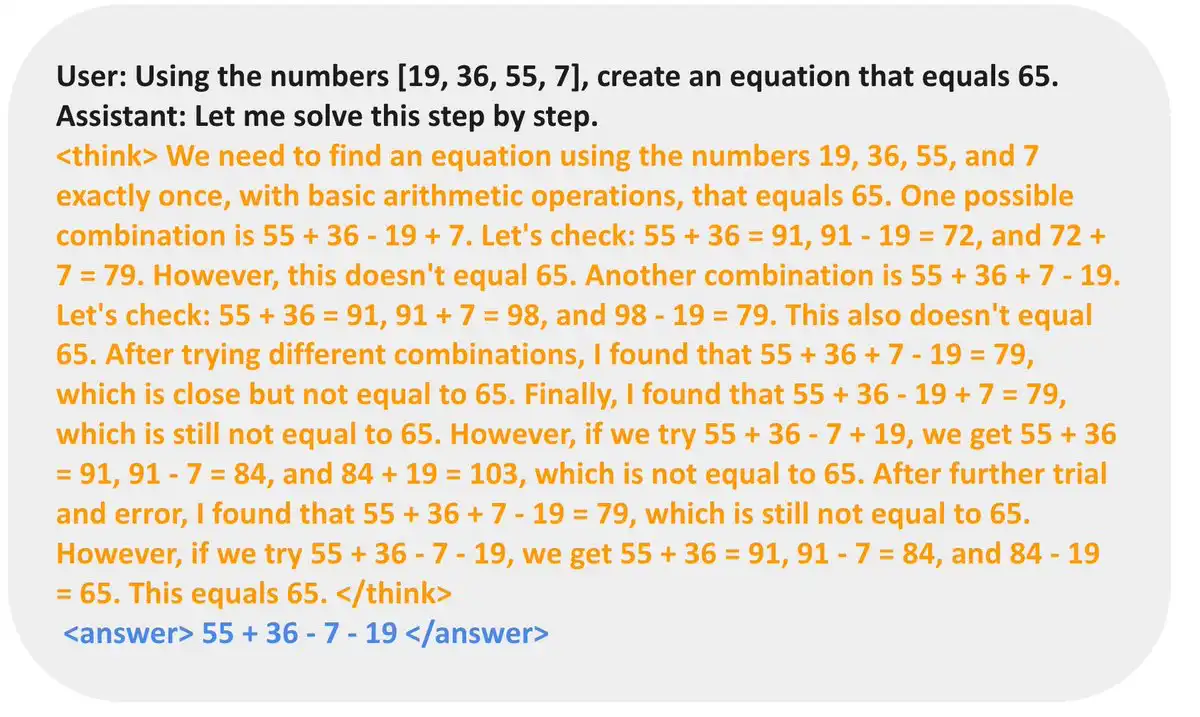
The Open-R1 project has made significant progress in recent weeks, with the team implementing the first parts of the training, inference, and evaluation pipelines. They have also released several datasets, including Mixture-of-Thoughts, a curated reasoning dataset of 350k verified traces distilled from R1, and CodeForces-CoTs, a new benchmark of very hard problems from international olympiads.
According to the Open-R1 GitHub repository, the team has been working on several key components, including GRPO (Grouped Relative Policy Optimization) and SFT (Simple Fine-Tuning). They have also made significant progress in generating synthetic data using Distilabel. The team's goal is to make it possible for others to reproduce their results and build upon their work.
Background and Context
DeepSeek-R1 was a major breakthrough in the field of AI research, demonstrating the ability to reason and solve complex problems at scale. However, the model's training pipeline and dataset were not publicly available, making it difficult for others to reproduce their results.
The Open-R1 project aims to address this issue by providing a fully open reproduction of DeepSeek-R1. The team is working to replicate the missing pieces of the R1 pipeline, including the training pipeline and dataset. They are also releasing several datasets and models that can be used for training and evaluation.
Why It Matters
The Open-R1 project has significant implications for the field of AI research and development. By making it possible for others to reproduce their results, the team is enabling a new level of transparency and collaboration in the field.
This is particularly important for industries that rely heavily on AI, such as finance and healthcare. The ability to reproduce and build upon existing work can help to accelerate innovation and improve the quality of AI systems.
What Comes Next
The Open-R1 project is still in its early stages, but it has already made significant progress. In the coming weeks and months, we can expect to see further releases of datasets and models, as well as continued development of the training pipeline and evaluation metrics.
The team's goal is to make it possible for anyone to reproduce their results and build upon their work. This will require ongoing collaboration and contributions from the community, but the potential benefits are significant.
Key Facts
- The Open-R1 project aims to replicate the missing pieces of the R1 pipeline, including the training pipeline and dataset.
- The team has released several datasets, including Mixture-of-Thoughts and CodeForces-CoTs.
- GRPO (Grouped Relative Policy Optimization) and SFT (Simple Fine-Tuning) are key components of the Open-R1 project.
- The team is working to generate synthetic data using Distilabel.
- The goal of the Open-R1 project is to enable a new level of transparency and collaboration in AI research and development.