A major partnership between Hugging Face and Google Cloud has expanded support for AI developers on Hugging Face's platform, offering native support for Tensor Processing Units (TPUs) on all open models sourced through Hugging Face. This move is expected to improve model access, infrastructure efficiency, and security for AI builders.
What Happened
The partnership between Hugging Face and Google Cloud aims to make open-source AI more accessible and easier to deploy on Google Cloud's infrastructure. According to a blog post by Ryan J. Salva, Senior Director of Product Management at Google Cloud, the collaboration will reduce Hugging Face model download times through Vertex AI and Google Kubernetes Engine. This is made possible by introducing a new gateway for Hugging Face repositories that caches models and datasets directly on Google Cloud.
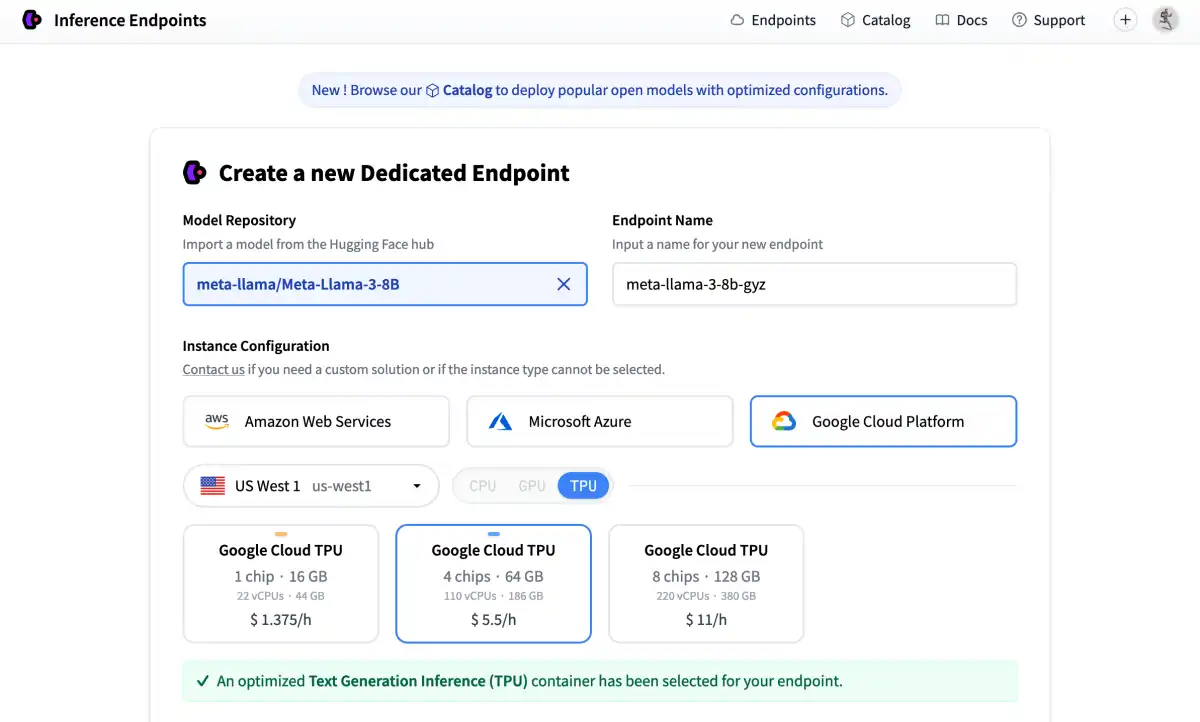
The partnership also includes native support for TPUs on all open models sourced through Hugging Face. This means developers can now deploy training and inference workloads on NVIDIA GPUs or TPUs with the same ease of deployment and support. Additionally, the companies are working together to bring Google Cloud's extensive security protocols to all Hugging Face models deployed through Vertex AI.
Background and Context
Hugging Face is a popular platform for hosting open-source AI models and datasets used by developers, researchers, and companies across the AI sector. The company has seen significant growth in recent years, with over 1,500 terabytes of open models and datasets downloaded and uploaded between Hugging Face and Google Cloud every day. This activity generates an estimated $1 billion in cloud spend annually.
Google Cloud's TPUs are custom-made AI hardware designed to accelerate deep learning workloads. They offer significant performance improvements over traditional GPUs, making them an attractive option for large-scale training and inference tasks. The partnership between Hugging Face and Google Cloud aims to simplify the adoption of TPUs for running open models on Google Cloud.
Why It Matters
The expanded partnership between Hugging Face and Google Cloud has significant implications for the adult industry, which relies heavily on AI-powered tools and infrastructure. The improved model access and infrastructure efficiency offered by this partnership will enable developers to build more complex and accurate models, leading to better performance and reduced latency.
The native support for TPUs on all open models sourced through Hugging Face will also simplify the adoption of TPUs for running open models on Google Cloud. This is particularly important for large-scale training and inference tasks, where TPUs offer significant performance improvements over traditional GPUs.
What Comes Next
The partnership between Hugging Face and Google Cloud is expected to continue evolving in the coming months. The companies have announced plans to introduce a Content Delivery Network (CDN) Gateway optimized for hosting Hugging Face models and datasets on Google Cloud's infrastructure. This will further improve model downloads and uploads, reducing latency and increasing supply chain robustness.
Hugging Face has also announced plans to provide native support for TPUs within its libraries, making it easier for developers to deploy training and inference workloads on TPUs with the same ease of deployment and support as GPUs. This will simplify the adoption of TPUs for running open models on Google Cloud, enabling developers to build more complex and accurate models.
Key Facts
- Hugging Face and Google Cloud have expanded their partnership to offer native support for TPUs on all open models sourced through Hugging Face.
- The partnership aims to improve model access, infrastructure efficiency, and security for AI builders.
- Google Cloud's TPUs are custom-made AI hardware designed to accelerate deep learning workloads.
- The partnership is expected to simplify the adoption of TPUs for running open models on Google Cloud.
- Hugging Face has announced plans to provide native support for TPUs within its libraries.