The adult industry's search engine optimization (SEO) landscape has undergone a significant shift as modern search engines prioritize user intent and contextual relevance over keyword matching. This change in approach requires adult-industry platforms and operators to adapt their SEO strategies from focusing on individual keywords to optimizing around broader topics.
What Happened
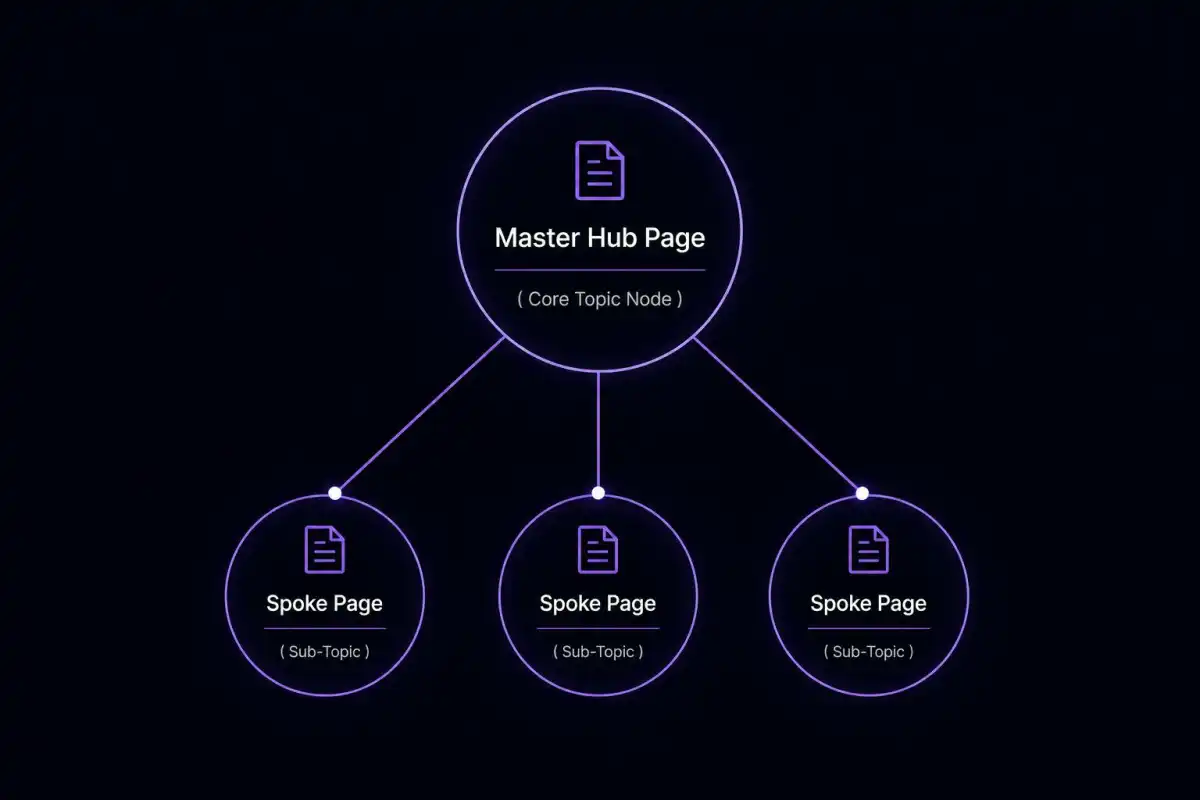
The traditional SEO workflow, which involves pulling a list of high-volume search terms, mapping pages to them, writing content that repeats those terms, and building links, is no longer effective. Search engines like Google now use semantic analysis to identify how topics interconnect, moving beyond single keywords. This shift has led to the rise of topic-focused SEO strategies, which prioritize creating authoritative pillar pages that cover entire topic nodes.
According to a recent article by Despina Gavoyannis, Senior SEO Specialist at Ahrefs, "Keywords aren't dead, but optimising for them one at a time is like trying to light up a galaxy one star at a time." Gavoyannis emphasizes the importance of understanding the difference between keywords and topics in SEO. Keywords are specific words or phrases typed by users, while topics represent the broader conceptual space those keywords belong to.
Background and Context
The shift from keyword matching to semantic understanding has been gradual but is now a fundamental aspect of modern search engines. Google's systems, along with other large language models used in AI-powered search, operate on what are called semantic spaces – environments where meaning is mapped mathematically so that related concepts end up close together and unrelated ones are far apart.
Vector embeddings, numerical representations of text, documents, multimedia content, and even brands, all plotted in multi-dimensional space based on how they relate to each other, play a crucial role in this process. This means that search engines can now understand the relationships between keywords and topics, making it possible for them to rank content contextually within broader topics.
Why It Matters to the Industry
The adult industry's SEO landscape has been heavily influenced by the traditional keyword-focused approach. However, with the rise of topic-focused strategies, platforms and operators must adapt to remain competitive. By prioritizing topics over keywords, adult-industry businesses can establish topical authority, create rich content that signals trustworthiness to search engines, and ultimately drive more traffic and conversions.
Violetta Bonenkamp, CEO of Fe/male Switch and CADChain, argues that "SEO should be treated as a thought map; not a scavenger hunt. Your content needs to occupy the user's entire knowledge framework, not just light up a scattered collection of stars." This approach requires adult-industry businesses to think more strategically about how topics behave and how they can create authoritative pillar pages that cover entire topic nodes.
What Comes Next
The shift from keyword-focused to topic-focused SEO strategies is not a one-time change but an ongoing process. Adult-industry platforms and operators must continue to adapt their approaches as search engines evolve and new technologies emerge. By prioritizing topics over keywords, businesses can stay ahead of the curve and maintain their competitive edge in the ever-changing landscape of adult industry SEO.
Key Facts
- Modern search engines prioritize user intent and contextual relevance over keyword matching.
- Topic-focused SEO strategies prioritize creating authoritative pillar pages that cover entire topic nodes.
- Keywords are specific words or phrases typed by users, while topics represent the broader conceptual space those keywords belong to.
- Vector embeddings play a crucial role in semantic understanding and ranking content contextually within broader topics.
- Adult-industry businesses must adapt their SEO strategies from focusing on individual keywords to optimizing around broader topics to remain competitive.
The adult industry's search engine optimization landscape has undergone a significant shift, requiring platforms and operators to adapt their approaches from keyword-focused to topic-focused strategies. By prioritizing topics over keywords, businesses can establish topical authority, create rich content that signals trustworthiness to search engines, and ultimately drive more traffic and conversions.