The concept of focus keywords has been a cornerstone of search engine optimization (SEO) for years, guiding content creators and marketers to optimize their pages for specific terms. However, as technology continues to evolve, especially with the rise of artificial intelligence (AI), the importance of focus keywords remains unchanged. In fact, understanding how to choose the right focus keyword is more crucial than ever in today's digital landscape.
What are Focus Keywords?
A focus keyword is the main search term you want a specific page to rank for in search engines. It's the answer to the question: "If someone searches for one thing and lands on this page, what should that thing be?" The focus keyword serves as the foundation of every On-Page SEO decision made on a page, including the title, headings, URL, content structure, and more. Choosing the wrong focus keyword can lead to optimizing a page nobody ever finds, while selecting the right one builds a direct path between your page and people actively looking for what it covers.
It's essential to understand that a focus keyword is not just a box to check; it's a strategic decision that requires careful consideration. The main search term you choose should match what your page actually covers and what readers are searching for. For instance, if you're writing a guide about brewing coffee at home, your focus keyword might be "how to make pour over coffee," not just "coffee" or "brewing." This distinction is crucial because your focus keyword is not the only term you'll rank for; a well-optimized page earns rankings for dozens or even hundreds of related variations naturally.
Why Focus Keywords Matter
Focus keywords matter for three primary reasons. Firstly, they give your content clarity by forcing you to define what your page is actually about. Without a focus keyword, content tends to drift, covering too much and ranking for nothing. A clear focus keyword keeps you on track, ensuring every section, heading, example ties back to that central topic.
Secondly, focus keywords guide your optimization efforts by providing direction for where to place the term – in the title, headings, URL, content structure, and more. This ensures a focused approach to SEO rather than random keyword sprinkling. Lastly, focus keywords give you a measurement baseline, allowing you to track whether your SEO is working by monitoring if you rank for your focus keyword.
Choosing the Right Focus Keyword
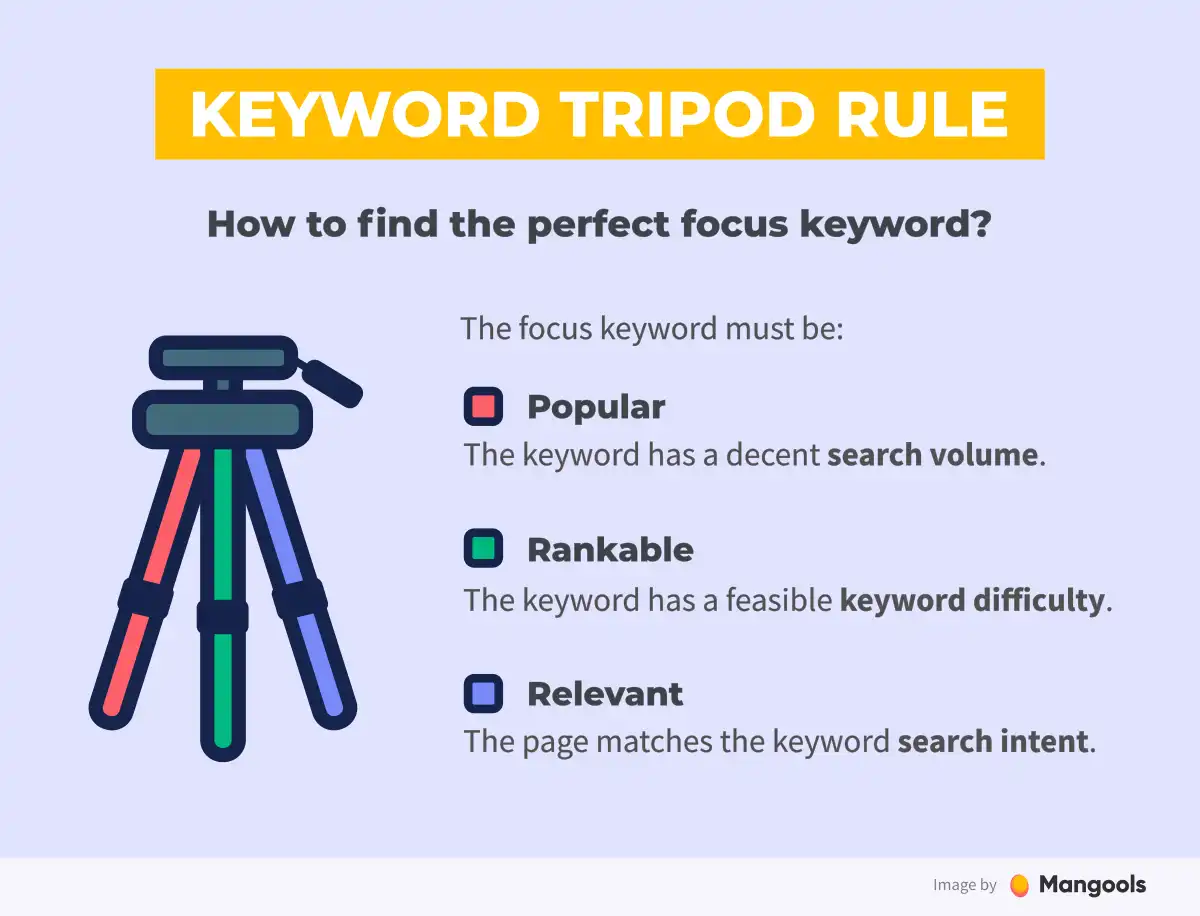
The process of choosing a focus keyword involves several steps. Firstly, find keyword ideas using tools like Ahrefs or Semrush, competitor research, and brainstorming. Then, check the numbers: volume, difficulty, traffic potential, and intent. Validate against the SERP to confirm you can compete for that term.
It's also crucial to use one focus keyword per page strategically. Placing it in key areas like the title tag, heading, text, and URL slug is essential. However, avoid over-optimization by not stuffing the keyword everywhere or sacrificing natural writing for exact-match placement.
Common Focus Keyword Mistakes
Avoid common mistakes when choosing focus keywords. These include choosing terms that are too broad, ignoring search intent, targeting the same keyword on multiple pages (keyword cannibalization), obsessing over exact match, and targeting keywords you can't compete for.
Key Facts:
- A focus keyword is the main search term you want a specific page to rank for in search engines.
- Choosing the wrong focus keyword can lead to optimizing a page nobody ever finds.
- A well-optimized page earns rankings for dozens or even hundreds of related variations naturally.
- The focus keyword is not just a box to check; it's a strategic decision that requires careful consideration.
- Focus keywords guide your optimization efforts and provide direction for where to place the term.
Conclusion
In conclusion, understanding how to choose the right focus keyword is crucial in today's digital landscape. By following the steps outlined above and avoiding common mistakes, you can optimize your pages effectively and improve your search engine rankings. Remember, a focus keyword is not just a term; it's a strategic decision that requires careful consideration.