Preview · this article is in the editorial review queue and is not yet approved for publish.
Review & approve →
New research reveals optimal prompt lengths and processing techniques for large language models, crucial for adult industry platforms seeking to enhance user experiences.
Large Language Model Performance Optimized for Adult Industry Platforms
Recent research has shed light on the optimal prompt length and processing techniques for large language models (LLMs), crucial for adult industry platforms that rely heavily on these AI-powered tools. A series of studies and articles have explored the impact of prompt length, token count, and context management on LLM performance, providing valuable insights for platform operators seeking to optimize their services.
Background and Context
Large language models have revolutionized the way adult industry platforms interact with users, enabling more efficient and effective content generation. However, as input and context length increase, so do the stakes: prompt design, prompt length, and effective context management now dictate whether a model's performance remains robust or falls prey to performance degradation, hallucination, or information overload. Marketers, strategists, and AI professionals alike must understand exactly how prompt length affects LLM performance.
Research has shown that optimal prompt length varies depending on the task complexity. For simple tasks, such as summaries or brief explanations, a prompt length of 50-100 words is sufficient. However, for more complex multi-part tasks, a longer prompt length of 300-500 words may be required. Exceeding this threshold can lead to diminishing returns in terms of output quality.
Why It Matters to the Industry
The adult industry relies heavily on LLMs for content generation, moderation, and customer support. Optimizing prompt length and processing techniques is crucial for ensuring seamless user experiences, reducing latency, and minimizing costs. By understanding how prompt length affects LLM performance, platform operators can fine-tune their services to meet the demands of their users.
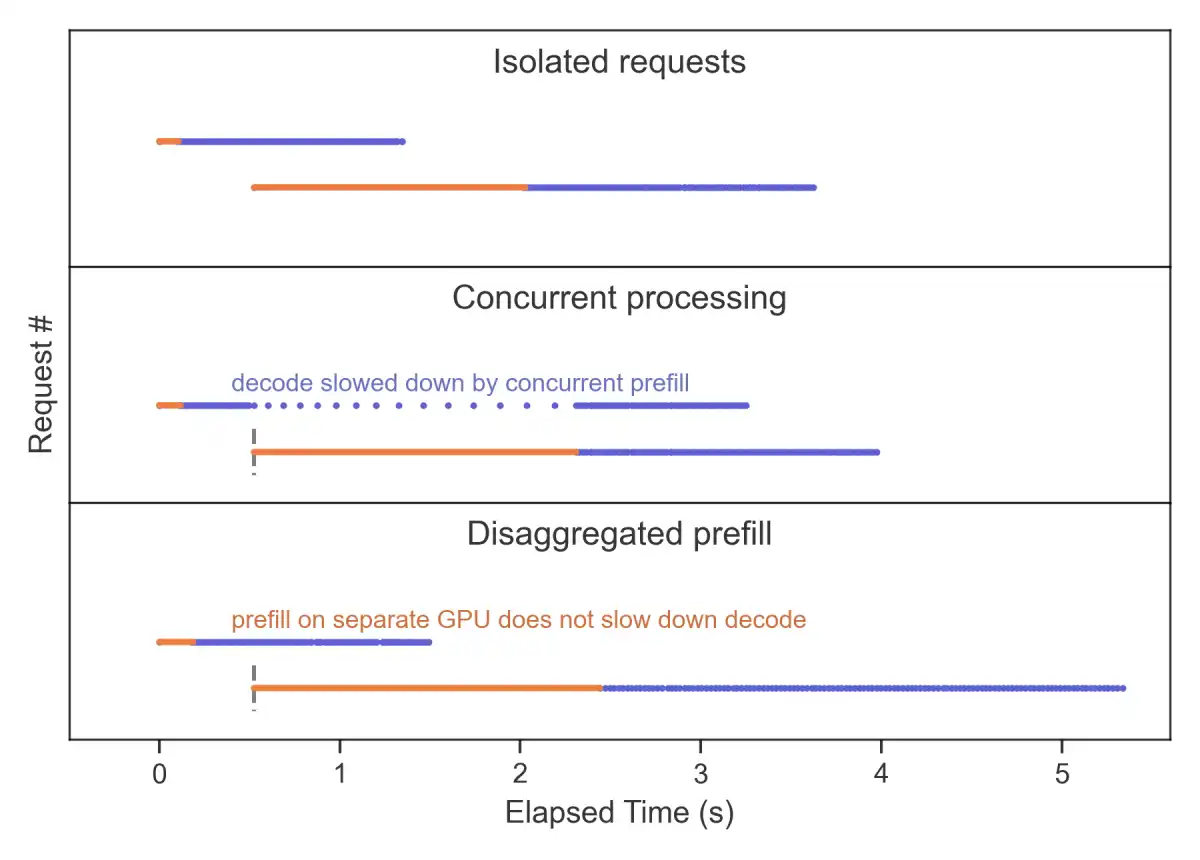
One key finding from recent research is that concurrent processing of prefill and decode stages on the same GPUs can lead to a fundamental flaw: token generation slowed down by parallel prefills. This issue can be mitigated by separating prefill and decode into different GPU operations, a strategy known as "disaggregated prefill." While this approach requires additional resources and may not increase total throughput, it can significantly improve latency and overall performance.
What Comes Next
As the adult industry continues to adopt LLMs for various applications, understanding optimal prompt length and processing techniques will become increasingly important. Platform operators must stay up-to-date with the latest research and developments in this field to ensure their services remain competitive and user-friendly.
Key Facts
- Optimal prompt length varies depending on task complexity: 50-100 words for simple tasks, 300-500 words for complex multi-part tasks.
- Exceeding the optimal prompt length threshold can lead to diminishing returns in terms of output quality.
- Concurrent processing of prefill and decode stages on the same GPUs can lead to token generation slowed down by parallel prefills.
- Disaggregated prefill, separating prefill and decode into different GPU operations, can mitigate this issue and improve latency.
- Optimizing prompt length and processing techniques is crucial for ensuring seamless user experiences, reducing latency, and minimizing costs in the adult industry.
By embracing these findings and adapting their services accordingly, adult industry platforms can unlock the full potential of LLMs and provide users with a more efficient, effective, and enjoyable experience.