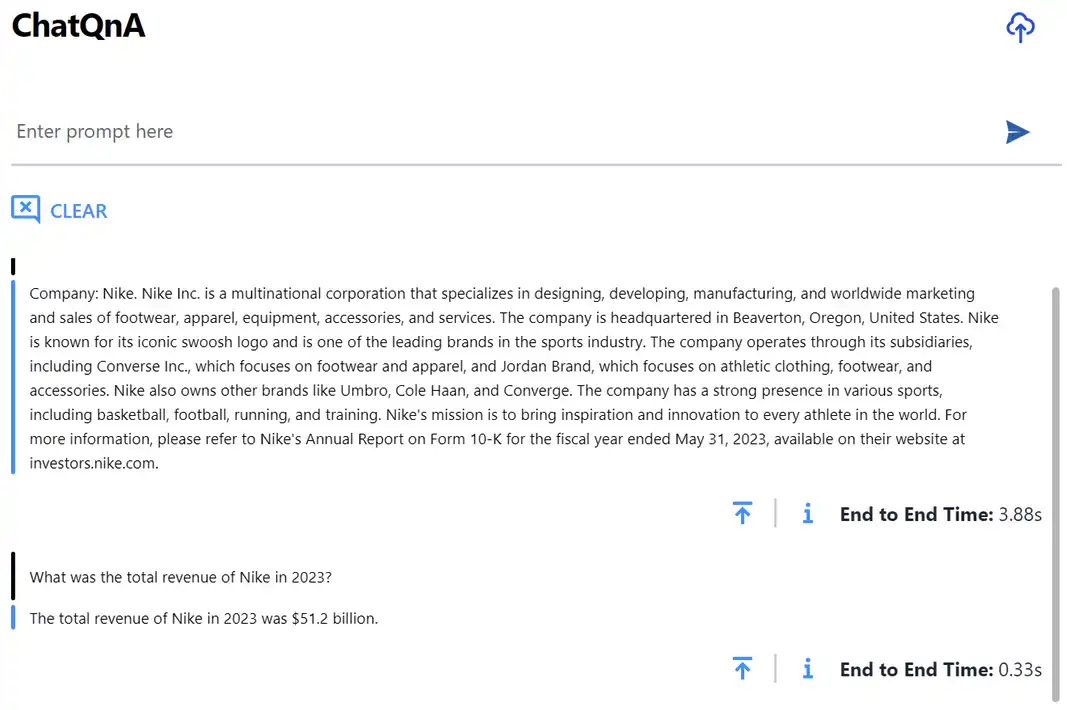
Intel has released a guide on building cost-efficient enterprise Retrieval-Augmented Generation (RAG) applications using its Gaudi 2 AI accelerators and Xeon CPUs. The guide, developed in collaboration with Hugging Face, provides a detailed "how-to" guide for creating vector databases, running high-performance chat models, and optimizing AI applications.
The blog post explains how Intel's Gaudi 2 AI accelerators and Xeon CPUs can significantly enhance enterprise performance by accelerating deep learning training and inference. The guide covers the use of LangChain, an open-source framework designed to simplify the creation of AI applications with Large Language Models (LLMs), and provides template-based solutions for building RAG applications.
Background and Context
RAG is a technique that enhances text generation by incorporating fresh domain knowledge stored in an external datastore. This approach has gained popularity in recent years due to its ability to improve the accuracy and performance of AI models. However, implementing RAG requires significant computational resources and expertise, making it challenging for enterprises to adopt.
Intel's Gaudi 2 AI accelerators are designed to accelerate deep learning training and inference in the data center and cloud. The accelerators provide a high-performance computing platform that can be used to run complex AI workloads, including RAG applications. In addition, Intel's Xeon CPUs offer a scalable and efficient processing solution for running vector databases and embedding models.
Why it Matters to the Industry
The release of this guide is significant for the adult industry as it provides a cost-efficient solution for building high-performance RAG applications. The use of Intel's Gaudi 2 AI accelerators and Xeon CPUs can help enterprises reduce their computational costs while improving the accuracy and performance of their AI models.
Furthermore, the guide's focus on LangChain and template-based solutions makes it easier for developers to build RAG applications without requiring extensive expertise in AI development. This democratization of AI development can lead to increased adoption and innovation in the industry.
What Comes Next
The release of this guide is just the beginning, as Intel continues to develop and optimize its Gaudi 2 AI accelerators and Xeon CPUs for enterprise use cases. The company has already released several tools and libraries that can be used to build RAG applications, including the Optimum Habana library, which provides an interface between Hugging Face's Transformers and Diffusers libraries and Intel's Gaudi accelerators.
Additionally, Intel is working with industry partners to develop more advanced AI workloads and use cases for its Gaudi 2 AI accelerators. This includes collaborations with companies like Hugging Face to develop new tools and libraries that can be used to build RAG applications.
Key Facts
- Intel has released a guide on building cost-efficient enterprise RAG applications using its Gaudi 2 AI accelerators and Xeon CPUs.
- The guide provides a detailed "how-to" guide for creating vector databases, running high-performance chat models, and optimizing AI applications.
- LangChain is an open-source framework designed to simplify the creation of AI applications with LLMs.
- Intel's Gaudi 2 AI accelerators are designed to accelerate deep learning training and inference in the data center and cloud.
- The Optimum Habana library provides an interface between Hugging Face's Transformers and Diffusers libraries and Intel's Gaudi accelerators.
In conclusion, the release of this guide is a significant step forward for the adult industry as it provides a cost-efficient solution for building high-performance RAG applications. The use of Intel's Gaudi 2 AI accelerators and Xeon CPUs can help enterprises reduce their computational costs while improving the accuracy and performance of their AI models.