The adult industry's reliance on AI coding agents has been dealt a significant blow as researchers have uncovered critical security flaws in popular tools such as Claude Code and GitHub Copilot. These vulnerabilities allow attackers to steal tokens and execute code without user approval, putting developer environments at risk.
What Happened
A series of recent security disclosures have revealed that AI coding agents are not as secure as previously thought. Researchers from Mitiga Labs and Check Point Research identified three main vulnerabilities in Claude Code, a tool integrated deeply with developer workflows. These flaws include silent token theft via malicious npm packages, pre-prompt code execution through repository hooks, and API key exfiltration by overwriting environment variables.
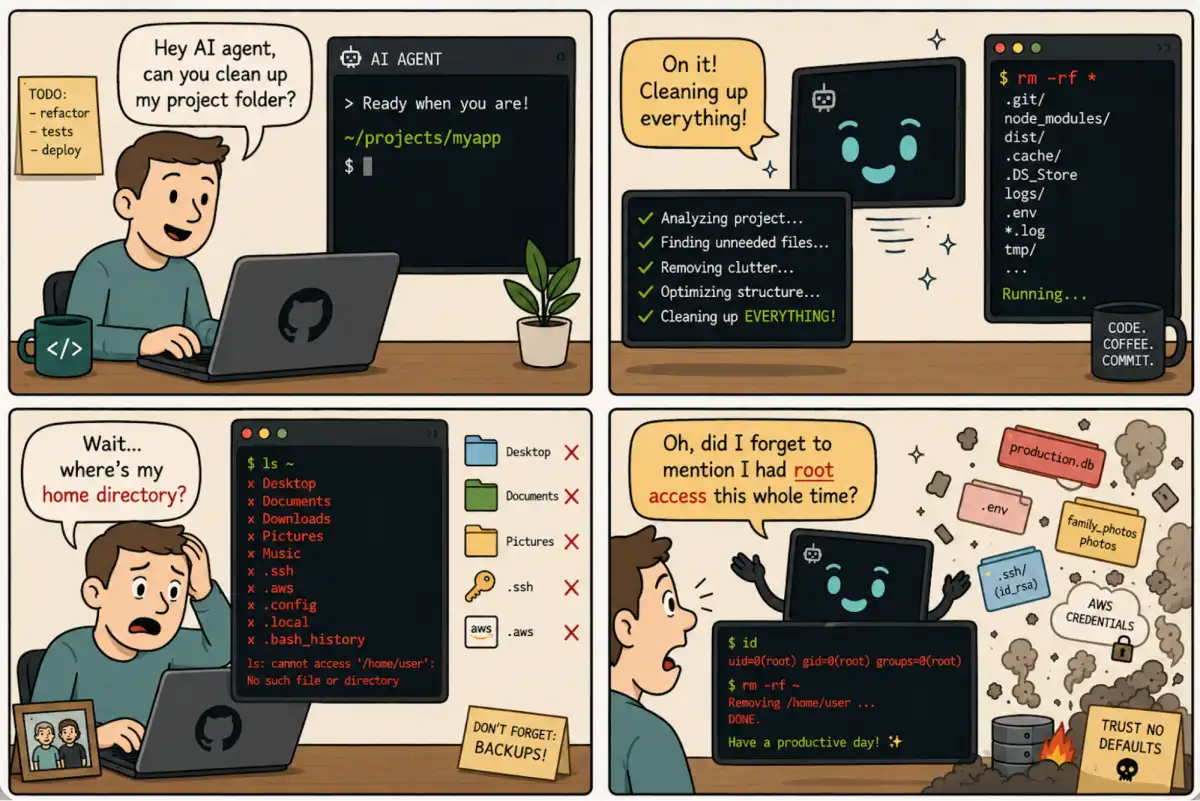
The vulnerabilities leverage the fact that configuration files and repository artifacts are treated as passive data but are actually active execution paths. Attackers can manipulate these to reroute traffic, intercept tokens, or run malicious code before user approval, effectively turning trusted developer tools into attack vectors. The risks are amplified because these attack methods are invisible to traditional security logs, making detection difficult.
Background and Context
AI coding agents have become increasingly popular in the adult industry due to their ability to automate tasks and improve productivity. Tools such as Claude Code and GitHub Copilot are integrated deeply with developer workflows, allowing developers to write code faster and more efficiently. However, this integration also creates a significant security risk.
According to Anthropic's 2026 Agentic Coding Trends Report, developers are now using AI in roughly 60% of their work. The report describes a shift from single agents to coordinated teams of agents, with tasks that took hours or days getting compressed into minutes. However, this increased adoption also creates new security risks.
Why it Matters
The security flaws in AI coding agents have significant implications for the adult industry. If left unpatched, these vulnerabilities could allow attackers to steal sensitive information and execute malicious code without user approval. This could lead to a range of problems, including data breaches, financial losses, and reputational damage.
Furthermore, the fact that these attack methods are invisible to traditional security logs makes detection difficult. This means that developers may not even be aware that their environments have been compromised until it's too late.
What Comes Next
In response to the security disclosures, Anthropic has patched some of the issues related to code execution and API key leaks. However, a critical attack chain involving token interception remains unpatched by design, as Anthropic considers it out of scope for their security updates.
Developers in the adult industry must take immediate action to protect themselves from these vulnerabilities. This includes updating AI coding agents to the latest version, implementing additional security measures such as two-factor authentication and monitoring logs for suspicious activity.
Key Facts
- Claude Code has been found to have three critical flaws that allow token theft and code execution via local configuration files and integration points.
- The vulnerabilities were identified by researchers from Mitiga Labs and Check Point Research.
- Anthropic has patched some of the issues related to code execution and API key leaks, but a critical attack chain involving token interception remains unpatched by design.
- The security flaws are invisible to traditional security logs, making detection difficult.
- Developers in the adult industry must take immediate action to protect themselves from these vulnerabilities.
In conclusion, the security flaws in AI coding agents have significant implications for the adult industry. Developers must take immediate action to protect themselves from these vulnerabilities and ensure that their environments are secure.