A recent spate of security incidents involving AI coding agents has exposed decades-old shell injection risks, highlighting the need for robust security measures to protect against supply chain attacks. The Model Context Protocol (MCP) has emerged as a key vulnerability in AI agent infrastructure, with multiple high-profile breaches attributed to its weaknesses.
What Happened
A series of incidents has brought attention to the security risks associated with AI coding agents. In January 2026, Check Point Research disclosed remote code execution in Claude Code through poisoned repository config files. Antiy CERT confirmed 1,184 malicious skills across ClawHub, the marketplace for the OpenClaw AI agent framework. Trend Micro found 492 MCP servers exposed to the internet with zero authentication. The Pentagon designated Anthropic a "supply chain risk," the first time an American company has received this classification.
The incidents have been linked to the Model Context Protocol (MCP), which is used in various AI agent frameworks, including OpenClaw and Claude Code. The MCP allows for the sharing of code and models between agents, but it also creates a vulnerability that can be exploited by attackers. The breaches have resulted in significant damage, including API key exfiltration, remote code execution, and exposure of sensitive data.
Background and Context
The use of AI coding agents has become increasingly prevalent in recent years, with many organizations adopting these tools to automate tasks and improve efficiency. However, the security risks associated with AI agent infrastructure have been largely overlooked until now. The Model Context Protocol (MCP) was designed to facilitate the sharing of code and models between agents, but it has created a vulnerability that can be exploited by attackers.
The MCP is used in various AI agent frameworks, including OpenClaw and Claude Code. These frameworks allow developers to create and share AI-powered tools, but they also introduce security risks if not properly secured. The breaches attributed to the MCP have highlighted the need for robust security measures to protect against supply chain attacks.
Why it Matters to the Industry
The recent security incidents involving AI coding agents have significant implications for the adult industry. Many platforms and operators rely on AI-powered tools to manage content, moderate interactions, and ensure compliance with regulations. However, these tools are only as secure as their underlying infrastructure.
The Model Context Protocol (MCP) vulnerability has exposed decades-old shell injection risks, which can be exploited by attackers to gain unauthorized access to sensitive data. This has significant implications for the adult industry, where data protection and security are critical concerns. The breaches attributed to the MCP have highlighted the need for robust security measures to protect against supply chain attacks.
What Comes Next
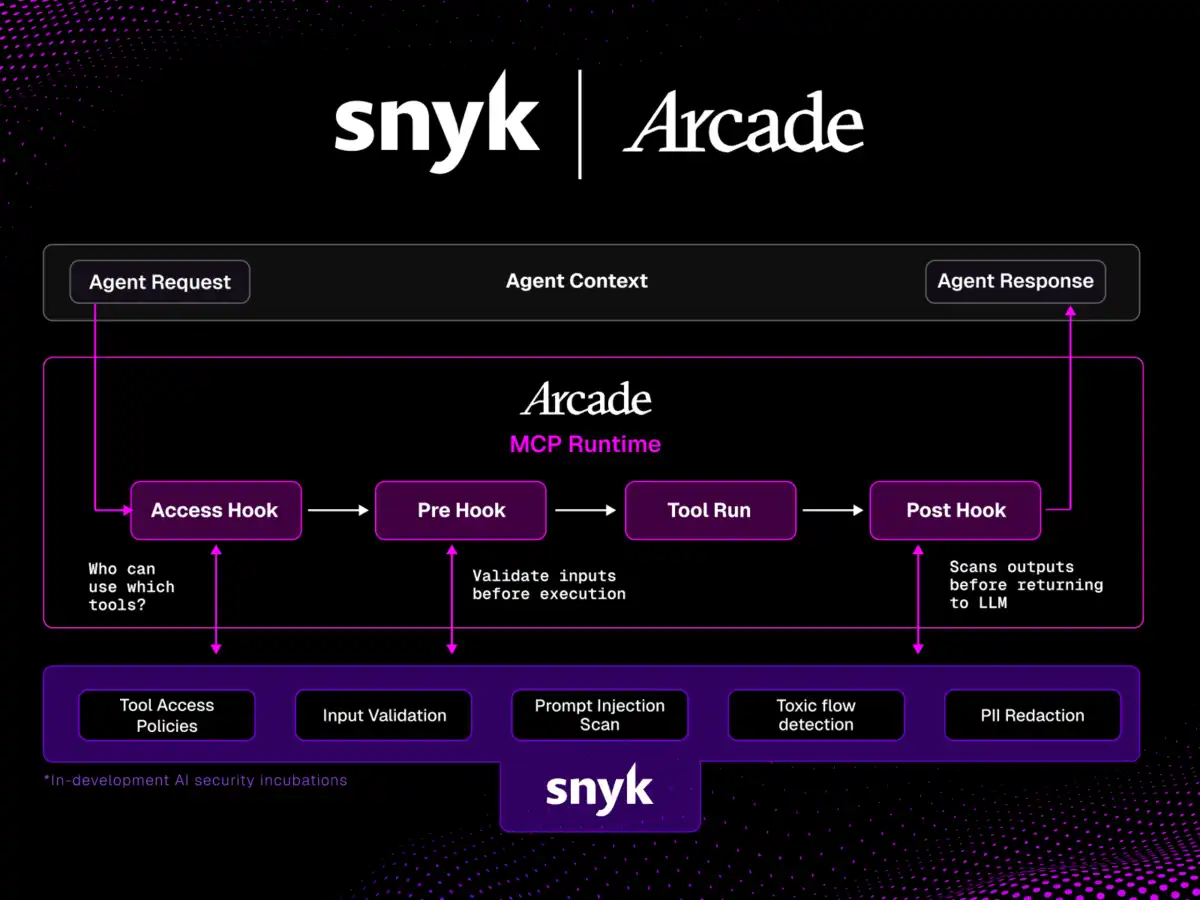
The recent security incidents involving AI coding agents have sparked a renewed focus on AI agent security. Many organizations are re-evaluating their security protocols and implementing new measures to protect against supply chain attacks. The Model Context Protocol (MCP) vulnerability has highlighted the need for robust security measures, including guardrails and contextual access controls.
Guardrails are being developed by companies like Snyk, which is working on a feature called Contextual Access. This feature will allow AI agents to do whatever they want, as long as every action they take passes through a security checkpoint before it happens. The goal is to create an architecture that lets AI agents operate securely and efficiently.
Key Facts
- Decades-old shell injection risks have been exposed in AI coding agents, highlighting the need for robust security measures.
- The Model Context Protocol (MCP) has emerged as a key vulnerability in AI agent infrastructure.
- Multiple high-profile breaches have been attributed to the MCP, including remote code execution and API key exfiltration.
- The Pentagon designated Anthropic a "supply chain risk," the first time an American company has received this classification.
- Guardrails are being developed by companies like Snyk to protect against supply chain attacks.
The recent security incidents involving AI coding agents have significant implications for the adult industry. The Model Context Protocol (MCP) vulnerability has exposed decades-old shell injection risks, which can be exploited by attackers to gain unauthorized access to sensitive data. This has highlighted the need for robust security measures to protect against supply chain attacks.