The open-source community has made significant strides in developing a powerful tool for desktop automation and AI agent development: ScreenEnv. This Python library allows users to create isolated Ubuntu desktop environments within Docker containers, making it easier to deploy GUI agents that can interact with real applications.
What is ScreenEnv?
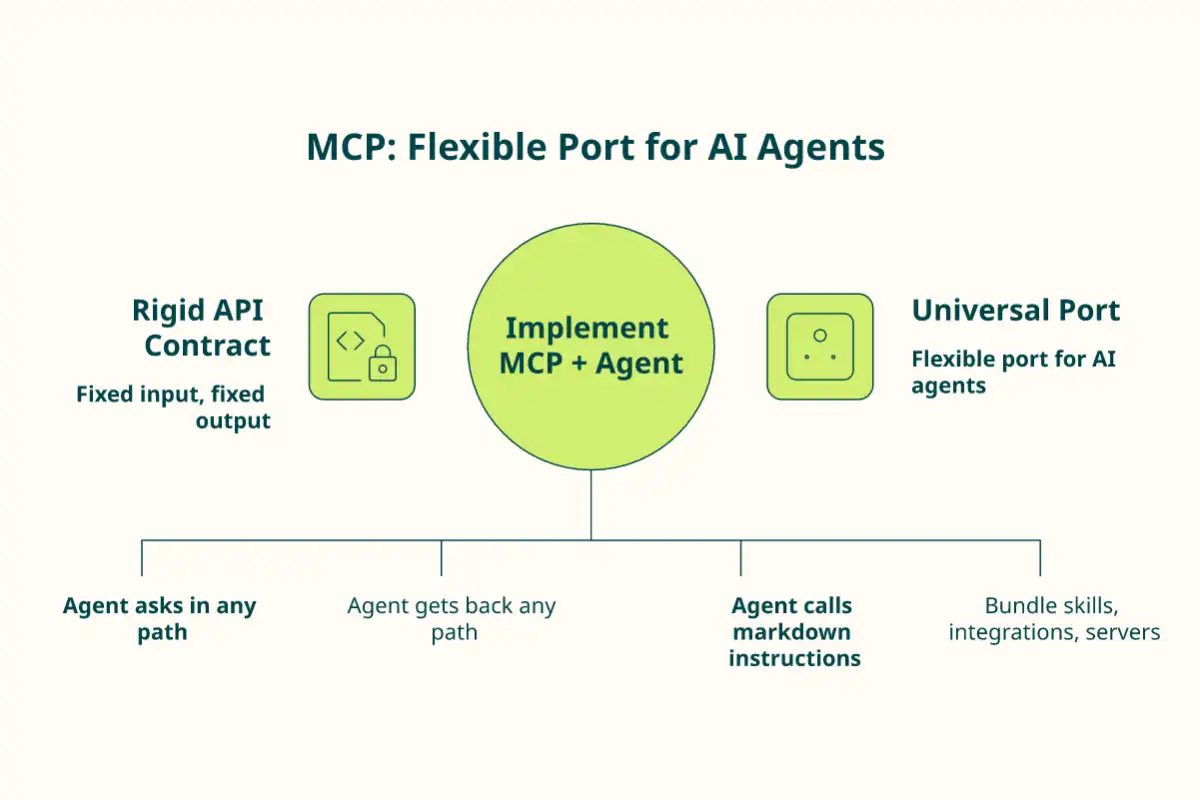
ScreenEnv provides a sandboxed desktop environment that runs in a Docker container, giving developers full control over the desktop experience. This includes launching applications, organizing windows, handling files, executing terminal commands, and recording the entire session. The library also supports two integration modes: direct Sandbox API for fine-grained control and Model Context Protocol (MCP) for AI systems.
According to the ScreenEnv documentation, the library is designed to simplify desktop automation and AI agent development by providing a seamless way to interact with real applications. With ScreenEnv, developers can automate mouse and keyboard actions, manage windows, launch software, execute terminal commands, and record desktop sessions all securely contained within Docker.
Background and Context
The need for powerful tools like ScreenEnv arises from the growing demand for AI agents that can interact with desktop applications. Virtual machines are cumbersome, and traditional automation scripts often break with the slightest system change. Linux has long been the invisible backbone of the internet, powering most servers, websites, and cloud giants. However, despite its dominance in other areas, Linux has struggled to gain traction on personal desktops.
Recently, there has been a shift towards using Linux as the platform for AI agents. This is due to fundamental technical and economic advantages, including open-source licensing fees, hackability by design, and scalability. The "Year of the Linux Desktop" may finally be here, but it's not for humans – it's for AI agents.
Why It Matters to the Industry
The development of ScreenEnv is significant for the adult industry because it provides a powerful tool for automating desktop tasks and deploying GUI agents. This can lead to increased efficiency, reduced costs, and improved accuracy in tasks such as content creation, moderation, and age verification.
ScreenEnv's support for MCP integration also makes it an attractive solution for AI-powered applications that require secure, remote control of the sandboxed desktop. This is particularly relevant for distributed AI systems or collaborative research projects.
What Comes Next?
The future of ScreenEnv looks promising, with plans to expand beyond Linux to support Android, macOS, and Windows. This will enable developers to build agents that generalize across environments with minimal setup. The library's adaptability and dual integration options ensure it fits into legacy stacks and modern AI frameworks alike.
Key Facts
- ScreenEnv is a Python library for creating isolated Ubuntu desktop environments within Docker containers.
- The library supports two integration modes: direct Sandbox API and Model Context Protocol (MCP) for AI systems.
- ScreenEnv provides full control over the desktop experience, including launching applications, organizing windows, handling files, executing terminal commands, and recording the entire session.
- The library is designed to simplify desktop automation and AI agent development by providing a seamless way to interact with real applications.
- ScreenEnv supports both AMD64 and ARM64 architecture.
- The library's adaptability and dual integration options ensure it fits into legacy stacks and modern AI frameworks alike.
In conclusion, ScreenEnv is a powerful tool for desktop automation and AI agent development that has significant implications for the adult industry. Its ability to provide full control over the desktop experience, support for MCP integration, and adaptability make it an attractive solution for distributed AI systems or collaborative research projects.