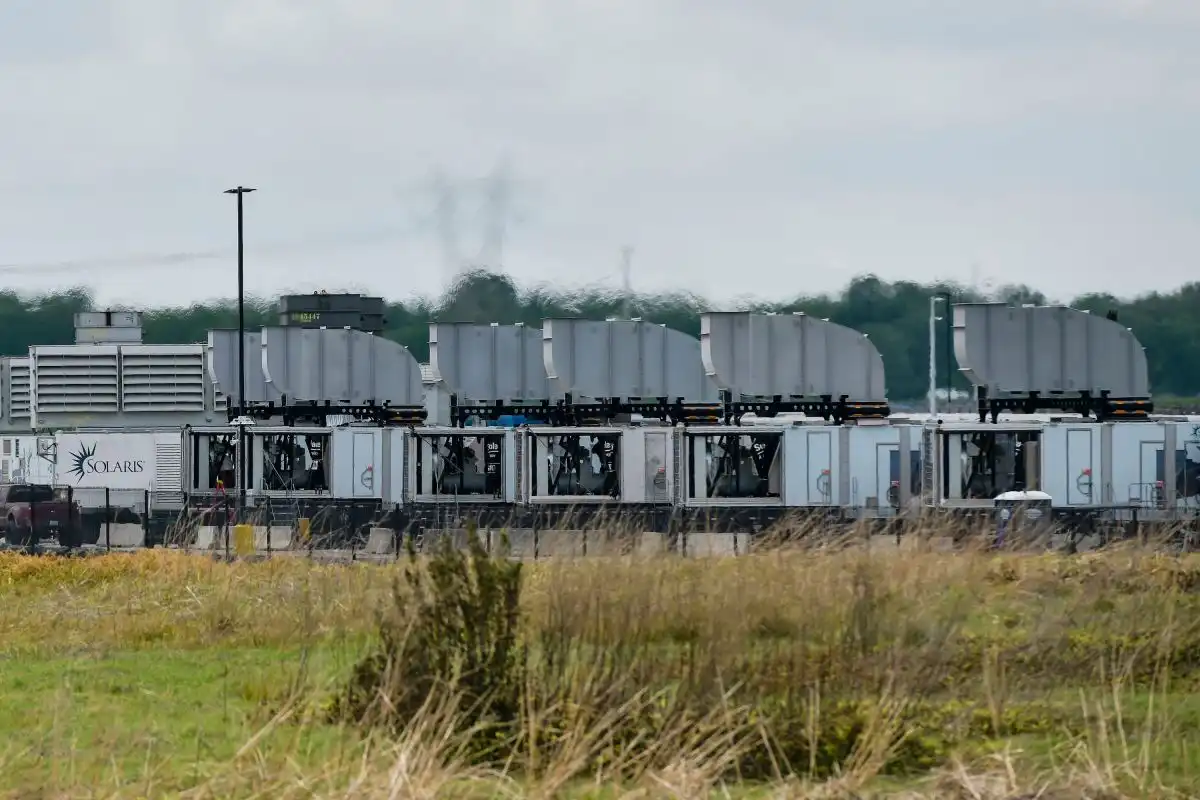
Data center operators are facing a perfect storm of challenges as they struggle to meet the increasing demand for AI computing power. A recent series of articles and reports highlights the complexities of data center management, from power availability and water usage to semiconductor shortages and geopolitical constraints.
What's Happening in Data Centers?
Data centers are facing unprecedented growth due to the rise of AI and machine learning applications. However, this growth is being hindered by a range of challenges. According to Mike Keough, a LinkedIn contributor who has been tracking data center trends, power availability is becoming a major issue. Interconnection queues, substation capacity, and transmission timelines are dictating where projects can be delivered, even in historically dominant markets.
Vacancy rates are near record lows, with demand outstripping supply. Even with record deliveries, absorption is being pulled forward via preleasing, largely driven by hyperscales and AI workloads. The Verge reports that heavier racks, higher densities, bigger cooling loads, and more structural/mechanical considerations are pushing owners toward purpose-built, AI-ready facilities versus retrofits.
Water usage is also becoming a major concern, particularly in water-stressed regions. Communities and regulators are pushing for greater disclosure and limits on cooling strategies, which is reshaping entitlement risk. Local moratoriums and project pushback are becoming more common, making early community strategy crucial.
Background and Context
The semiconductor industry's path to a $1 trillion valuation is being throttled by a perfect storm of physical and geopolitical constraints. Bruce Bateman, a chief analyst at Omdia, outlines the challenges facing the industry in his article "The great data center delay: Why your AI chips are stuck in 2026". The shortage of electricity, copper, and critical gases is exacerbating the problem.
The five largest hyperscalers – Amazon, Microsoft, Google, Meta, and Oracle – have collectively committed over $660 billion in 2026 capital expenditures. However, they've hit a wall due to the power requirements of AI-optimized data center facilities, which can reach 100-500 megawatts. The grid simply cannot keep up, and disruptions at Qatar's Ras Laffan hub have removed 20% of the global LNG supply.
The U.S. also faces a critical power infrastructure bottleneck, with interconnection queues ballooning to over 2,100 gigawatts – exceeding total grid capacity. Data center developers are facing reality checks on 2026 timelines, and industry analysis projects that 30-50% of planned 2026 data center capacity will be delayed.
Why It Matters to the Industry
The challenges facing data centers have significant implications for the adult industry, which relies heavily on cloud infrastructure. The increasing demand for AI computing power is driving up costs and complexity, making it harder for operators to scale their services. The shortage of electricity, copper, and critical gases will only exacerbate these challenges.
Moreover, the rise of purpose-built, AI-ready facilities may require adult industry operators to invest in new infrastructure or retrofit existing data centers. This can be a costly and time-consuming process, which may impact the ability of operators to meet growing demand for their services.
What Comes Next?
Omen AI, a company that specializes in real-time asset intelligence, is working to address some of these challenges. Their technology uses continuous fluid analysis to read the health of equipment in real time, allowing operators to predict and prevent failures. This can help reduce downtime and improve overall efficiency.
Key Facts
- Data center vacancy rates are near record lows, with demand outstripping supply.
- The five largest hyperscalers have collectively committed over $660 billion in 2026 capital expenditures.
- Disruptions at Qatar's Ras Laffan hub have removed 20% of the global LNG supply.
- Data center developers are facing reality checks on 2026 timelines, with 30-50% of planned capacity expected to be delayed.
- Omen AI is working to address data center challenges through real-time asset intelligence technology.
Conclusion
The perfect storm of challenges facing data centers has significant implications for the adult industry. Operators must navigate complex issues related to power availability, water usage, and semiconductor shortages, all while meeting growing demand for AI computing power. By understanding these challenges and exploring innovative solutions like Omen AI's real-time asset intelligence technology, operators can better prepare themselves for the future of data center management.