Data augmentation techniques have been gaining attention in various industries, including computer vision and natural language processing. Recently, researchers have developed new methods for augmenting document images, which are crucial for applications such as Optical Character Recognition (OCR) and text recognition.
New Data Augmentation Technique for Document Images
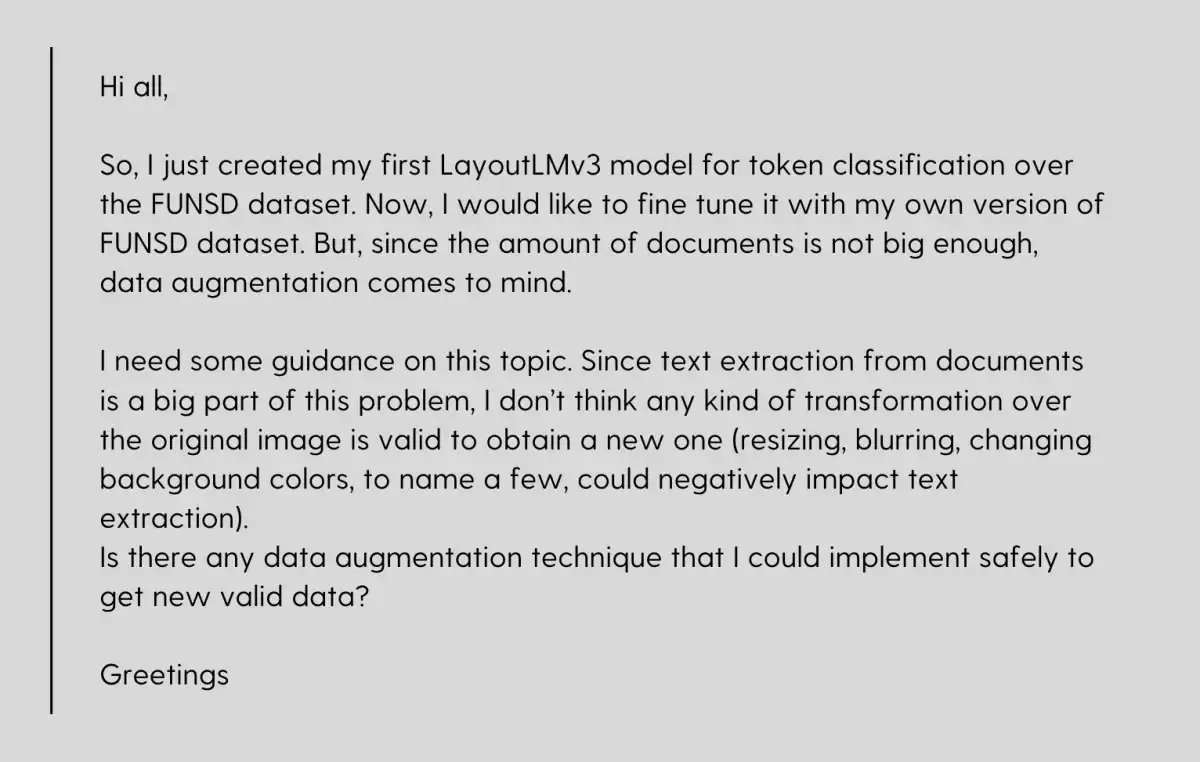
A team of researchers has introduced a new data augmentation technique specifically designed for document images. The technique, called TextImage Augmentation, is a multimodal approach that modifies both the image content and the text annotations simultaneously. This method aims to address the challenges in fine-tuning Vision Language Models (VLMs) with limited datasets.
The researchers recognized the need for data augmentation techniques that preserve the integrity of the text while augmenting the dataset. They developed a new pipeline that handles both images and text within them, providing a comprehensive solution for document images. This class of data augmentation is multimodal as it modifies both the image content and the text annotations simultaneously.
Background and Context
Data augmentation has become an essential tool in machine learning to increase the size and diversity of training datasets. It helps prevent overfitting, improves model robustness, and enhances generalization. In the context of document images, data augmentation is particularly crucial for applications such as OCR and text recognition.
Researchers have been exploring various techniques to augment document images, including geometric transformations, color space alterations, and noise injection. However, these methods often focus on modifying the image content alone, neglecting the importance of preserving the text annotations.
Why it Matters to the Industry
The new TextImage Augmentation technique has significant implications for industries that rely heavily on document image processing, such as finance, healthcare, and government. By providing a comprehensive solution for augmenting document images, this method can improve the accuracy of OCR systems, enhance text recognition models, and reduce the need for manual data annotation.
Moreover, the multimodal approach of TextImage Augmentation allows for the generation of diverse training samples, which is essential for developing robust and generalized AI models. This technique can be particularly beneficial for industries with limited datasets or those that require high accuracy in document image processing.
What Comes Next
The researchers have made their code available on GitHub, allowing developers to experiment with the TextImage Augmentation technique. The community is encouraged to contribute to the development of this method and explore its applications in various industries.
As the demand for accurate document image processing continues to grow, the new TextImage Augmentation technique has the potential to revolutionize the field. By providing a comprehensive solution for augmenting document images, this method can improve the performance of OCR systems, enhance text recognition models, and reduce the need for manual data annotation.
Key Facts
- The new TextImage Augmentation technique is a multimodal approach that modifies both the image content and the text annotations simultaneously.
- This method aims to address the challenges in fine-tuning Vision Language Models (VLMs) with limited datasets.
- TextImage Augmentation can improve the accuracy of OCR systems, enhance text recognition models, and reduce the need for manual data annotation.
- The technique has significant implications for industries that rely heavily on document image processing, such as finance, healthcare, and government.
- The researchers have made their code available on GitHub, allowing developers to experiment with the TextImage Augmentation technique.