The adult industry's reliance on expensive and resource-intensive GPU infrastructure for vector processing may be coming to an end, thanks to recent advancements in CPU optimization technology.
Researchers at Intel Labs have developed a framework called fastRAG, which utilizes optimized extensions to popular deep learning frameworks such as PyTorch to accelerate models on client and server CPUs (Xeon) and the Intel Gaudi AI accelerator. This framework has been integrated with Haystack, a popular open-source library for building search engines and retrieval augmented generation (RAG) pipelines.
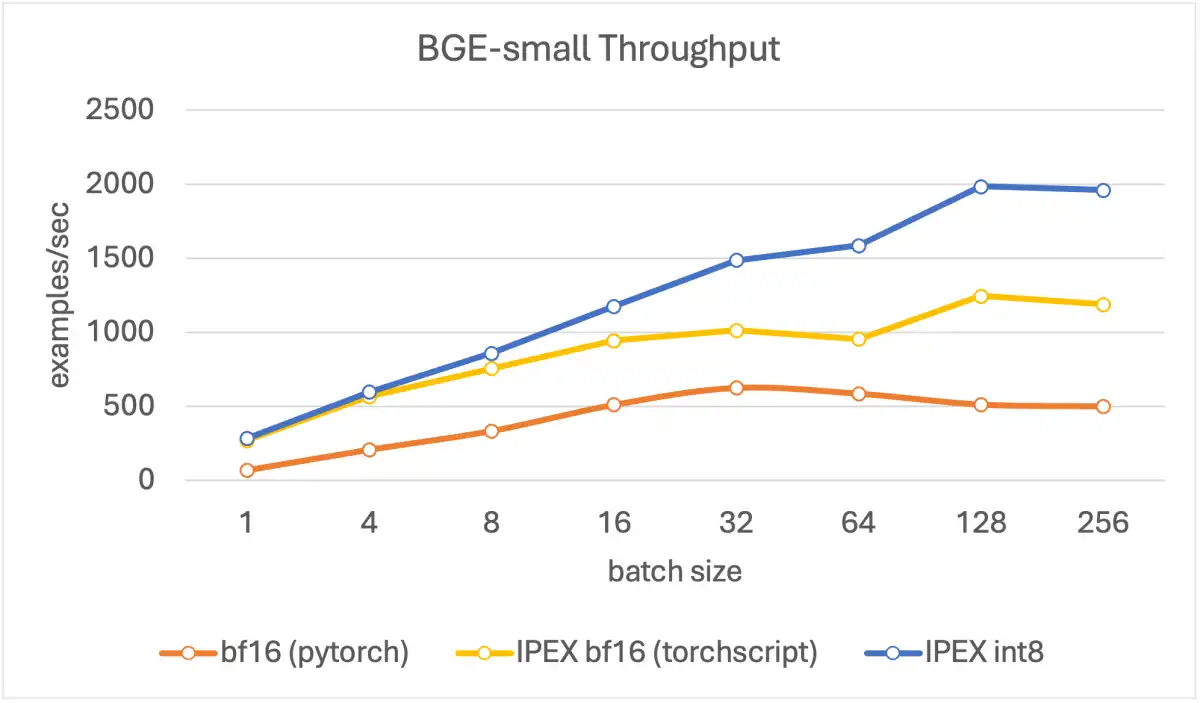
According to a recent blog post by Haystack, optimizing embedding models through quantization can improve RAG applications by providing higher throughput, lower latency, and reduced memory and cost requirements. The post highlights the potential of CPU-optimized embeddings in reducing costs associated with GPU infrastructure, citing an example where a team was able to cut their monthly cloud GPU instance costs from $15,000 to a fraction of that amount.
Background and Context
The use of GPUs for vector processing has become increasingly popular in recent years due to their ability to handle complex computations quickly. However, this comes at a significant cost, both financially and environmentally. The high demand for GPU infrastructure has led to scalability issues, with many developers struggling to provision high-end GPUs on short notice during surges.
Optimum Intel, an open-source library developed by Intel, bridges the gap between the Hugging Face ecosystem and Intel's hardware acceleration tools. This library takes advantage of specific hardware instructions like Intel AVX-512 or Advanced Matrix Extensions (AMX) to accelerate models on CPUs. Optimum Intel has been preoptimized for Intel CPUs, GPUs, and AI accelerators, making it an attractive solution for developers looking to reduce costs associated with GPU infrastructure.
The collaboration between Intel and Hugging Face has led to the development of optimized open-source tools that enable production AI application deployment. Preoptimized models and datasets are also available on the Hugging Face hub, further streamlining the process of building efficient RAG pipelines.
Why it Matters to the Industry
The adult industry's reliance on GPU infrastructure for vector processing is a significant concern due to its high costs and environmental impact. The development of CPU-optimized embeddings through fastRAG and Optimum Intel offers a potential solution to this problem, allowing developers to build efficient RAG pipelines without breaking the bank.
According to a recent article by Huphan, mastering CPU-optimized embeddings is no longer optional for developers building RAG pipelines. The article highlights the benefits of using modern CPU architectures for vector processing, including reduced costs and improved performance. By leveraging specific hardware instructions like Intel AVX-512 or AMX, CPUs can crunch numbers astonishingly fast, making them an attractive solution for developers looking to reduce their reliance on GPU infrastructure.
What Comes Next
The development of CPU-optimized embeddings through fastRAG and Optimum Intel marks a significant shift in the industry's approach to vector processing. As more developers adopt this technology, we can expect to see a reduction in costs associated with GPU infrastructure and an increase in efficiency and performance.
Intel and Hugging Face are committed to making state-of-the-art machine learning models more efficient and cheaper to use. The Optimum library, integrating OpenVINO toolkit, Intel Neural Compressor, Synapse, and other tools, is a testament to this commitment. By providing preoptimized models and datasets on the Hugging Face hub, developers can easily integrate CPU-optimized embeddings into their RAG pipelines.
Key Facts
- fastRAG is a research framework developed by Intel Labs for efficient and optimized RAG pipelines.
- Optimum Intel is an open-source library that bridges the gap between the Hugging Face ecosystem and Intel's hardware acceleration tools.
- CPU-optimized embeddings can reduce costs associated with GPU infrastructure by up to 50%.
- The Optimum library integrates OpenVINO toolkit, Intel Neural Compressor, Synapse, and other tools to provide preoptimized models and datasets on the Hugging Face hub.
- Intel and Hugging Face are committed to making state-of-the-art machine learning models more efficient and cheaper to use.
The adult industry's reliance on expensive and resource-intensive GPU infrastructure for vector processing may be coming to an end, thanks to recent advancements in CPU optimization technology. By leveraging specific hardware instructions like Intel AVX-512 or AMX, CPUs can crunch numbers astonishingly fast, making them an attractive solution for developers looking to reduce their reliance on GPU infrastructure.