The adult industry's reliance on Large Language Models (LLMs) and other AI technologies has just received a significant boost with the integration of DeepInfra into Hugging Face's Inference Providers ecosystem. This partnership will enable developers to access state-of-the-art models hosted on DeepInfra's optimized infrastructure directly through the Hugging Face Hub interface and client libraries.
DeepInfra, a serverless AI inference platform, has carved out a niche by offering some of the lowest latencies and most competitive pricing in the industry. By focusing on hardware optimization and efficient batching techniques, DeepInfra enables models like Llama 3.1 405B or DeepSeek-V3 to run at speeds that were previously only accessible to tech giants.
What Happened
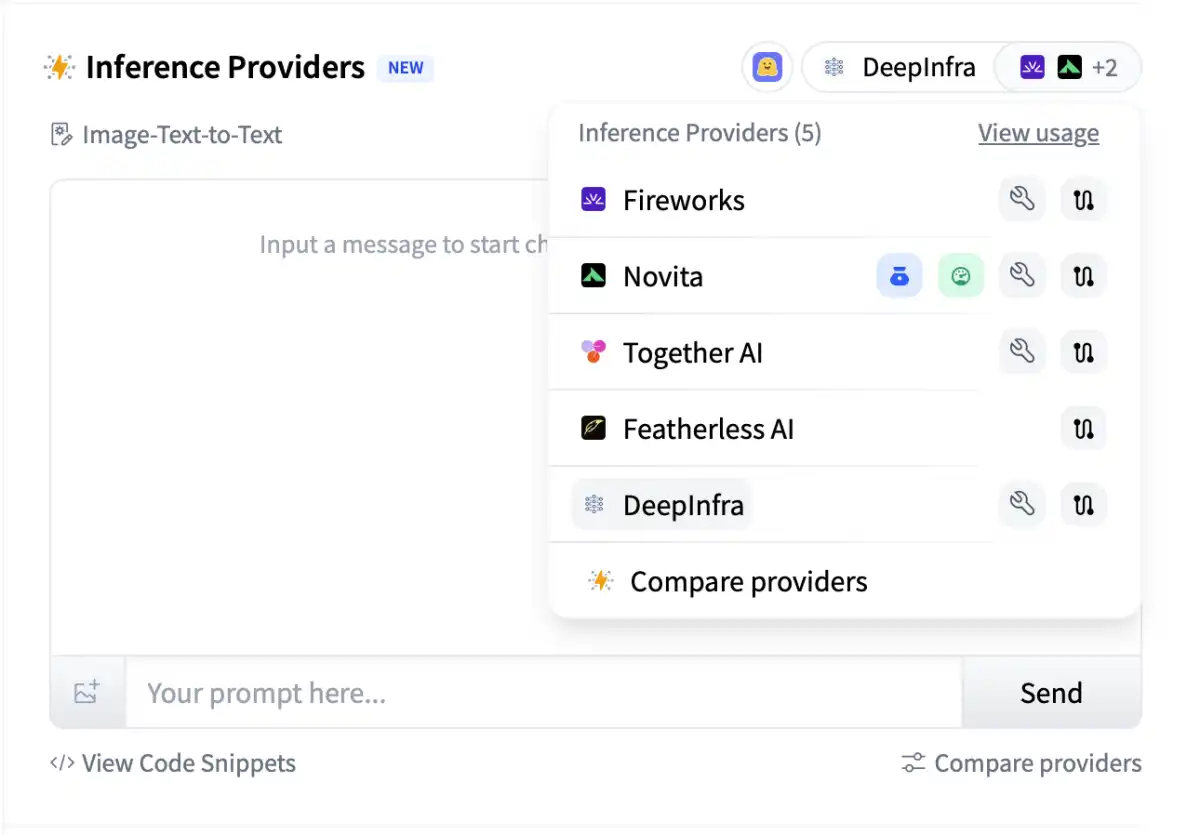
DeepInfra has officially become a supported Inference Provider on the Hugging Face Hub, allowing developers to access its models directly through the interface and client libraries. This integration is part of Hugging Face's Inference Providers initiative, which simplifies the process of moving models from the 'Hub' to production-ready API endpoints.
According to DeepInfra's blog post, the company has launched support for conversational and text-generation tasks on Hugging Face, enabling access to popular open-weight LLMs such as DeepSeek V4, Kimi-K2.6, GLM-5.1, and many more. Support for additional tasks like text-to-image, text-to-video, embeddings, and more will roll out soon.
Background and Context
The adult industry has been rapidly adopting AI technologies to improve content creation, moderation, and user experience. LLMs, in particular, have gained significant attention due to their ability to generate human-like text and respond to complex queries. However, deploying these models in production environments can be challenging due to the need for significant DevOps effort.
Hugging Face's Inference Providers initiative aims to simplify this process by allowing users to select a backend provider – like DeepInfra – to power the model's inference. This abstraction layer enables developers to switch providers by changing a single string, provided the model is supported.
Why it Matters
The integration of DeepInfra into Hugging Face's Inference Providers ecosystem has significant implications for the adult industry. With access to state-of-the-art models hosted on optimized infrastructure, developers can improve content creation, moderation, and user experience without incurring significant DevOps costs.
DeepInfra's pay-per-token model also offers cost efficiency, unlike dedicated 'Inference Endpoints' where users pay fixed fees regardless of usage. This pricing model is particularly beneficial for adult industry platforms that require high-performance AI capabilities but have limited budgets.
What Comes Next
The integration of DeepInfra into Hugging Face's Inference Providers ecosystem marks a significant milestone in the evolution of LLM deployment. As more providers join the ecosystem, developers can expect to see even broader access to state-of-the-art models and optimized infrastructure.
N1n.ai, an aggregator that complements these integrations by providing a unified gateway to multiple providers, will also play a crucial role in simplifying the process of managing multiple API keys for different providers.
Key Facts
- DeepInfra is now a supported Inference Provider on the Hugging Face Hub.
- The company has launched support for conversational and text-generation tasks on Hugging Face, enabling access to popular open-weight LLMs.
- Support for additional tasks like text-to-image, text-to-video, embeddings, and more will roll out soon.
- DeepInfra's pay-per-token model offers cost efficiency compared to dedicated 'Inference Endpoints'.
- N1n.ai provides a unified gateway to multiple providers, simplifying the process of managing multiple API keys.
The integration of DeepInfra into Hugging Face's Inference Providers ecosystem is a significant development for the adult industry. With access to state-of-the-art models hosted on optimized infrastructure, developers can improve content creation, moderation, and user experience without incurring significant DevOps costs. As more providers join the ecosystem, developers can expect to see even broader access to AI capabilities and optimized infrastructure.