Preview · this article is in the editorial review queue and is not yet approved for publish.
Review & approve →
Exploring Harness Engineering, a discipline that focuses on building reliable systems around AI coding agents to unlock their full potential and improve efficiency in various industries.
Harness Engineering Gains Momentum as Industry Seeks to Leverage AI Coding Agents
Harness engineering, a discipline that focuses on building reliable and trustworthy systems around AI coding agents, has gained significant attention in recent months. The concept, which treats the scaffolding around an agent as a real artifact, is gaining traction among developers and engineers who seek to unlock the full potential of these powerful tools. According to industry experts, harness engineering is not just about selecting the right model, but also about designing the surrounding infrastructure that enables agents to work reliably.
Background and Context
The idea of harness engineering was first introduced by
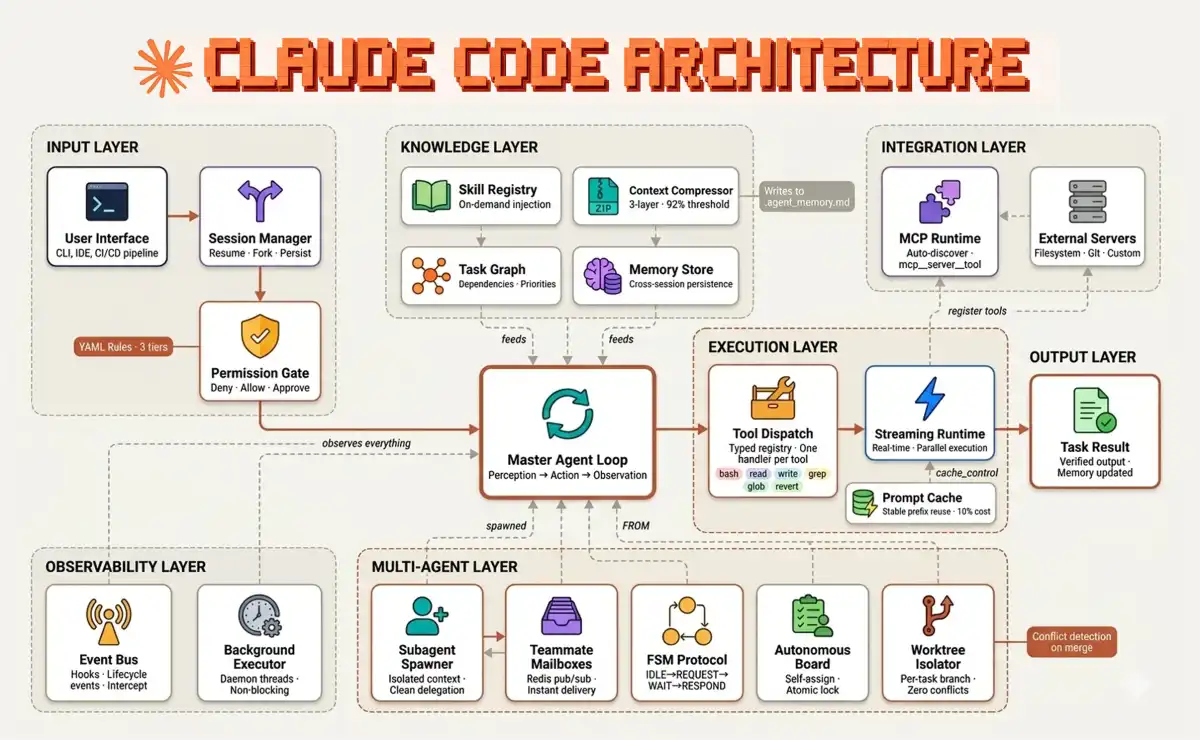
Viv Trivedy, who coined the term and provided a clear definition of what a harness actually is. According to Trivedy, an agent is simply the model plus everything built around it, including prompts, tools, context policies, hooks, sandboxes, subagents, feedback loops, and recovery paths. This concept has been further developed by other experts in the field, including
Dex Horthy and
Birgitta Böckeler, who have highlighted the importance of designing a harness that complements the model.
The need for harness engineering arises from the fact that even the strongest models can fail on real-world tasks if not properly supported. As Birgitta Böckeler notes in her article, "the strongest model in the world will still fail on real engineering tasks if you don't build a proper environment around it." This is evident in the way many developers struggle to get AI coding agents to work reliably, often spending more time cleaning up after them than if they had done the task themselves.
Why It Matters to the Industry
Harness engineering has significant implications for the adult industry, where AI coding agents are increasingly being used to automate tasks and improve efficiency. By designing reliable and trustworthy systems around these agents, developers can unlock their full potential and reduce the risk of errors and failures. This is particularly important in industries where accuracy and reliability are critical, such as in content moderation and age verification.
Moreover, harness engineering can help address some of the key challenges facing the adult industry, including latency, scale, and moderation. By designing systems that can handle high volumes of traffic and provide real-time feedback, developers can improve the overall user experience and reduce the risk of errors and failures. Additionally, harness engineering can help mitigate the risks associated with AI-generated content, such as copyright infringement and age verification.
What Comes Next
As harness engineering continues to gain momentum, it is likely that we will see more developers and engineers adopting this approach to building reliable systems around AI coding agents. This may involve the development of new tools and frameworks that make it easier to design and implement harnesses, as well as the creation of communities and resources that support the growth of this discipline.
In addition, we can expect to see more research and experimentation in the field of harness engineering, as experts seek to better understand how to design reliable and trustworthy systems around AI coding agents. This may involve the development of new methodologies and frameworks for designing harnesses, as well as the creation of benchmarks and evaluation metrics that can help assess the effectiveness of different approaches.
Key Facts
- Harness engineering is a discipline that focuses on building reliable and trustworthy systems around AI coding agents.
- The concept was first introduced by Viv Trivedy, who coined the term and provided a clear definition of what a harness actually is.
- Harness engineering involves designing the surrounding infrastructure that enables agents to work reliably, including prompts, tools, context policies, hooks, sandboxes, subagents, feedback loops, and recovery paths.
- The need for harness engineering arises from the fact that even the strongest models can fail on real-world tasks if not properly supported.
- Harness engineering has significant implications for the adult industry, where AI coding agents are increasingly being used to automate tasks and improve efficiency.
Conclusion
Harness engineering is a rapidly evolving field that holds great promise for improving the reliability and trustworthiness of AI coding agents. As developers and engineers continue to adopt this approach, we can expect to see significant improvements in the way these systems are designed and implemented. By understanding the importance of harness engineering and its implications for the adult industry, we can unlock the full potential of AI coding agents and improve efficiency, accuracy, and reliability in our workflows.