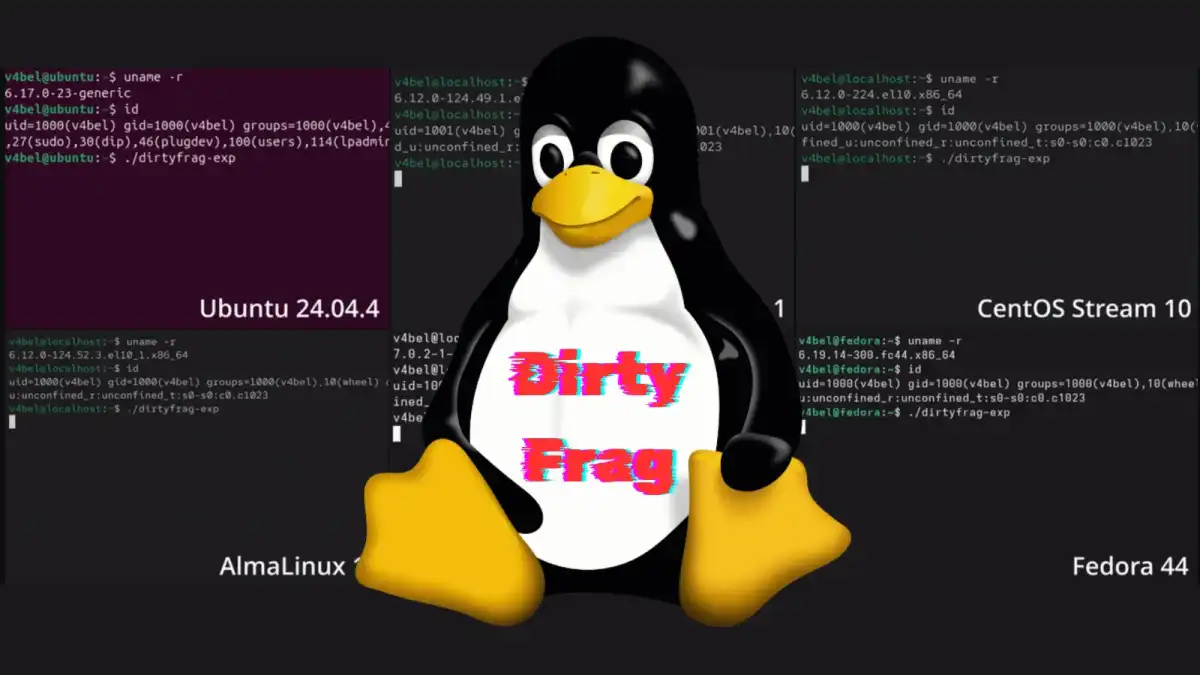
A recently disclosed Linux kernel vulnerability, dubbed DirtyClone, has been identified as a significant threat to multi-tenant servers, CI runners, container hosts, and Kubernetes clusters. The flaw, tracked as CVE-2026-43503, allows local users to gain root access by manipulating cloned network packets through the XFRM/IPsec subsystem.
The vulnerability is part of the DirtyFrag family, a class of Linux kernel memory corruption bugs affecting how socket buffers (skb) reference shared page-cache memory. According to JFrog Security Research, which discovered the flaw, the attack primitive is not path-specific; any skb transformation that drops the shared-frag marker becomes an exploitation vector.
The DirtyClone vulnerability has a CVSS score of 8.8, indicating its high severity. It allows a local user to manipulate file-backed memory via a cloned network packet, ultimately achieving root access. The kernel's update to address this issue was introduced on May 21, making it crucial for users to update their systems promptly.
Background and Context
The DirtyFrag family of vulnerabilities is rooted in the improper handling of fragment descriptors in the Linux kernel's networking code. This flaw has been exploited through various paths, including direct splicing and packet cloning. The original DirtyFrag fix introduced a safety flag to protect file-backed page cache memory, but subsequent variants like Fragnesia (CVE-2026-46300) and DirtyClone demonstrated that this flag could be silently dropped across multiple code paths.
According to JFrog's research, the attack primitive is not limited to a single vulnerable code path. The kernel's failure to strictly separate three memory roles - file-backed page cache, networking buffers (skb), and in-place cryptographic transformations - creates an exploitation vector that can be used by attackers to gain root access.
The DirtyFrag family of vulnerabilities has been extensively researched and documented by JFrog Security Research. The team's findings have highlighted the importance of thorough audits of all code paths that manage packet data and fragment transfers. This is particularly relevant for multi-tenant servers, CI runners, container hosts, and Kubernetes clusters where untrusted users can create namespaces.
Why it Matters to the Industry
The DirtyClone vulnerability poses a significant threat to adult-industry platforms and operators that rely on Linux-based infrastructure. The flaw's ability to allow local users to gain root access makes it a high-risk vulnerability, particularly in multi-tenant environments where untrusted users can create namespaces.
Adult-industry platforms and operators must prioritize updating their systems with the latest kernel updates to mitigate the risk of exploitation. Disabling unprivileged user namespaces or blacklisting specific kernel modules like esp4, esp6, and rxrpc can reduce the attack surface, but these are temporary measures that do not replace the need for a permanent fix.
The DirtyFrag family of vulnerabilities highlights the importance of robust security measures in Linux-based infrastructure. Adult-industry platforms and operators must remain vigilant and ensure their systems are consistently updated with the latest security patches to prevent exploitation by attackers.
What Comes Next
The discovery of the DirtyClone vulnerability underscores the ongoing challenges faced by Linux kernel developers and maintainers. The community is working tirelessly to identify and patch vulnerabilities, but the complexity of the Linux kernel's networking code makes it a daunting task.
JFrog Security Research has emphasized the need for thorough audits of all code paths that manage packet data and fragment transfers. This requires collaboration between researchers, developers, and maintainers to ensure that the Linux kernel is secure and reliable.
Key Facts
- The DirtyClone vulnerability (CVE-2026-43503) allows local users to gain root access by manipulating cloned network packets through the XFRM/IPsec subsystem.
- The flaw has a CVSS score of 8.8, indicating its high severity.
- The kernel's update to address this issue was introduced on May 21, making it crucial for users to update their systems promptly.
- Systems vulnerable to DirtyClone include multi-tenant servers, CI runners, container hosts, and Kubernetes clusters where untrusted users can create namespaces.
- JFrog Security Research has emphasized the need for thorough audits of all code paths that manage packet data and fragment transfers.