The adult industry's reliance on online content has led to a growing concern about content decay, where previously successful articles and pages gradually lose traffic and relevance over time. According to recent studies, this phenomenon affects almost every piece of content eventually, regardless of its initial performance. Content decay is not just a minor issue; it can significantly impact SEO performance, leading to lower search engine rankings, reduced organic traffic, and ultimately, lost revenue.
**What Is Content Decay?**
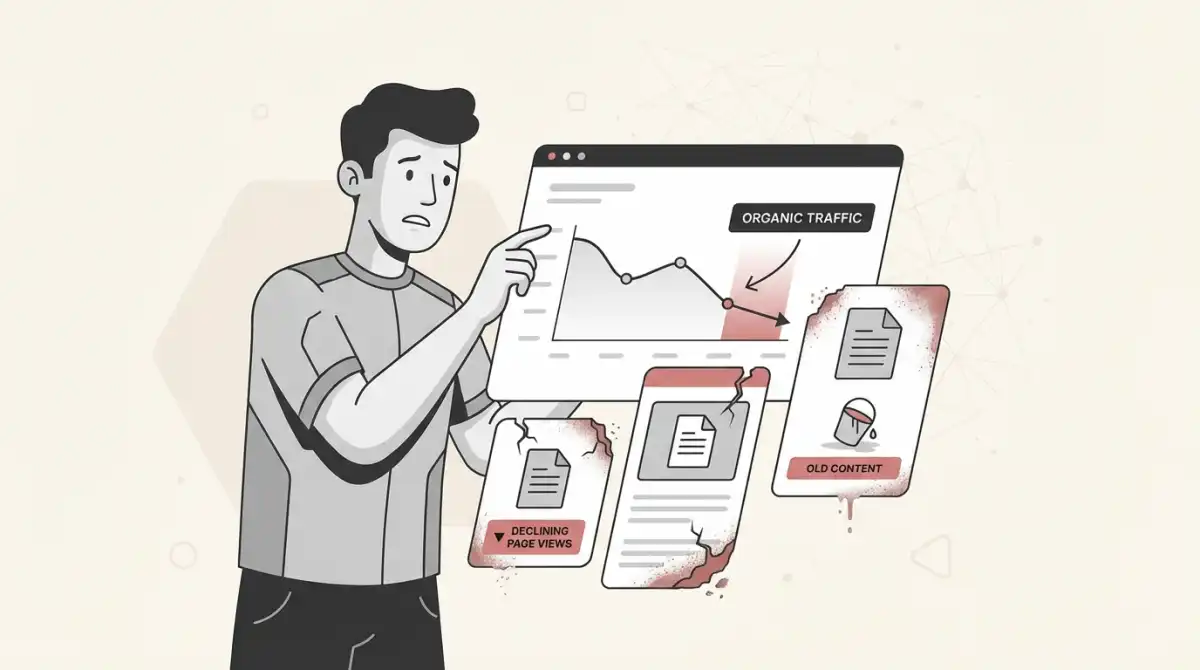
Content decay is the gradual decline in traffic and conversions that a piece of content experiences over time. It's a natural process where content becomes outdated, and its relevance decreases as new information emerges. A study by IZEA found that the average lifespan of a piece of content is only 1 year and 9 months, after which traffic and conversions start to steadily decline. If left unchecked, decaying content can flatline altogether, leading to lost opportunities for engagement and revenue.
**Why Does Content Decay Happen?**
There are several reasons why content decay occurs. One major factor is the rise of new, more comprehensive content from competitors. As search engines favor recently updated content, older articles may lose their rankings and traffic. Another reason is keyword cannibalism, where multiple articles on a website target the same keywords, splitting authority and reducing overall performance. Additionally, changes in search intent can also contribute to content decay, as search engine algorithms prioritize up-to-date information.
**How to Identify and Fix Content Decay**
Identifying decaying content requires monitoring traffic and engagement metrics over time. Tools like Ahrefs and Google Search Console can help track changes in rankings, impressions, and clicks. Once identified, the next step is to refresh or update the content to make it more relevant and engaging. This involves updating stale data, examples, and keywords to reflect current search intent. Additionally, strengthening on-page signals, such as title tags and meta descriptions, can also help improve visibility.
**Prevention and Maintenance**
To prevent content decay, adult industry platforms should prioritize ongoing optimization and maintenance of their content. Regular updates, refreshes, and rewrites can help keep content relevant and engaging. Building clusters of related articles can also distribute authority across the website, reducing the impact of individual page decay. Furthermore, setting up alerts for key keywords and scheduling annual updates for high-traffic pages can help catch decaying content early.
**Key Facts**
- Content decay affects almost every piece of content eventually.
- The average lifespan of a piece of content is 1 year and 9 months.
- New, more comprehensive content from competitors can lead to content decay.
- Keyword cannibalism can split authority and reduce overall performance.
- Updating stale data, examples, and keywords can help refresh decaying content.
- Strengthening on-page signals can improve visibility.
In conclusion, content decay is a growing concern for adult industry platforms. By understanding the causes of content decay and implementing strategies to prevent and fix it, platforms can maintain their online presence, engage with audiences, and drive revenue. As the adult industry continues to evolve, prioritizing ongoing optimization and maintenance of content will be crucial for success.