A new generation of AI-powered tools is revolutionizing the field of chemistry, enabling researchers to design and synthesize complex molecules with unprecedented ease. Two recent breakthroughs, Synthegy and Chemist-X, have made significant strides in this area, leveraging large language models (LLMs) to guide chemical synthesis and reaction planning.
What Happened
Synthegy, developed by researchers at the Ecole Polytechnique Fédérale de Lausanne (EPFL), is an AI system that allows chemists to design molecules using simple language. By combining traditional search algorithms with LLMs, Synthegy can evaluate possible solutions and provide explanations for its recommendations. This approach has been shown to significantly reduce the time and effort required for chemical synthesis.
Chemist-X, on the other hand, is a comprehensive AI agent that automates reaction condition optimization (RCO) in chemical synthesis. Developed by researchers at various institutions, Chemist-X uses retrieval-augmented generation (RAG) technology to interrogate molecular and literature databases, narrowing the search space for later processing. The agent then leverages a computer-aided design (CAD) tool developed through LLM-supervised programming interface.
Background and Context
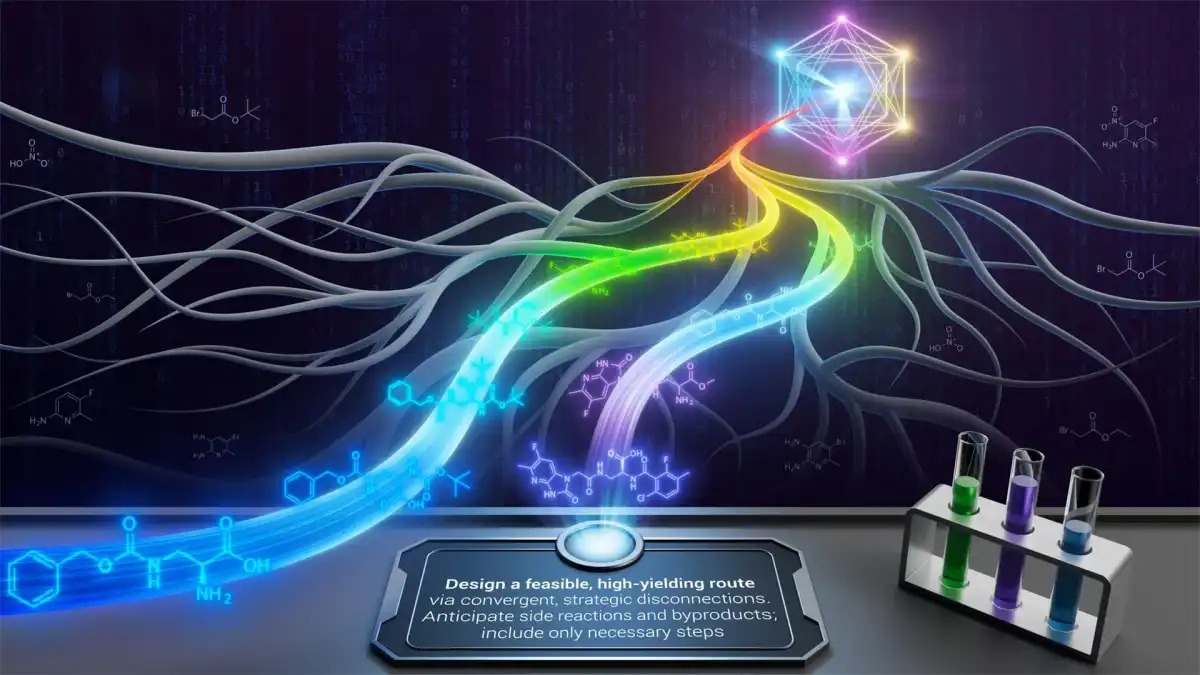
Chemical synthesis is a complex process that requires deep expertise and strategic thinking. Researchers often spend years mastering the process, and even with computational tools, they struggle to match the strategic judgment of experienced chemists. The challenge lies in retrosynthesis, where chemists begin with the final molecule and work backward to determine simpler starting materials and possible reaction routes.
Another hurdle is understanding reaction mechanisms, which describe how reactions proceed step by step through electron movement. While current computational tools can suggest many possible pathways, they often lack the intuition needed to pinpoint the most realistic ones. This is where AI-powered tools like Synthegy and Chemist-X come in, providing a new level of precision and efficiency in chemical synthesis.
Why it Matters to the Industry
The implications of these breakthroughs are significant for industries that rely on complex molecule design and synthesis. In the adult industry, where content creators often require specialized equipment and expertise to produce high-quality streams, AI-powered tools like Synthegy and Chemist-X could revolutionize the way content is created and distributed.
For example, AI-assisted chemical synthesis could enable the development of new materials with unique properties, such as advanced lighting or display technologies. This could have a significant impact on the adult industry's ability to produce high-quality visual content, enabling creators to push the boundaries of what is possible in terms of lighting, texture, and overall aesthetic.
What Comes Next
The development of Synthegy and Chemist-X marks a significant milestone in the field of AI-powered chemistry. As researchers continue to refine these tools, we can expect to see even more innovative applications in various industries, including the adult sector.
While it's difficult to predict exactly how these breakthroughs will be applied in the short term, one thing is clear: the future of chemical synthesis has never looked brighter. With AI-powered tools like Synthegy and Chemist-X leading the charge, we can expect to see significant advancements in the field, with far-reaching implications for industries that rely on complex molecule design and synthesis.
Key Facts
- Synthegy is an AI system developed by researchers at EPFL that allows chemists to design molecules using simple language.
- Chemist-X is a comprehensive AI agent that automates reaction condition optimization (RCO) in chemical synthesis.
- Synthegy combines traditional search algorithms with LLMs to evaluate possible solutions and provide explanations for its recommendations.
- Chemist-X uses retrieval-augmented generation (RAG) technology to interrogate molecular and literature databases, narrowing the search space for later processing.
- The development of Synthegy and Chemist-X marks a significant milestone in the field of AI-powered chemistry.
- These breakthroughs have significant implications for industries that rely on complex molecule design and synthesis, including the adult sector.
The future of chemical synthesis has never looked brighter. With AI-powered tools like Synthegy and Chemist-X leading the charge, we can expect to see significant advancements in the field, with far-reaching implications for industries that rely on complex molecule design and synthesis.