The White House has set ambitious deadlines for federal agencies and government contractors to adopt quantum-resistant encryption algorithms, aiming to prevent U.S. adversaries from using quantum computers to decrypt sensitive data in the coming decades.
What Happened
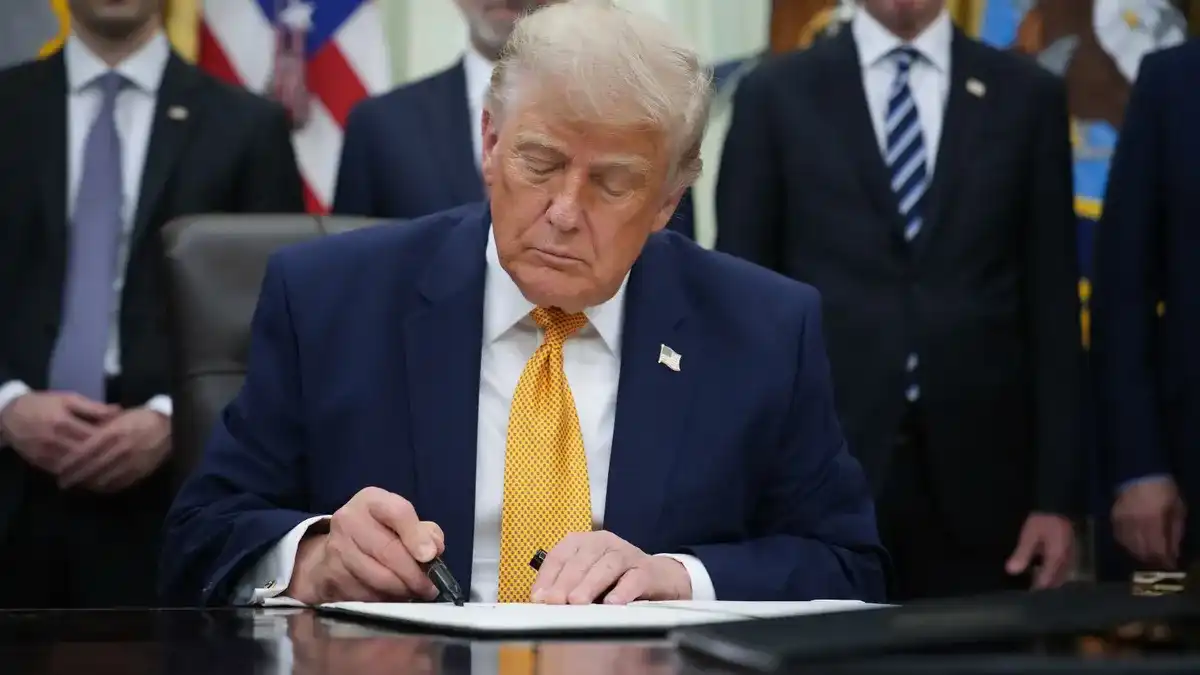
On June 22, 2026, President Donald Trump signed a pair of executive orders aimed at accelerating the federal government's transition to post-quantum cryptography while expanding U.S. investment in quantum technologies. The actions include an executive order titled "Securing the Nation Against Advanced Cryptographic Attacks" and a companion order, "Ushering in the Next Frontier of Quantum Innovation." Accompanying White House fact sheets frame the initiatives as part of the administration's broader national security, economic competitiveness, and cybersecurity strategy.
The most immediate impact comes from the cryptography order, which establishes federal migration deadlines for quantum-resistant encryption. The directive requires the Office of Management and Budget to issue guidance setting two major deadlines for agencies' adoption of post-quantum cryptography (PQC) in their high-value assets: December 31, 2030, for key establishment, and December 31, 2031, for digital signatures.
Background and Context
The threat posed by quantum computers to widely used cryptographic security systems is a pressing concern. The "harvest now, decrypt later" scenario, where adversaries collect encrypted data now and decrypt it when quantum computing capabilities advance, has been identified as a significant risk. This threat is not limited to government agencies; contractors and critical infrastructure operators will also face increasing pressure to demonstrate readiness for post-quantum cryptography.
Experts continue to debate how long it will take to build cryptographically relevant quantum computers, but federal officials argue that organizations cannot wait until such systems exist before beginning preparations. The White House has described the threat as a "harvest now, decrypt later" scenario in which information stolen today could be stored and decrypted years from now once sufficiently powerful quantum computers become available.
Why it Matters to the Industry
The deadlines set by the executive order will have far-reaching implications for the adult industry. As Chris Hickman, CISO at post-quantum cryptography company Keyfactor, noted, "It's a great step and definitely in alignment with what we've seen from other jurisdictions around the world." The pressure to adopt quantum-resistant encryption algorithms will not be limited to federal agencies; contractors and critical infrastructure operators, including those in the adult industry, will face increasing scrutiny.
The urgency of this transition is underscored by recent research showing that the resources and cost for building a cryptographically relevant quantum computer are far less than previous consensus estimates. In response, companies like Google and Cloudflare have tightened their timelines for moving off vulnerable systems to 2029. The White House's executive order has now set an even more ambitious deadline of December 31, 2030, for key establishment and December 31, 2031, for digital signatures.
What Comes Next
The National Institute of Standards and Technology (NIST), the Cybersecurity and Infrastructure Security Agency (CISA) and the National Security Agency are now required to provide agencies with "comprehensive technical guidance on PQC implementation" on an ongoing basis. The Commerce Department has been tasked with pilot-testing PQC algorithms on selected NIST computer systems by the end of 2027.
The executive order also directs the agencies that write federal contracting rules to issue a regulation requiring contractors to comply with NIST's Federal Information Processing Standards (FIPS) by the end of 2030. The agencies must also issue a regulation requiring contractors to update their vulnerability disclosure programs to cover "cryptographic vulnerabilities, including testing for lack of encryption and the use of non-FIPS approved algorithms."
Key Facts
- The White House has set deadlines for federal agencies and government contractors to adopt quantum-resistant encryption algorithms by December 31, 2030, for key establishment and December 31, 2031, for digital signatures.
- The executive order requires the Office of Management and Budget to issue guidance setting these deadlines.
- The National Institute of Standards and Technology (NIST), the Cybersecurity and Infrastructure Security Agency (CISA) and the National Security Agency are now required to provide agencies with "comprehensive technical guidance on PQC implementation" on an ongoing basis.
- The Commerce Department has been tasked with pilot-testing PQC algorithms on selected NIST computer systems by the end of 2027.
- Contractors will be required to comply with NIST's Federal Information Processing Standards (FIPS) by the end of 2030.