The adult industry's 3D content creation and rendering processes have received a boost with the development of new techniques for converting vertex-colored meshes to textured meshes.
Background and Context
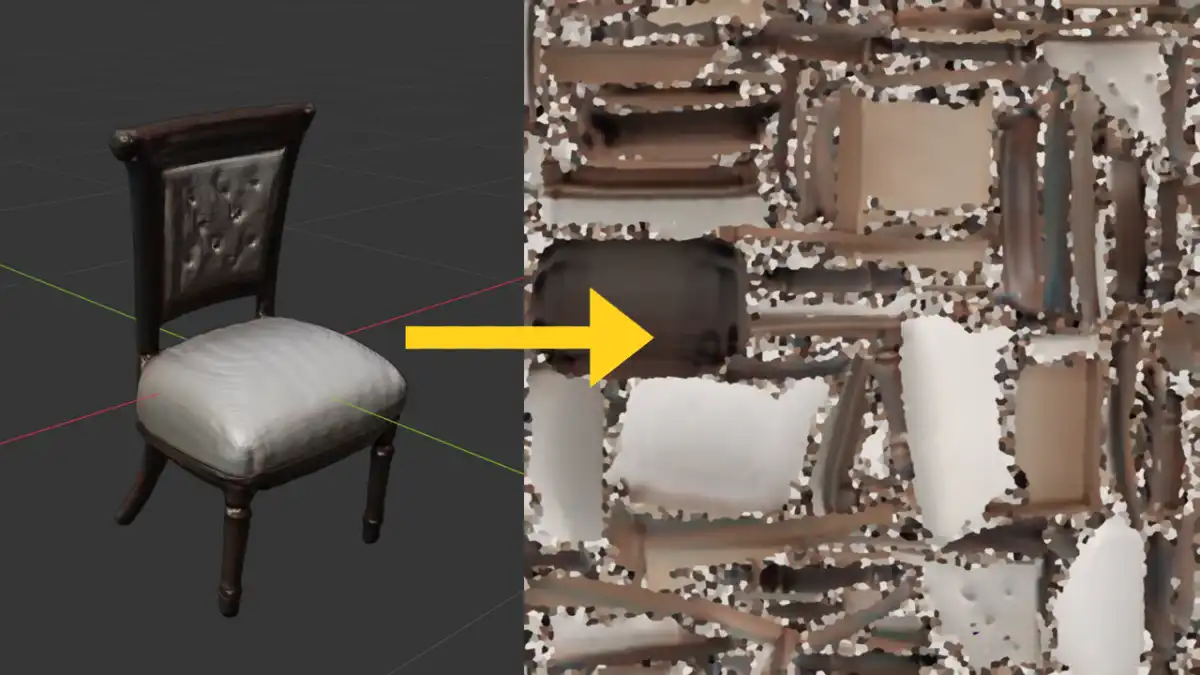
Vertex colors are a straightforward way to add color information directly to a mesh's vertices, often used in generative 3D models like InstantMesh. However, most applications prefer UV-mapped, textured meshes. This is because vertex colors can be difficult to work with, especially when it comes to texture mapping and rendering.
Several solutions have been proposed to address this issue, including the use of libraries such as InstantTexture. This library provides a quick solution for converting vertex-colored meshes to UV-mapped, textured meshes. The process involves installing the library, loading the vertex-colored mesh, accessing the vertex colors, generating the uv map using xatlas, and remapping the vertices and vertex colors to the uv map.
What Happened
A recent tutorial on GitHub provides a step-by-step guide on how to convert vertex-colored meshes to textured meshes. The tutorial uses the InstantTexture library and covers both the short version for quick results and the long version for an in-depth walkthrough. The long version involves installing dependencies, loading the vertex-colored input mesh, accessing the vertex colors, generating the uv map using xatlas, remapping the vertices and vertex colors to the uv map, defining the desired texture size, constructing a texture buffer, filling in the texture of the UV-mapped mesh using barycentric interpolation, and visualizing the output mesh.
The tutorial also covers several techniques for improving the quality of the texture, including inpainting, median filtering, Gaussian blurring, and downsampling. These techniques can be used to remove holes and artifacts from the texture, resulting in a higher-quality final product.
Why It Matters to the Industry
The ability to convert vertex-colored meshes to textured meshes is crucial for the adult industry's 3D content creation and rendering processes. This technique allows creators to work with vertex colors more efficiently and effectively, resulting in higher-quality textures and better rendering performance.
Furthermore, this technique can be used to improve the quality of existing 3D models by converting them from vertex-colored meshes to textured meshes. This can result in improved texture mapping, reduced artifacts, and enhanced overall visual fidelity.
What Comes Next
The development of new techniques for converting vertex-colored meshes to textured meshes is an ongoing process. As the industry continues to evolve, we can expect to see further improvements and refinements to these techniques.
One potential area of research is the use of machine learning algorithms to improve the quality of texture mapping and rendering. This could involve training neural networks on large datasets of 3D models and textures, allowing for more accurate and efficient texture mapping and rendering.
Key Facts
- The InstantTexture library provides a quick solution for converting vertex-colored meshes to UV-mapped, textured meshes.
- The process involves installing the library, loading the vertex-colored mesh, accessing the vertex colors, generating the uv map using xatlas, and remapping the vertices and vertex colors to the uv map.
- Several techniques can be used to improve the quality of the texture, including inpainting, median filtering, Gaussian blurring, and downsampling.
- The ability to convert vertex-colored meshes to textured meshes is crucial for the adult industry's 3D content creation and rendering processes.
- This technique allows creators to work with vertex colors more efficiently and effectively, resulting in higher-quality textures and better rendering performance.