Top Google security staff have warned that proposed changes to European Union regulations could lead to a significant increase in cybercrime and expose users' private information.
What Happened
The European Commission is set to make final decisions next month on two cases related to Google Search and Android interoperability under the Digital Markets Act (DMA) competition rules. The DMA aims to force open Big Tech companies that dominate markets, making it easier for others to compete and reducing reliance on a handful of firms.
Google's top privacy and security staff have expressed concerns about the proposed changes, which would require the company to share search data with rivals and allow other AI services to access the Android operating system. Heather Adkins, Google's vice president of security engineering, warned that if implemented as described, there could be a "significant increase in fraud" on Android within a short period of time.
Background and Context
The European Commission has been cracking down on Big Tech companies through various legislation to ensure users have more choices and smaller rivals room to compete. The DMA allows European officials to designate tech companies with large market shares as "gatekeepers" and use the rules to get them to open up their systems and data to competitors.
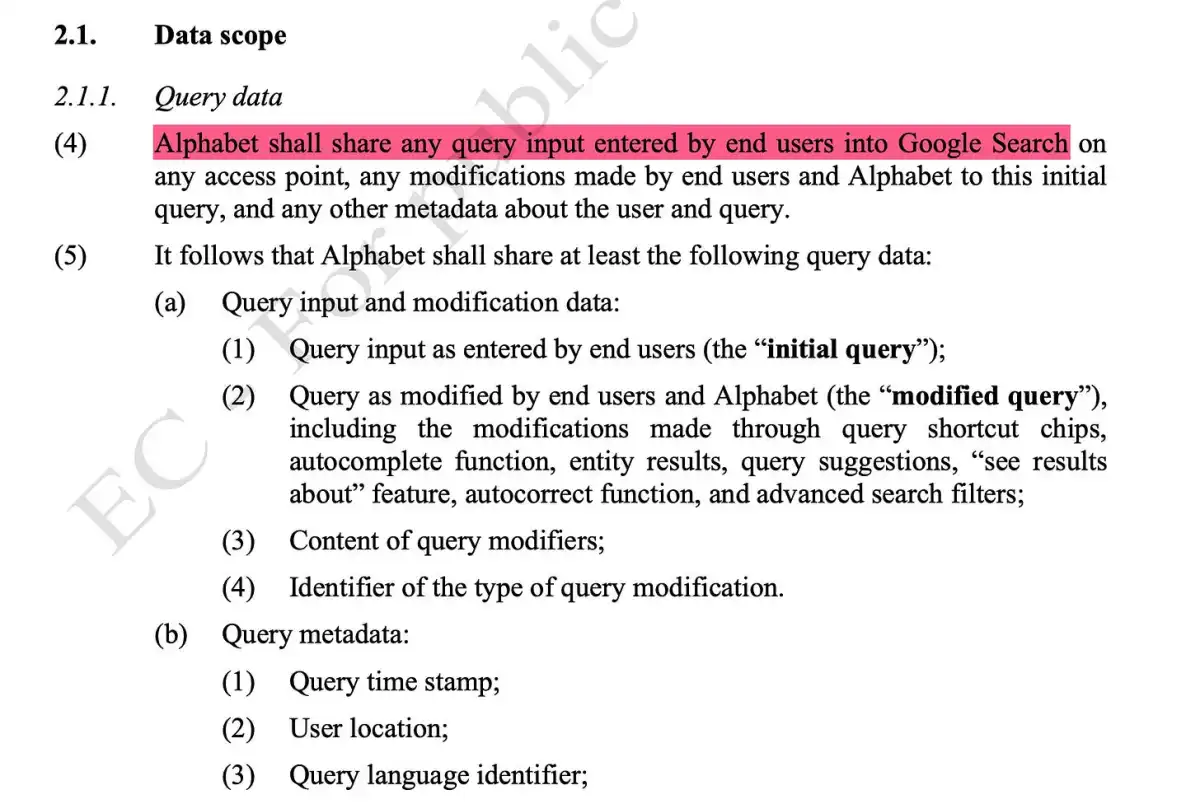
Google's search business, which makes up 90% of the worldwide search market, is subject to the DMA rules. Under the proposed changes, Google would have to share online search engine access with rivals on fair, reasonable, and non-discriminatory terms. This includes sharing anonymized search data, such as ranking, query, click, and view data.
Why it Matters to the Industry
The proposed changes could have significant implications for the adult industry, which relies heavily on online platforms and streaming services. If Google's concerns about the risks of reidentification and data sharing are valid, it could lead to a loss of control over sensitive user data and increased exposure to cybercrime.
As Adkins noted, "if we are asked to hand over data we lose control of it, and we just have no functional execution capability to secure it once it's beyond the border of what we control." This could be particularly problematic for small European startups that receive search data from Google, which would likely become targets for hackers.
What Comes Next
The European Commission is expected to finalize its decisions on the proposed changes in the coming weeks. Google has been vocal in its opposition to certain aspects of the plans, citing concerns about user privacy and security. The company's top scientists have warned that the proposed anonymization techniques contain "deep weaknesses" and would require releasing search data at higher levels of granularity.
As the debate continues, it remains to be seen how the European Commission will address Google's concerns and balance the need for competition with the risks associated with sharing sensitive user data.
Key Facts
- The European Commission is set to make final decisions next month on two cases related to Google Search and Android interoperability under the DMA competition rules.
- Google's top privacy and security staff have expressed concerns about the proposed changes, which would require sharing search data with rivals and allowing other AI services to access the Android operating system.
- The proposed changes could lead to a significant increase in cybercrime and expose users' private information.
- Google's search business makes up 90% of the worldwide search market and is subject to the DMA rules.
- The company has warned that the proposed anonymization techniques contain "deep weaknesses" and would require releasing search data at higher levels of granularity.
As the adult industry continues to rely on online platforms and streaming services, it will be essential to monitor developments in this area and assess the potential implications for user privacy and security.