OpenAI has released a set of open-source, prompt-based safety policies aimed at helping developers build AI applications that are safer for teenagers. The move marks a strategic shift from product-level safety to ecosystem-wide infrastructure, as the company faces mounting legal pressure over alleged harms to minors from its AI models.
What Happened
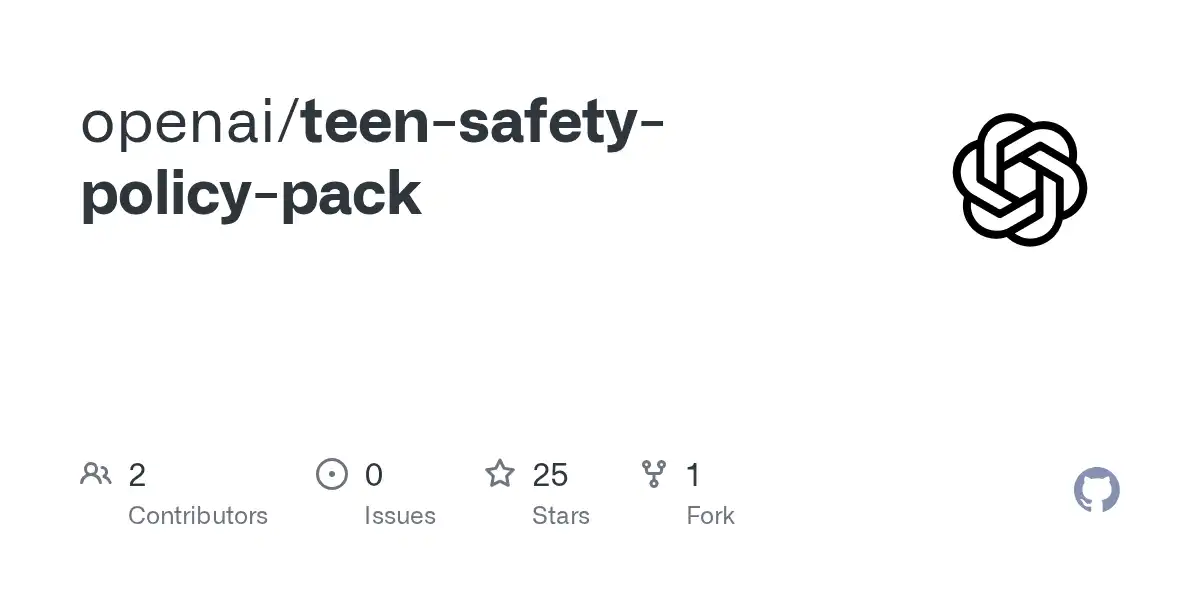
The new policies, formatted as prompts for the gpt-oss-safeguard model, cover six initial risk areas: graphic violent content, graphic sexual content, harmful body ideals and behaviors, dangerous activities and challenges, romantic or violent roleplay, and age-restricted goods and services. Developers can download the policies from GitHub and customize them for their specific use cases, lowering the barrier to implementing robust safety measures.
The gpt-oss-safeguard model itself is a "bring your own policies and definitions of harm" design, which takes two inputs—a policy and content to classify—and outputs a conclusion with reasoning. The model is available in 120 billion and 20 billion parameter sizes, making it accessible to developers with varying computational resources.
Background and Context
The release builds on OpenAI's broader push to strengthen youth protections, including updates to its model behavior guidelines to incorporate under-18 considerations, as well as product-level features such as parental controls and age prediction systems. The company has faced mounting legal pressure over alleged harms to minors from its AI models, with at least 14 lawsuits alleging harm to minors.
OpenAI collaborated with Common Sense Media and everyone.ai, a nonprofit focused on AI safety, in developing the policies. Early testers included SafetyKit, ROOST, Tomoro, and Discord. The policies are available on GitHub under the Apache 2.0 license through the ROOST Model Community, allowing developers to modify and redistribute them freely.
Why It Matters to the Industry
The new policies aim to provide a baseline for safety across the AI ecosystem, particularly for applications used by teenagers. By structuring policies as prompts, developers can more easily integrate them into existing workflows, adapt them to their use cases, and iterate over time.
Robbie Torney, senior director of AI partnerships at Common Sense Media, stated: "These prompt-based policies help set a meaningful safety floor across the ecosystem, and because they're released as open source, they can be adapted and improved over time." The initiative is part of a broader teen safety push that includes a Safety Bug Bounty Program and a Trusted Contact feature.
What Comes Next
The release of the new policies marks a significant shift in OpenAI's approach to AI safety. By providing open-source, prompt-based safety policies, the company is aiming to set an industry floor for safety across the AI ecosystem. The move is likely to have far-reaching implications for developers and platform operators working on AI applications that interact with teenagers.
Key Facts
- The new policies cover six initial risk areas: graphic violent content, graphic sexual content, harmful body ideals and behaviors, dangerous activities and challenges, romantic or violent roleplay, and age-restricted goods and services.
- The gpt-oss-safeguard model is a "bring your own policies and definitions of harm" design, which takes two inputs—a policy and content to classify—and outputs a conclusion with reasoning.
- The model is available in 120 billion and 20 billion parameter sizes, making it accessible to developers with varying computational resources.
- OpenAI collaborated with Common Sense Media and everyone.ai in developing the policies.
- The policies are available on GitHub under the Apache 2.0 license through the ROOST Model Community.