The next phase of enterprise AI has arrived, bringing significant changes to how businesses operate and integrate artificial intelligence into their workflows. According to recent predictions from industry experts, agentic AI will accelerate in 2026, requiring deliberate orchestration and integration with existing systems.
What's Happening
Agentic AI, which enables systems to act across workflows, coordinate tasks, and escalate issues with growing autonomy, is becoming increasingly prevalent. According to a report by McKinsey, nearly 88% of businesses report regular AI use in at least one function, and many have embedded AI directly into core workflows. However, deployment alone is not enough; leadership teams will face growing pressure to show measurable results, manage risk, and connect AI investment to long-term performance.
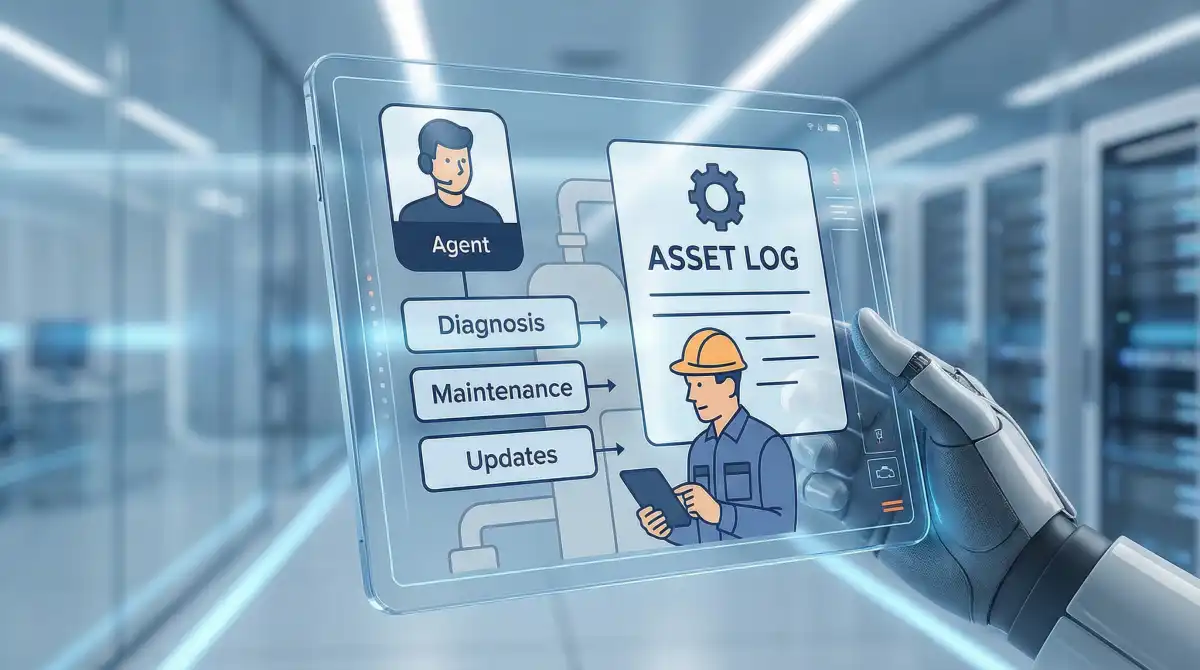
John Pettit, CTO of Promevo, notes that the real test begins in 2026: proving the operational value of agentic AI. He emphasizes that every production agent should have four things before launch: a defined owner, a clear decision boundary, an escalation path, and a measurable success metric.
Background and Context
The shift towards agentic AI is driven by the need for businesses to move beyond simply deploying AI models. According to Deloitte's AI Pulse Check series, most organizations have moved beyond questioning AI use, but few have fully transformed their operations. The data highlights current trends, their significance, and forecasts for 2026.
Deloitte's report emphasizes that redesigning work around AI is not just a matter of deploying a copilot; it requires leadership to show measurable performance improvement. The tension between experimentation and operational value is evident in the pulse data, underscoring the need for businesses to rethink their approach to AI adoption.
Why It Matters to the Industry
The implications of agentic AI on the adult industry are significant. As platforms and operators continue to integrate AI into their workflows, they must also address the complexities associated with agentic AI. This includes deciding what tasks should be automated, defining business rules, and establishing accountability for errors.
AI integration work is becoming more important than the AI interface itself. According to Square Codex, a Costa Rican outsourcing company, agents live inside processes and require APIs to talk to business platforms, backend services to apply rules, data pipelines to keep context updated, and cloud environments that can handle changing workloads.
What Comes Next
The next phase of enterprise AI will see a shift towards orchestration over model selection as the real competitive axis. According to Gabe Goodhart, Chief Architect for AI Open Innovation at IBM, "We're going to hit a bit of a commodity point. It's a buyer's market. You can pick the model that fits your use case just right and be off to the races."
This shift will require businesses to focus on how multiple models are coordinated rather than which model is "best." The underlying model will become a commodity input, and competitive advantage will live in how models are routed, monitored, and integrated with existing systems.
Key Facts
- Nearly 88% of businesses report regular AI use in at least one function (McKinsey)
- Agentic AI adoption is accelerating, with 88% of senior executives planning to increase AI-related budgets (PwC)
- The real test begins in 2026: proving the operational value of agentic AI (John Pettit, CTO of Promevo)
- Every production agent should have four things before launch: a defined owner, a clear decision boundary, an escalation path, and a measurable success metric (John Pettit, CTO of Promevo)
- 40% of enterprise applications will feature task-specific AI agents by the end of 2026 (Gartner)
The next phase of enterprise AI brings significant changes to how businesses operate and integrate artificial intelligence into their workflows. As agentic AI accelerates, businesses must address the complexities associated with its adoption, including orchestration, integration, and accountability.