A new backdoor dubbed Mistic has been linked to ransomware access broker KongTuke/Woodgnat, an initial access broker active since at least 2024 that specializes in compromising corporate networks and selling that access to ransomware groups. The malware is believed to be used in financially motivated attacks targeting organizations in the insurance, education, IT, and professional services sectors.
What Happened
The Mistic backdoor has been observed in intrusions since April 2026, with researchers at cybersecurity company Symantec noting that it is a newly developed, stealthy backdoor designed for long-term persistence in compromised networks. In one incident, Mistic was deployed shortly after ModeloRAT, a backdoor attributed to KongTuke and delivered via social engineering attacks over Microsoft Teams.
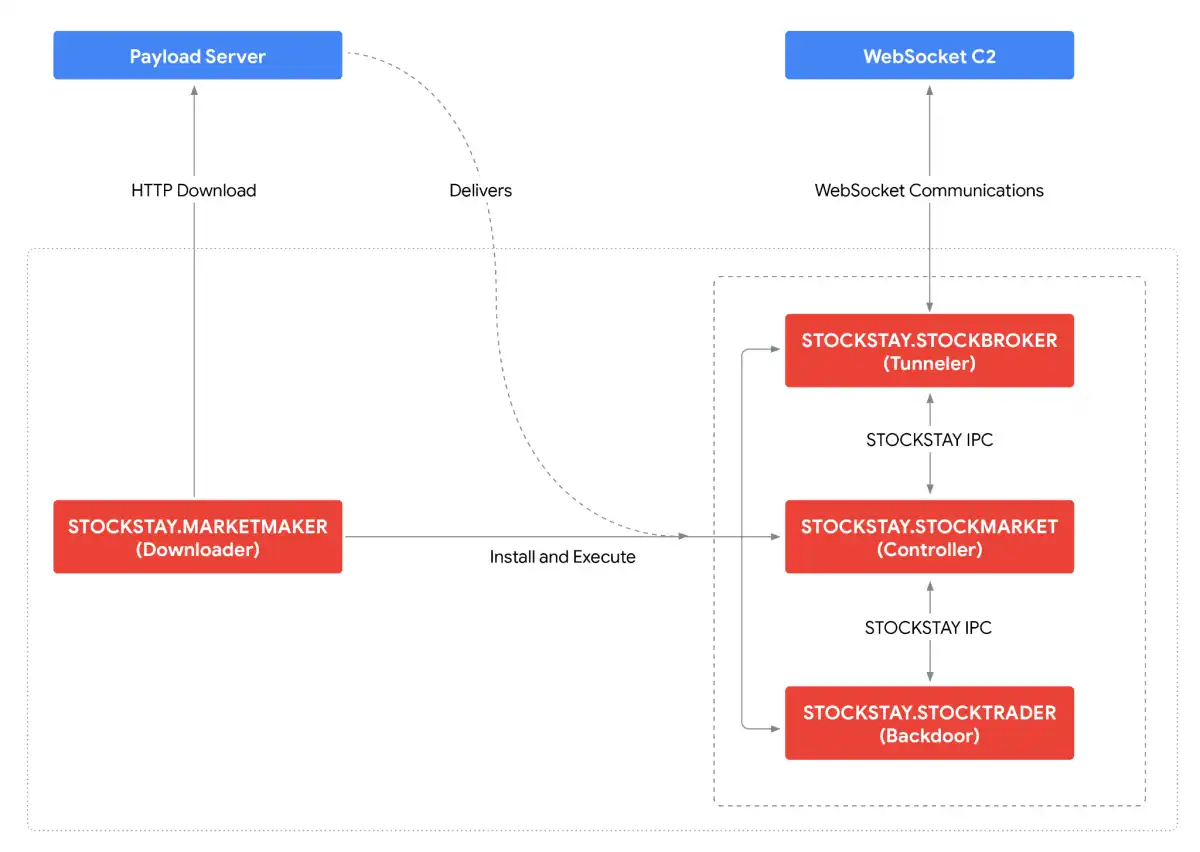
The infection chain observed by Symantec combined multiple stages and tools, including a .NET credential stealer with a fake login prompt, living-off-the-land utilities such as curl, reg.exe, net.exe, certutil, WMIC, and PowerShell for reconnaissance. The backdoor itself reaches out to a command-and-control (C2) server and can execute code delivered from it directly in memory, without saving any file on disk.
Other features of the Mistic backdoor include the ability to write, delete, and move files on the victim machine, as well as download and upload files to the C2 server. The researchers have also observed a credential-stealing capability, where the backdoor displays a fake login screen to steal account credentials.
Background and Context
KongTuke/Woodgnat is an initial access broker that has been active since at least 2024, specializing in compromising corporate networks and selling that access to ransomware groups. The group has been linked to multiple ransomware families, including Qilin, Interlock, Rhysida, Akira, 8Base, and Black Basta.
ModeloRAT is a Python-based remote access trojan (RAT) developed by Woodgnat/KongTuke, which has been used in attacks delivering the Qilin ransomware. The RAT uses RC4-encrypted C2 communications and multi-path resiliency with independent C2 infrastructure.
Woodgnat's primary goal is to establish highly durable remote access within an enterprise and sell this high-level access to ransomware affiliates and other attackers for a fee. This approach allows the group to maintain a persistent foothold within compromised networks over extended periods, making it difficult for defenders to detect and remove the malware.
Why It Matters to the Industry
The Mistic backdoor and its connection to KongTuke/Woodgnat highlight the growing threat of initial access brokers in the cybercrime landscape. These groups specialize in compromising corporate networks and selling that access to ransomware groups, making them a significant concern for organizations in various sectors.
The use of stealthy backdoors like Mistic, which can run payloads directly in memory without saving any files on disk, makes it challenging for defenders to detect and remove the malware. The inclusion of a kill switch that allows the operator to self-delete also complicates forensic detection.
Furthermore, the targeting of organizations across multiple sectors, including insurance, education, IT, and professional services, suggests that the attackers are casting a wide net in search of saleable enterprise access rather than focusing on a particular industry vertical.
What Comes Next
The discovery of Mistic and its connection to KongTuke/Woodgnat underscores the need for organizations to implement robust security measures, including zero-trust network access (ZTNA) solutions that can help eliminate lateral movement and modernize secure access. By connecting users directly to applications rather than the network, ZTNA can reduce the attack surface and prevent malware like Mistic from spreading.
Additionally, organizations should remain vigilant in monitoring their networks for signs of compromise and implement regular security audits to identify potential vulnerabilities. The use of AI-powered threat detection tools can also help defenders stay ahead of emerging threats like Mistic.
Key Facts
- Mistic is a new, stealthy backdoor linked to ransomware access broker KongTuke/Woodgnat.
- The malware has been used in financially motivated attacks targeting organizations in the insurance, education, IT, and professional services sectors.
- Mistic was first seen in April 2026 and has been deployed on networks belonging to organizations across multiple sectors.
- The backdoor can run remote payloads directly in memory without saving any files on disk.
- Mistic includes a kill switch that allows the operator to self-delete, complicating forensic detection.
- KongTuke/Woodgnat is an initial access broker active since at least 2024, specializing in compromising corporate networks and selling that access to ransomware groups.