Mirendil, a startup founded by two former researchers from Anthropic, has raised $200 million in seed funding at a valuation of $1 billion. The company aims to develop AI systems that can accelerate scientific research and improve AI models themselves.
What Happened
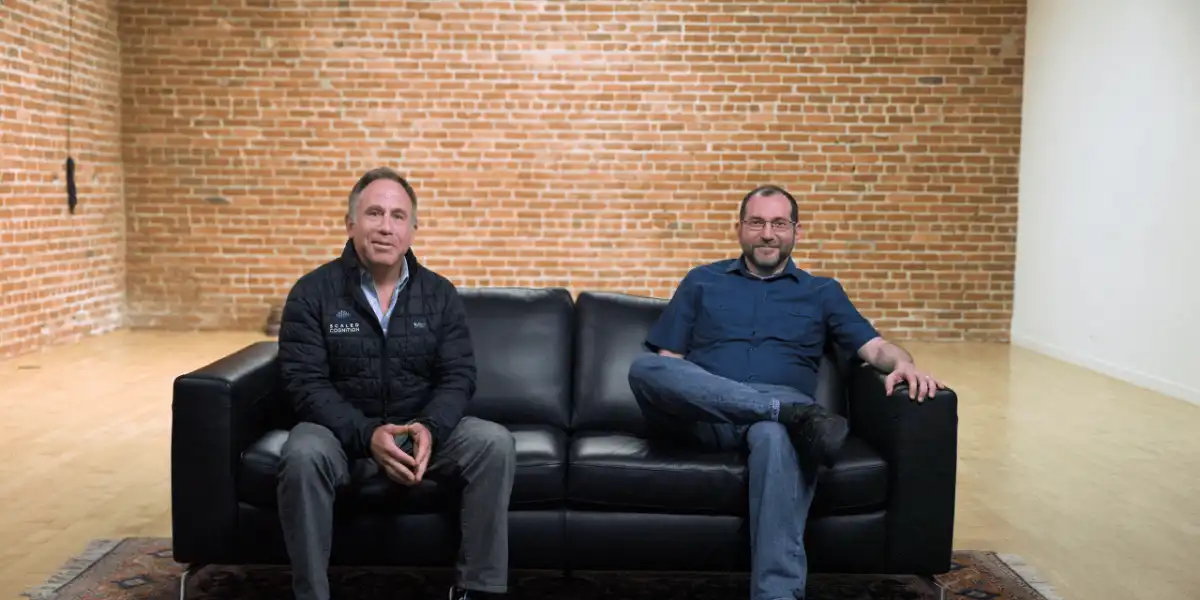
The seed round was led by Andreessen Horowitz and Kleiner Perkins, with participation from Nvidia. Mirendil's founders, Behnam Neyshabur and Harsh Mehta, met while working at Google in 2019 and later joined Anthropic together. They left the company after the release of Claude Opus 4.5 in December 2025.
Mirendil has assembled a team of experienced researchers from leading AI labs, including xAI, Google DeepMind, and OpenAI. The company's website doesn't provide detailed information about its technology, but job postings suggest that it plans to develop new variants of existing neural network architectures, with a focus on the transformer architecture.
Background and Context
The development of AI systems capable of accelerating scientific research is an area of growing interest in the tech industry. Large model developers like Anthropic are increasingly relying on AI to accelerate their own model development, with Claude writing over 80% of Anthropic's code as of May 2026.
However, leading labs typically prohibit external developers from using their large models to train competing products and have recently imposed undisclosed restrictions on responses related to AI development. Mirendil's founders disagree with this approach, believing that self-improvement is the shortest path to accelerating scientific research and can be achieved safely under regulatory oversight.
The company name Mirendil derives from Elvish in The Lord of the Rings, meaning "Friend of Discovery." The team plans to release its models and products within the coming months to gather user feedback.
Why It Matters to the Industry
The development of AI systems capable of accelerating scientific research has significant implications for the adult industry. As AI becomes increasingly important in various fields, including chemistry, medicine, and robotics, companies like Mirendil can provide tools that help scientists and engineers build better AI models.
Currently, many adult-industry platforms rely on general-purpose language models to power their services. However, these models are often limited by their inability to adapt to specific research tasks or domains. Mirendil's self-improving AI systems can potentially address this limitation, enabling companies to build more specialized and effective AI models.
The democratization of frontier AI research is also an important aspect of Mirendil's mission. By making advanced research capabilities available beyond a handful of well-funded AI laboratories, the company aims to accelerate scientific progress in various fields, including those relevant to the adult industry.
What Comes Next
Mirendil plans to make its self-improving AI available to scientists in various fields, with a focus on chemistry, medicine, and robotics. The company will build custom AI tooling to speed up its model development efforts, automating tasks such as data preparation and debugging.
The success of Mirendil's approach will depend on the ability of its self-improving AI systems to accelerate scientific research while maintaining safety and control. If successful, the company's technology can potentially revolutionize the way scientists and engineers build AI models, leading to breakthroughs in various fields, including those relevant to the adult industry.
Key Facts
- Mirendil has raised $200 million in seed funding at a valuation of $1 billion.
- The company aims to develop AI systems that can accelerate scientific research and improve AI models themselves.
- Mirendil's founders, Behnam Neyshabur and Harsh Mehta, met while working at Google in 2019 and later joined Anthropic together.
- The company has assembled a team of experienced researchers from leading AI labs, including xAI, Google DeepMind, and OpenAI.
- Mirendil plans to release its models and products within the coming months to gather user feedback.