Hugging Face has made significant strides in deploying speech-to-speech technology on its Inference Endpoints platform, allowing for seamless and efficient processing of audio inputs. The company's Speech-to-Speech pipeline combines various advanced models to create a cascaded pipeline that can handle voice activity detection, speech-to-text, language modeling, and text-to-speech tasks.
The project leverages the Transformers library on Hugging Face's hub, providing a modular approach with support for device-specific and external library implementations. The pipeline consists of Voice Activity Detection (VAD), Speech to Text (STT), Language Model (LM), and Text to Speech (TTS) components, all of which can be customized and fine-tuned for specific use cases.
Background and Context
The development of speech-to-speech technology has been a significant area of research in recent years, with various companies and organizations working on advancing the field. Hugging Face's Speech-to-Speech pipeline is one such example, combining multiple models to create a seamless and efficient processing system.
One of the key features of Hugging Face's Speech-to-Speech pipeline is its ability to handle multilingual and cross-lingual audio transformation. The pipeline supports various languages, including English, French, Spanish, Chinese, Japanese, and Korean, making it a versatile tool for developers working on voice applications.
Why It Matters to the Industry
The deployment of speech-to-speech technology on Hugging Face's Inference Endpoints platform has significant implications for the adult industry. The ability to process audio inputs efficiently and accurately can be used in various applications, such as virtual assistants, live captioning, transcription services, and voice search.
Moreover, the modular design of the pipeline allows developers to customize and fine-tune the components for specific use cases, making it a valuable tool for companies looking to integrate speech-to-speech technology into their products or services.
What Comes Next
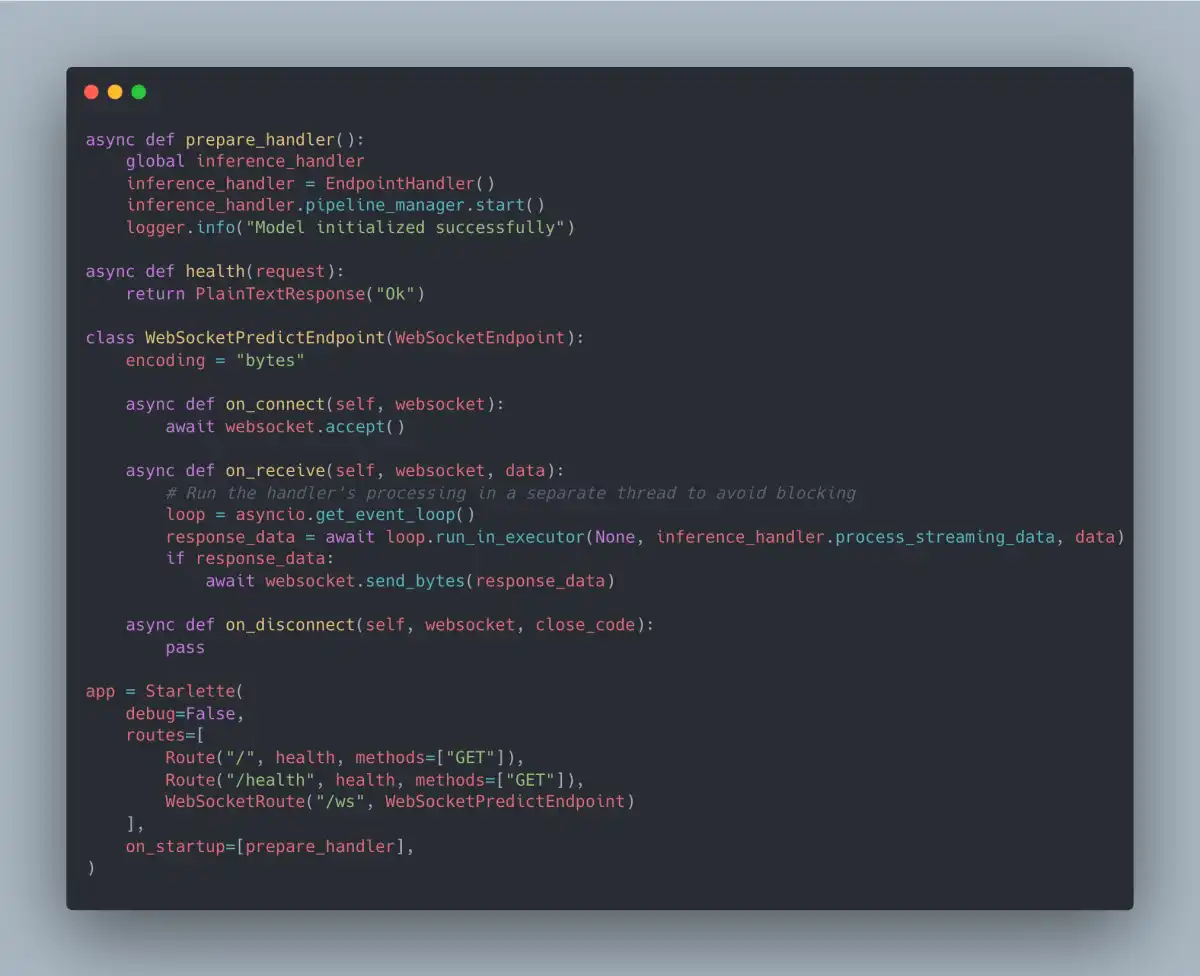
Hugging Face's Speech-to-Speech pipeline is an open-source project, allowing developers to access and modify the code. The company has also provided a custom Docker image to ensure low latency, making it easier for developers to deploy the pipeline on their own infrastructure.
The deployment of speech-to-speech technology on Hugging Face's Inference Endpoints platform marks a significant step forward in the development of voice applications. As the industry continues to evolve, we can expect to see more innovative uses of speech-to-speech technology in various sectors, including the adult industry.
Key Facts
- The Speech-to-Speech pipeline combines multiple models for efficient processing of audio inputs.
- The pipeline supports multilingual and cross-lingual audio transformation.
- Hugging Face's Inference Endpoints platform provides a scalable and efficient way to deploy the pipeline.
- The custom Docker image ensures low latency, making it easier for developers to deploy the pipeline.
- The Speech-to-Speech pipeline is an open-source project, allowing developers to access and modify the code.