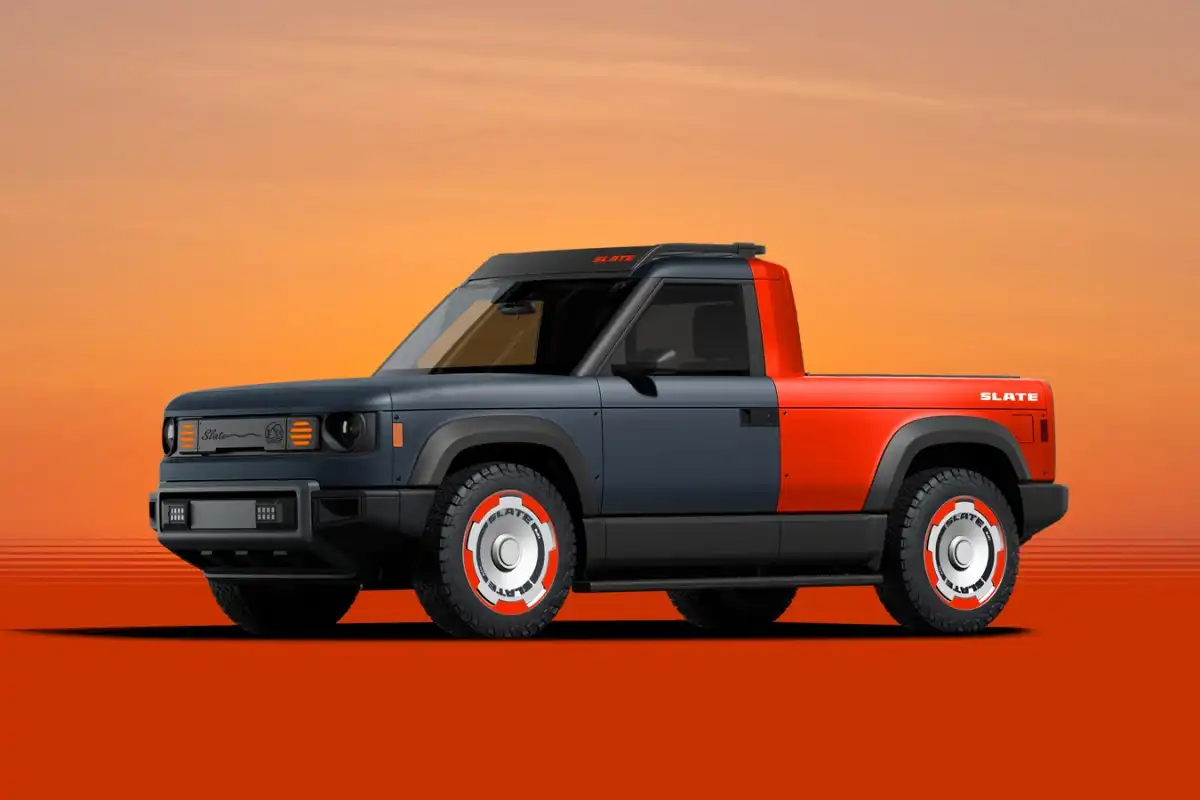
The electric vehicle startup Slate has made a significant change to its battery strategy for its upcoming pickup truck, opting for lithium-iron-phosphate (LFP) batteries instead of the initially planned nickel-manganese-cobalt (NMC) cells. This decision is expected to make the truck more affordable and accessible to a wider range of customers.
The Slate truck's price has been set at $24,950 before destination, taxes, and other fees, making it both America's cheapest new EV and its most affordable truck when sales kick off by the end of this year. The company has attributed this change in battery strategy to the growing availability of LFP cells and the elimination of the federal tax credit's domestic sourcing criteria for batteries.
What Happened
Slate initially planned to use NMC batteries, which are widely used in the automotive industry due to their high energy density. However, these batteries are also expensive, mainly due to the high cost of nickel and cobalt. In contrast, LFP batteries are less energy-dense but cheaper by about 40%, thanks to lower-cost ingredients like iron.
The company's president of vehicles, Chris Barman, explained that Slate had been talking to Gotion, a Chinese battery company, all along the way. However, at the time, they wouldn't have met the foreign entity of concern requirement, and their capacity wasn't sufficient. The new 65-kilowatt-hour LFP battery pack will be supplied by Gotion and built at its factory in Illinois.
Background and Context
The industry's shift towards LFP batteries is a significant development, driven by the growing demand for affordable EVs. Automakers like Ford, GM, Rivian, and Tesla have already started using LFP cells in their vehicles. The change in battery strategy also coincides with the transition to cell-to-pack technology, which Slate is using to build its battery packs.
Cell-to-pack construction trims manufacturing steps and boosts volumetric energy density, a helpful trait for a small EV like the Slate truck. Additionally, LFP cells can be charged to 100% with fewer concerns about degradation than NMC, meaning drivers can use the full pack on a daily basis.
Why It Matters
The adoption of LFP batteries by automakers has significant implications for the industry as a whole. The shift towards more affordable and accessible EVs could lead to increased demand and market growth. Additionally, the use of LFP cells in battery packs could help reduce costs and improve efficiency.
For adult-industry platforms and operators, this development is particularly relevant due to its potential impact on scalability and affordability. As the demand for EVs continues to grow, companies may need to adapt their infrastructure and supply chains to accommodate the increasing number of vehicles on the road.
What Comes Next
The Slate truck's launch is expected to be a significant milestone in the industry's transition towards more affordable and accessible EVs. As the company prepares for production, it will be interesting to see how other automakers respond to this shift towards LFP batteries.
The use of LFP cells in battery packs also raises questions about the long-term sustainability of these batteries. While they may be cheaper and more efficient than NMC cells, their durability and lifespan remain uncertain. As the industry continues to evolve, it will be essential to monitor the performance and reliability of LFP batteries.
Key Facts
- Slate has opted for lithium-iron-phosphate (LFP) batteries instead of nickel-manganese-cobalt (NMC) cells in its upcoming pickup truck.
- The company's price for the truck has been set at $24,950 before destination, taxes, and other fees.
- Gotion will supply the LFP battery pack, which will be built at its factory in Illinois.
- The use of LFP cells in battery packs could help reduce costs and improve efficiency.
- Automakers like Ford, GM, Rivian, and Tesla have already started using LFP cells in their vehicles.