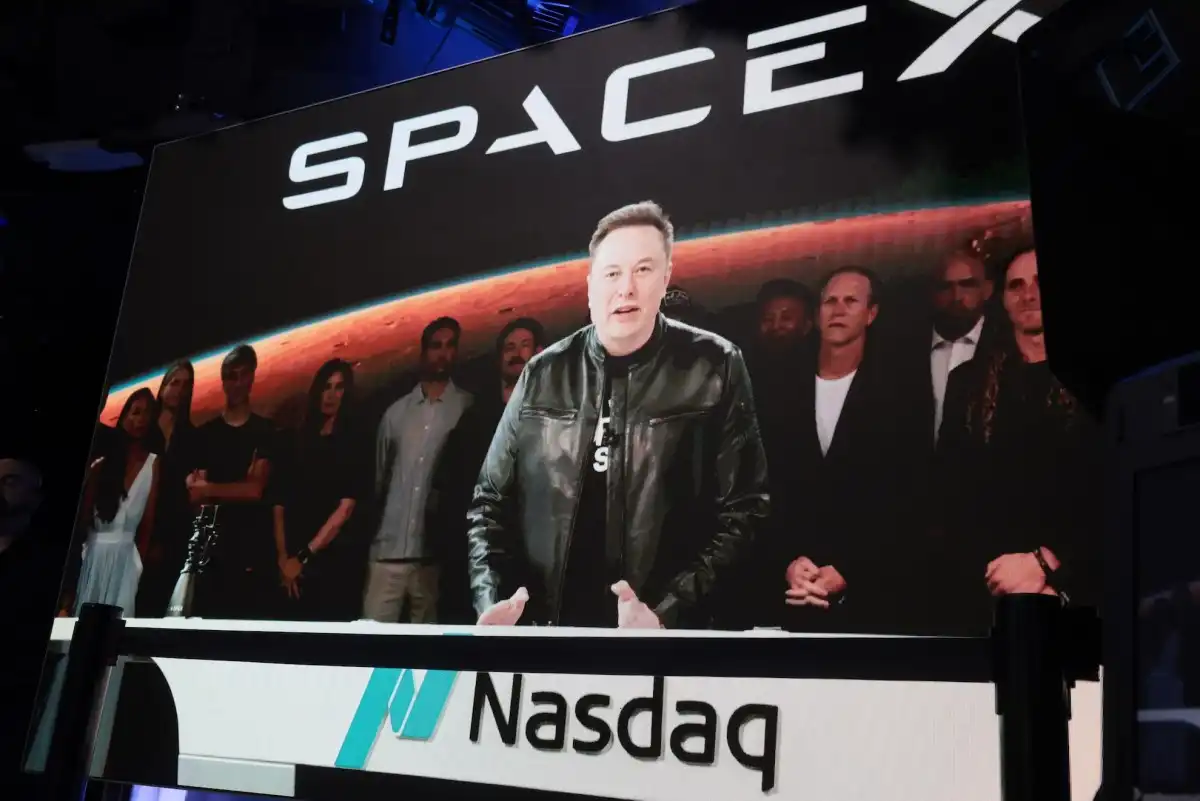
The Federal Trade Commission has cleared Elon Musk to acquire Mesh Optical Technologies, a startup founded by three former SpaceX engineers who develop optical transceivers for AI data centers. The acquisition marks an aggressive push into hardware infrastructure by Musk's companies, following SpaceX's historic initial public offering earlier this month.
What Happened
The FTC granted early termination of its antitrust review on Wednesday, according to a pattern of Musk acquisitions that has accelerated since SpaceX went public. Bloomberg first reported the clearance. Mesh Optical came out of stealth in February when it announced a $50 million Series A led by Thrive Capital. Its co-founders, CEO Travis Brashears, president Cameron Ramos, and VP of product Serena Grown-Haeberli, previously developed the optical communication links that keep thousands of SpaceX's Starlink satellites connected to one another.
The startup builds optical transceivers, devices that convert electrical signals into light so data can travel between servers and GPUs at higher speeds and lower power consumption than traditional copper-based connections. Its flagship product, the Alpha C1, transmits data at more than one terabit per second. The technology addresses a bottleneck that grows more acute as AI training clusters scale to hundreds of thousands of chips.
Background and Context
Musk's companies have been investing heavily in artificial intelligence infrastructure, including new data centers and partnerships with AI developers to expand access to computing resources. SpaceX has signed compute agreements with Anthropic, Google, and Reflection AI worth more than $80 billion through 2029, turning its Memphis data center complex into one of the largest third-party compute platforms in the world.
However, SpaceX discovered that latency issues and aging network infrastructure inside those facilities limited their usefulness for its own AI training, forcing it to rent capacity to outside tenants instead. Acquiring Mesh could eventually allow SpaceX to improve the efficiency of its data centers, whether they are located on Earth or, in the future, in space.
Why It Matters to the Industry
The acquisition of Mesh Optical Technologies by Musk's companies is significant for several reasons. Firstly, it marks an aggressive push into hardware infrastructure by Musk's companies, following SpaceX's historic initial public offering earlier this month. Secondly, it highlights the growing importance of optical transceivers in AI data centers, which are becoming increasingly critical to the development and deployment of large-scale AI models.
Optical transceivers are the component that determines how fast chips inside a data center can talk to each other. Acquiring the team that solved inter-satellite optical links for Starlink gives SpaceX in-house expertise on a problem that has historically been outsourced to suppliers like Broadcom and Coherent. Whether SpaceX deploys the technology in its existing Memphis facilities or in future data centers, including the orbital compute infrastructure it has discussed with Anthropic, remains to be seen.
What Comes Next
The financial terms of the acquisition were not disclosed. The FTC determined the deal raised no significant competition concerns, fast-tracking a review process that typically takes 30 days. Mesh was founded last year, making this one of the fastest paths from founding to acquisition by one of the world's most valuable companies.
Key Facts
- The Federal Trade Commission has cleared Elon Musk to acquire Mesh Optical Technologies, a startup founded by three former SpaceX engineers who develop optical transceivers for AI data centers.
- Musk's companies have been investing heavily in artificial intelligence infrastructure, including new data centers and partnerships with AI developers to expand access to computing resources.
- SpaceX has signed compute agreements with Anthropic, Google, and Reflection AI worth more than $80 billion through 2029, turning its Memphis data center complex into one of the largest third-party compute platforms in the world.
- Mesh Optical Technologies builds optical transceivers that convert electrical signals into light so data can travel between servers and GPUs at higher speeds and lower power consumption than traditional copper-based connections.
- The company's flagship product, the Alpha C1, transmits data at more than one terabit per second.