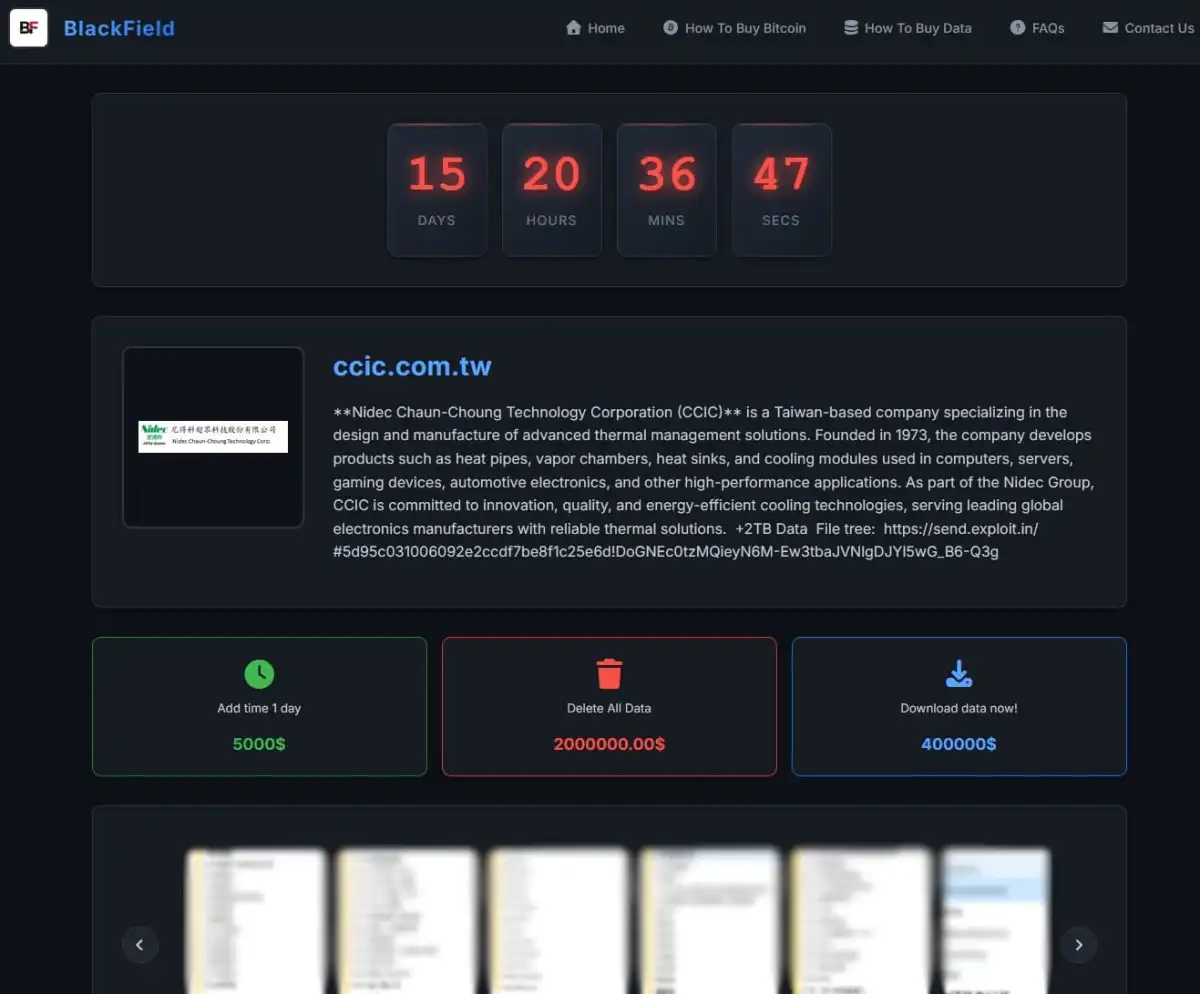
The Blackfield ransomware gang has targeted Nidec Corporation, a Japanese manufacturer of electronic components for automotive and computing applications, demanding a $2 million ransom in exchange for not releasing stolen data. The attack on Nidec's Taiwanese subsidiary, Nidec Chaun Choung Technology, highlights the growing threat of ransomware attacks against large corporations.
Nidec is a global leader in electric motor manufacturing, with annual revenue of $17.2 billion and operations in over 40 countries through manufacturing facilities and subsidiaries. The company's Taiwanese subsidiary was compromised in a ransomware attack on June 22, 2026, with the attackers demanding a payment of $2 million to delete the allegedly stolen information.
What Happened
The Blackfield ransomware gang claimed responsibility for the attack and gave Nidec more than 15 days to respond and engage in negotiations. The threat actor also leaked samples of data showing file structures and various documents to prove the data breach. However, BleepingComputer could not confirm the validity of the information.
Nidec stated that its Taiwanese subsidiary was compromised in a ransomware attack, with emergency measures taken to prevent the spread of damage. The company disclosed a "possibility of information leak," although no personal or confidential information has been confirmed to have been leaked online. Nidec is currently investigating how production, shipping, and other business operations might be impacted by the incident.
Background and Context
Ransomware attacks have become increasingly common in recent years, with sophisticated criminal organizations using robust algorithms like AES-256 and RSA to encrypt critical files. The Blackfield ransomware gang is known for its ability to cause significant disruptions to critical operations, particularly affecting sectors such as healthcare, manufacturing, education, and finance.
Nidec Corporation has previously suffered a data breach by ransomware actors in 2024, which targeted its Vietnam-based Nidec Precision division, exposing over 50,000 sensitive files. The attack was claimed by both the 8Base and Everest gangs, which attempted to extort Nidec separately.
Why It Matters to the Industry
The Blackfield ransomware gang's targeting of Nidec Corporation highlights the growing threat of ransomware attacks against large corporations. The attack demonstrates the sophistication and reach of modern ransomware gangs, which can compromise even the most secure systems using advanced algorithms and encryption techniques.
For adult-industry platforms and operators, this incident serves as a reminder of the importance of robust cybersecurity measures to prevent and mitigate ransomware attacks. With the increasing use of cloud-based services and online storage, the risk of data breaches and ransom demands is higher than ever before.
What Comes Next
Nidec Corporation has stated that it is currently investigating how production, shipping, and other business operations might be impacted by the incident. The company's Taiwanese subsidiary was compromised in a ransomware attack on June 22, 2026, with emergency measures taken to prevent the spread of damage.
The Blackfield ransomware gang's demands for a $2 million ransom in exchange for not releasing stolen data highlight the growing threat of ransomware attacks against large corporations. The incident serves as a reminder of the importance of robust cybersecurity measures to prevent and mitigate ransomware attacks, particularly in industries with high-value data and sensitive operations.
Key Facts
- Nidec Corporation is a global leader in electric motor manufacturing, with annual revenue of $17.2 billion and operations in over 40 countries through manufacturing facilities and subsidiaries.
- The Blackfield ransomware gang claimed responsibility for the attack on Nidec's Taiwanese subsidiary, demanding a payment of $2 million to delete the allegedly stolen information.
- Nidec stated that its Taiwanese subsidiary was compromised in a ransomware attack, with emergency measures taken to prevent the spread of damage.
- The company disclosed a "possibility of information leak," although no personal or confidential information has been confirmed to have been leaked online.
- Ransomware attacks have become increasingly common in recent years, with sophisticated criminal organizations using robust algorithms like AES-256 and RSA to encrypt critical files.